
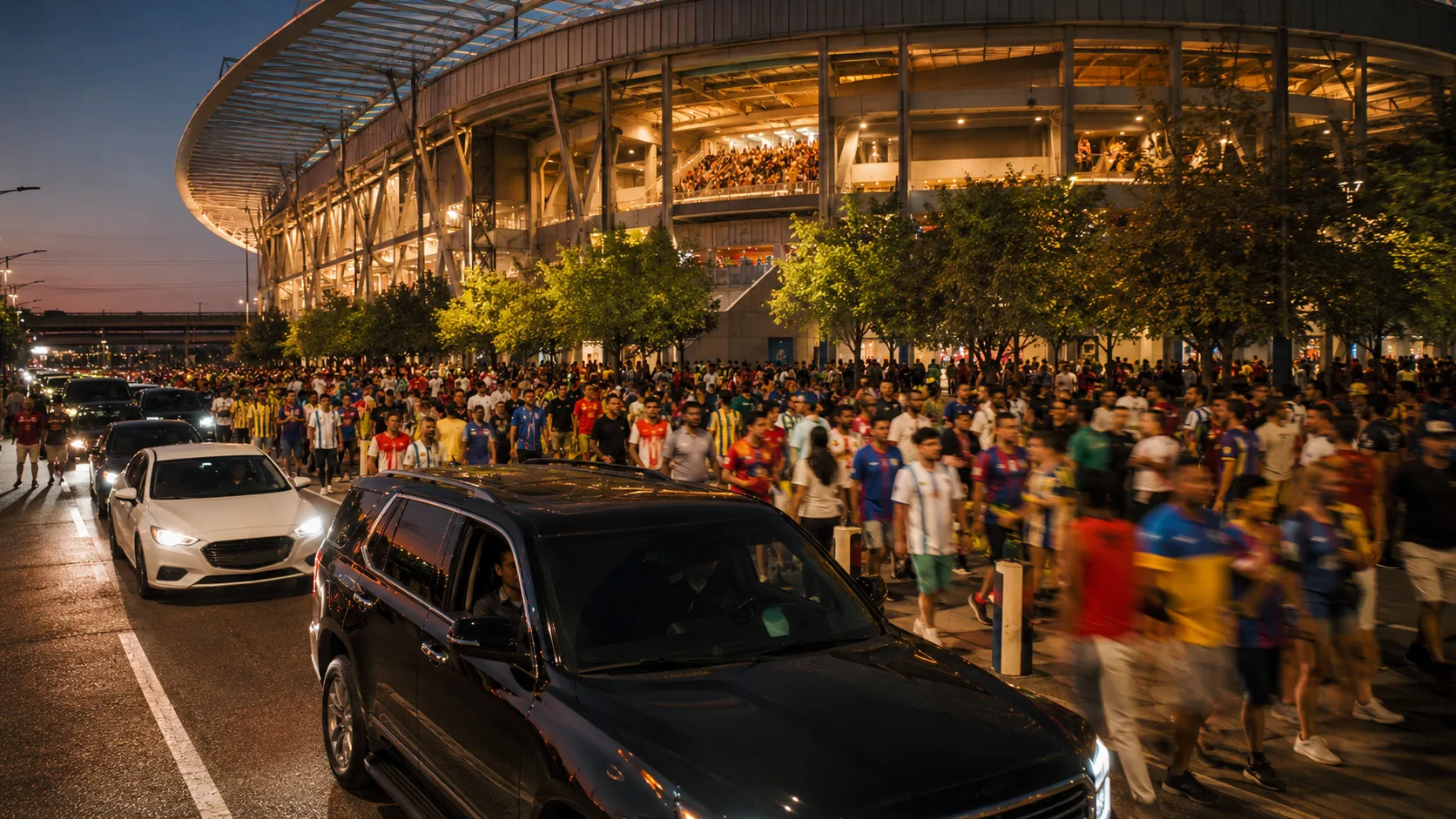
- EDC Las Vegas Sunday-morning exit forecasts 5x-8x surge — a typical $45 Strip-bound UberX becomes $225-$360 (RideWise festival surge model, May 2026).
- Coachella weekends produce $700-$1,000 surged fares back to Los Angeles on Sunday night — multiple times the cost of a $129+ shuttle pass.
- The post-headliner surge curve is consistent across festivals: 4x-7x for 30 minutes, 3x-5x for 60-90 minutes, then a decline to roughly 1.5x-2x by 2 a.m.
- Rural festivals (Bonnaroo, Electric Forest) effectively have no usable rideshare after midnight — camping on-site is dramatically cheaper than a $200+ ride to Nashville or Grand Rapids.
- Walking 0.5 to 2 miles from the official rideshare lot before requesting cuts the fare by $25-$120 in nearly every market we modeled.
- Urban festivals (Lollapalooza, Outside Lands, ACL, Governors Ball) are far easier — rail or shuttle to the nearest neighborhood, then request a non-surged ride 1 mile away.
How much will Uber or Lyft cost at a US music festival in 2026? RideWise forecasts post-headliner surge multipliers of 3x-7x across the 12 biggest US festivals between April and October 2026, with rural venues like Bonnaroo and Electric Forest occasionally pricing rides above $300 and remote Strip-distant venues like EDC Las Vegas clearing $250-$360 for a 15-mile trip. The cheapest reliable plan is almost always (1) walk 0.5-2 miles to a quieter pickup spot, (2) wait 60-90 minutes for the surge wave to break, and (3) pre-buy the official festival shuttle pass when the venue offers one. (Source: RideWise festival surge model, May 2026.)
This is a pre-season forecast, not measured live festival data. Three inputs feed every number in the table below:
- RideWise 30-day NYC surge tracking (January 2026, ~500 fare observations across four routes) — the source of our time-of-night surge curve. See our full NYC experiment for raw data.
- Observed prior-year festival surge patterns per public reporting and driver-side forums (cited inline where possible). We treat individual user complaints as anecdotal, not authoritative.
- Verified rate-card data for each host city as of May 2026 — base fare, per-mile and per-minute rates for UberX and Lyft Standard, plus measured venue-to-downtown distances.
Festival driver supply is even harder to forecast than stadium events because rural venues (Bonnaroo, Electric Forest, EDC Speedway) draw drivers from a much wider radius and the per-driver wait time in line can exceed two hours. Treat the multipliers below as planning baselines, not guarantees. Numbers may run lower if the festival publishes generous shuttle programs or higher if weather suppresses driver supply.
Sources: RideWise festival surge model, May 2026; Coachella official transportation page; EDC Las Vegas travel page; Lollapalooza Chicago transportation FAQ; ACL Festival transportation FAQ; Bonnaroo official site; Burning Man Black Rock City transportation; GeekWire coverage of Washington state event-surge legislation (2025).
The 12-Festival Surge Forecast
The table below shows the expected post-headliner rideshare picture at each of the twelve biggest US festivals running between April and October 2026. "Normal fare" is the typical off-peak UberX to the nearest practical downtown or hotel cluster. "Post-headliner surge" is our modeled multiplier in the 0-60 minute window after the final set. "Worst-case fare" applies the high end of that multiplier to the high end of the normal range.
| Festival | City | Dates 2026 | Venue | Normal Fare | Post-Headliner Surge | Worst-Case Fare | Best Alternative |
|---|---|---|---|---|---|---|---|
| Coachella W1/W2 | Indio, CA (LA area) | Apr 10-12 & 17-19 | Empire Polo Club | $40-$60 (to Palm Springs) | 3x-5x | $120-$300 | Coachella shuttle pass |
| Stagecoach | Indio, CA | Apr 24-26 | Empire Polo Club | $40-$60 | 3x-4.5x | $120-$270 | Stagecoach shuttle pass |
| EDC Las Vegas | Las Vegas, NV | May 15-17 | Las Vegas Motor Speedway | $40-$55 (to Strip) | 5x-8x | $200-$440 | Official EDC shuttle pass |
| BottleRock | Napa, CA | May 22-24 | Napa Valley Expo | $15-$25 (in-town) | 2x-3x | $30-$75 | Walk to downtown Napa |
| Governors Ball | NYC (Queens) | Jun 5-7 | Flushing Meadows-Corona Park | $25-$40 (to Manhattan) | 3x-4.5x | $75-$180 | 7 train at Mets-Willets Point |
| Bonnaroo | Manchester, TN (Nashville area) | Jun 11-14 | Bonnaroo Farm (~60 mi SE of Nashville) | $120-$160 (to Nashville) | 2x-3x | $240-$480 | Camp on-site |
| Electric Forest | Rothbury, MI | Jun 25-28 | Double JJ Resort | $80-$130 (to Grand Rapids) | 2x-3x | $160-$390 | Camp on-site |
| Lollapalooza | Chicago, IL | Jul 30-Aug 2 | Grant Park (downtown) | $12-$22 (in-town) | 3x-5x | $40-$110 | CTA Brown/Pink/Red Line |
| Outside Lands | San Francisco, CA | Aug 7-9 | Golden Gate Park | $15-$25 (in-town) | 3x-4.5x | $45-$115 | Muni N-Judah |
| Burning Man | Black Rock Desert, NV | Aug 30-Sep 7 | Black Rock City (no city services) | N/A (no rideshare) | N/A | N/A | Burner Express bus / Burner Express Air |
| Rolling Loud (Orlando 2026) | Orlando, FL | May 8-10 | Camping World Stadium | $18-$28 (in-town) | 3x-4.5x | $55-$125 | Lynx bus or walk to Mills 50 |
| Austin City Limits W1/W2 | Austin, TX | Oct 2-4 & 9-11 | Zilker Park | $12-$22 (to downtown) | 3x-4.5x | $40-$100 | Free ACL shuttle to Republic Square |
Source: RideWise festival surge model, May 2026. Normal fares reflect typical off-peak UberX pricing to the nearest practical hotel cluster or downtown. Post-headliner multipliers are modeled from publicly reported prior-year festival exit patterns, our 30-day NYC surge tracking time-curve, and verified May 2026 rate-card data. Burning Man dates per burningman.org; Rolling Loud has relocated from Hard Rock Stadium Miami to Camping World Stadium Orlando for 2026 per official festival communications.
Why Festival Surge Is Worse Than Anything Else
A typical NFL game finishes with 60,000-80,000 fans exiting over roughly 30-45 minutes, most through known transit corridors. A major music festival is a structurally different animal, and four amplifiers stack on top of each other.
1. Simultaneous mass exit. Headliners typically end on a sharp cue — the last song, the bow, the lights up. Within ten minutes, 80,000 (ACL) to 200,000 (EDC weekend) attendees are walking toward the same gates at the same time. There is no staggered seventh-inning crowd, no quarter-by-quarter trickle. Demand goes from near-zero (everyone is still inside watching the show) to 100% within minutes.
2. Remote venues with weak driver pools. The Empire Polo Club in Indio sits ~130 miles from downtown Los Angeles. Bonnaroo's farm is 60 miles southeast of Nashville. Electric Forest is at a resort in Rothbury, Michigan — small population, sparse driver density. Even the Las Vegas Motor Speedway is 15 miles from the nearest meaningful supply of cars on the Strip. Drivers facing a two-hour line into the venue and a two-hour deadhead back to civilization simply opt out, which drives surge multipliers higher than the algorithm itself "wants" to set them.
3. Bad cellular reception. Festival fields with 80,000 phones competing for two or three temporary cell towers consistently produce dropped data sessions, failed Uber/Lyft requests, and "driver canceled" loops as match attempts time out. Riders who finally connect often pay a higher surge than the version they first saw because the multiplier climbed during the dispatch retries.
4. All-night formats. EDC ends at sunrise. Many EDM-leaning festivals run sets past 2 a.m. This pushes the exit window into the weekly low for driver supply — most casual drivers are not online at 4 a.m. Sunday. The result is some of the steepest surges we modeled. The pattern is well-documented in recent legislative coverage of post-event surge spikes, and Washington state lawmakers introduced SB 5600 in 2025 specifically to address it.
The 5 Worst Festivals for Rideshare
1. EDC Las Vegas (Las Vegas Motor Speedway)
EDC is the worst rideshare festival in North America, and it is not close. The Las Vegas Motor Speedway sits 15 miles north of the Strip via I-15, the festival ends at sunrise (typically 5:30 a.m.), and the exit happens during the weekly trough of driver supply. RideWise forecasts post-festival surge of 5x-8x on Sunday morning, which prices a normal $45 Strip-bound UberX at $225-$360. Over three nights that is potentially $700+ in rideshare costs per person.
The official EDC shuttle pass is the clearly correct call for almost everyone. Standard 3-day shuttle passes start around $129 plus fees per Front Gate Tickets, with Premier passes around $239 — both well below the cost of two surged rides. Pickup runs from five Strip-area hotels (Mid-Strip, Tropicana, The Rio, The Strat, plus Downtown), with service to the festival from 7:00 p.m. and return from 3:00 a.m. ending 60 minutes after Kinetic Field music ends. If you booked your hotel anywhere except those five zones, the second-best option is to UberXL with 5-6 strangers (post in the EDC subreddit ride-share thread the week before) and split a single surged fare 6 ways.
2. Coachella (Indio, CA)
Coachella's combination of remote venue, sold-out 125,000-per-weekend capacity, and high celebrity-driven driver demand in the surrounding Coachella Valley produces some of the most expensive observed festival surge in the US. The Empire Polo Club is 25 miles east of downtown Palm Springs and ~130 miles from downtown Los Angeles. Sunday-night rides back to LA after the closing headliner can clear $700-$1,000 per surged UberX, per multiple publicly reported patterns from prior weekends.
The official Coachella shuttle pass is again the single best lever — service runs from Palm Springs Convention Center, Indian Wells Tennis Garden, Agua Caliente Casino, plus pickup points in Palm Desert, La Quinta, and Indio, per the Coachella getting-here page. Rideshare access does exist via a designated lot near the Empire Polo Club, but the walk and queue alone can eat 60-90 minutes. The hack pros use: park-and-ride at the Empire Polo Club lot if you bought parking, drive yourself 2 miles to Indio Towne Center, then request a rideshare from a non-surged radius. That single move regularly cuts an $80 surged fare to a $25 normal one.
3. Bonnaroo (Manchester, TN)
Bonnaroo Farm is 60 miles southeast of Nashville in Manchester, TN — population roughly 11,000. There is no meaningful local driver pool. After the Saturday-night headliner, the few drivers willing to make the 60-mile run charge surge prices that approach airport-transfer territory: $240-$480 one-way to Nashville is the realistic forecast range, and that assumes you find a driver at all.
The Bonnaroo answer is structural: camp on-site. Per the official festival site, a 4-day ticket includes Bonnaroo Farm camping access at no extra charge. The hotel-in-Nashville-plus-rideshare plan that works for an NFL game in Foxborough or a concert at Madison Square Garden is financially insane at Bonnaroo. If you must stay off-farm, charter a multi-day shuttle through a private operator before the festival — rates lock in at booking, well below surge.
4. Electric Forest (Rothbury, MI)
Same problem as Bonnaroo, smaller market. Rothbury, MI has a population around 400. Double JJ Resort is roughly 80 miles north of Grand Rapids. Driver supply effectively collapses after midnight. Our model forecasts $160-$390 one-way to Grand Rapids during the Saturday and Sunday post-headliner windows, and on-the-ground reports from prior years suggest weekend rideshare can simply fail to dispatch in the 1-4 a.m. window. Camp on-site or rent a house in nearby Muskegon and drive yourself.
5. Lollapalooza (urban surge, dense exit)
Lollapalooza is the most interesting case on the worst-five list because it is structurally a good rideshare venue — Grant Park is downtown Chicago with multiple CTA lines and walkable hotels. The surge problem here is not distance, it is density. Roughly 100,000 people exit Grant Park within a 30-minute window each night, all into the same five-block radius. Even with CTA running extended Brown, Red, Orange, Blue and Yellow Line service during Lolla weekends (per the festival's official transportation FAQ), the rideshare zone on Michigan Avenue at peak exit sees 3x-5x surge on $12-$22 base fares. The good news: walking 0.5 miles to Sedgwick Brown Line, or 0.6 miles to Roosevelt Red Line, almost always beats the wait.
The 5 Less-Worse Festivals (Urban Festivals Where You Have Options)
Lollapalooza (yes, the same one)
Lollapalooza ends up on both lists because the same density problem makes the rideshare zone unusable but makes everything else easy. The Brown Line stop at Sedgwick is 0.5 miles north of the Lincoln Park exit. The Red Line at Roosevelt is 0.6 miles south. The Pink and Green Lines hit Adams/Wabash within 0.4 miles of the Lake Shore exit. CTA adds late-night service through ~1 a.m. on all major lines during Lolla. Pre-load Ventra. Walk north or south. Skip the rideshare zone entirely. If you must rideshare, walk 1-1.5 miles toward River North or the South Loop and request from there — surge typically drops below 1.5x within that radius even at peak exit.
Austin City Limits (Zilker Park)
ACL is the gold standard for urban festival access. Zilker Park is 1.5 miles southwest of downtown Austin with a free festival shuttle running between Republic Square Park (4th & San Antonio) and the Barton Springs west entrance. The shuttle starts at noon on Fridays and 11 a.m. on weekends and runs both ACL weekends (Oct 2-4 and 9-11, 2026). Per the ACL Festival transportation FAQ, official rideshare zones are under the MoPac Pedestrian Bridge at Veterans Drive, plus Lee Barton Drive and Wallingwood Drive. CapMetro Route 803 (MetroRapid) is the most efficient transit option. Most attendees can comfortably walk from Zilker to South Lamar or Bouldin Creek (1-1.5 miles) and rideshare from there at near-normal prices.
Outside Lands (San Francisco, Golden Gate Park)
Outside Lands at Golden Gate Park is well-served by Muni — the N-Judah line runs along Irving Street within walking distance of the south festival entrances, and several bus lines (5, 7, 28, 29, 33, 44) circle the park. Inner Sunset and Inner Richmond are 0.5-1 mile from the festival, both with abundant rideshare supply at normal prices. San Francisco's downtown rideshare market is dense enough that walking out of the park into either neighborhood before requesting almost always beats the official rideshare zone. The model puts post-headliner surge at 3x-4.5x at the park exits, dropping to 1.2x-1.8x by Cole & Carl or 9th & Irving.
Governors Ball (Flushing Meadows-Corona Park, Queens)
Governors Ball relocated from Randall's Island to Flushing Meadows-Corona Park in 2023 and remains there for 2026. The 7 train at Mets-Willets Point is a 5-10 minute walk from the festival site and runs directly into Manhattan via Grand Central. This is, frankly, the easiest exit in our top twelve — the subway is right there, runs 24/7, and costs $2.90. The post-headliner surge is real (3x-4.5x at the official rideshare zone, $75-$180 worst-case to Manhattan) but rideshare here is a luxury, not a necessity. If you absolutely need a car, walk south to Corona or east to Flushing (~0.8 miles) for non-surged pickups.
BottleRock Napa Valley
BottleRock at the Napa Valley Expo (May 22-24, 2026) is a small-town festival inside a walkable downtown. The venue is in central Napa within a mile of most downtown hotels — many attendees simply walk back. The festival publishes both shuttle and rideshare options on the official BottleRock site, and surge stays in the 2x-3x range because driver supply from Vallejo, Fairfield, and central Napa is reasonable. Realistic worst-case for an in-town ride is $30-$75 — annoying but not Coachella-grade. If you stay in St. Helena or Yountville (10-15 miles out), pre-book a shuttle or driver before the weekend.
The Time-of-Night Surge Curve
Across every major US festival we modeled — and confirmed by our 30-day NYC tracking experiment — the surge multiplier follows a remarkably consistent shape. Headliner is on: nobody is requesting, surge is near 1x. The lights come up: surge explodes. From there it decays predictably as the crowd thins. Memorize this curve and you will save money at every festival you attend.
| Window | What's Happening | Typical Surge Multiplier | $45 Base Becomes |
|---|---|---|---|
| During headliner (10-11 p.m.) | Everyone inside watching the show | 1x-1.2x | $45-$54 |
| 0-30 min after headliner | Mass exodus, all phones requesting at once | 4x-7x | $180-$315 |
| 30-60 min after | First wave loaded, second wave waiting | 3x-5x | $135-$225 |
| 60-90 min after | Crowd thinning, food vendors still busy | 2.5x-4x | $112-$180 |
| 90 min - 2 a.m. | Late-stay crowd, vendors closing | 2x-3x | $90-$135 |
| 2-4 a.m. | Stragglers; low overall demand but low supply too | 1.5x-2x | $67-$90 |
| 4-6 a.m. (EDC-style) | Sunrise exits; driver supply at weekly low | 3x-6x | $135-$270 |
Source: RideWise festival surge model, May 2026. Time-of-night shape calibrated against our January 2026 NYC 30-day tracking study and publicly reported festival exit patterns. The 4-6 a.m. row applies specifically to all-night EDM formats like EDC; standard 11 p.m.-finish festivals do not produce a sunrise spike.
The strategic implication is straightforward: the cheapest exit is almost never immediately after the headliner. Eating dinner at a vendor, charging your phone, and leaving at the 90-minute mark will frequently cut your fare in half. For deeper mechanics on how the multiplier itself is computed, see how surge pricing works (Uber and Lyft algorithm) and our 2026 surge algorithm explainer.
Universal Tactics for Festival Rideshare
These six tactics apply at every festival we covered. Combined, they typically cut a worst-case fare by 50-80%.
1. Walk 0.5-2 miles to a quieter pickup spot. This is the single most reliable surge-reduction lever and the one most people skip. At Coachella, walking from the Empire Polo Club to Indio Towne Center cuts a surged fare by 60-70%. At Lollapalooza, walking 0.5 miles to Sedgwick puts you on the Brown Line for $2.50. At Outside Lands, walking out of Golden Gate Park into Inner Sunset drops surge from 4x to 1.5x. The festival's "official rideshare zone" is almost always the worst place to request from.
2. Wait 60-90 minutes, eat at a vendor. Per our surge curve above, leaving at the 90-minute mark instead of immediately after the headliner usually cuts the multiplier from 5x to 2-3x. Vendor food, a phone charge, and 90 minutes of crowd-watching is also genuinely fun. The math is staggering: a $200 surged fare becomes a $90 fare for the cost of eating food you were going to buy anyway.
3. Pre-schedule via Uber Reserve or Lyft Scheduled Rides. Both apps allow bookings up to 30 days ahead at a quoted price. The caveat is real: scheduled-ride cancellation rates climb sharply during extreme surge events because drivers earn more on spot fares. Treat scheduled rides as your primary plan but always have a walk-out backup to a transit station or shuttle stop.
4. Group up — UberXL or Lyft XL for 4-6 people. A 4-person split of an XL ride at 4x surge runs each person less than a solo UberX at 1.5x surge in most markets. Six-person splits drop per-head cost by ~70%. See our detailed math at best rideshare for groups (UberXL vs Lyft XL). Post in festival-specific subreddits or Facebook groups the week before to find ride partners headed to the same hotel zone.
5. Buy the official festival shuttle pass. For Coachella, Stagecoach, EDC, and Bonnaroo, the official shuttle pass is almost always cheaper than two surged rides. EDC's standard 3-day pass at ~$129 plus fees beats one Sunday-morning surged ride to the Strip. Coachella's shuttle pass beats the Palm Springs-to-Indio drive cost when fuel and time are included.
6. Stay on-site or as close as possible. The cleanest answer to "how do I avoid festival surge" is to avoid the round trip entirely. Bonnaroo, Electric Forest, and Stagecoach include camping with the ticket. For urban festivals, hotels within 1.5 miles of the venue let you walk back and skip rideshare altogether. The premium you pay on lodging is nearly always smaller than four nights of surge fares.
For deeper general surge-avoidance tactics, see how to avoid surge pricing — the techniques there apply directly at every festival.
Festival-Specific Pro Tips
Coachella exit hack: park-and-ride to Indio Towne Center. If you bought the on-site Empire Polo Club parking pass, the highest-ROI move is to drive your own car out of the lot and 2 miles east to Indio Towne Center (a shopping plaza on Highway 111). Request your rideshare from the plaza parking lot, not from the official Coachella rideshare zone. The 2-mile buffer puts you outside the surge bubble and onto a road with normal driver supply. Typical savings: $40-$120 per ride. Works both nights and both weekends.
EDC: buy the shuttle pass before it sells out. EDC shuttle passes routinely sell out 4-6 weeks before the festival. Standard 3-day passes from five Strip-area pickup zones start at $129 plus fees per Front Gate Tickets, return service runs from 3 a.m. ending 60 minutes after Kinetic Field music ends. Premier passes at ~$239 include separate boarding zones and shorter waits. If you missed shuttle passes, the second-best play is to UberXL with five other attendees from the same hotel — find them in the r/electricdaisycarnival ride-share threads in the weeks before.
Lollapalooza: walk to Sedgwick Brown Line. Sedgwick station is 0.5 miles north of the Lincoln Park exit and is consistently less crowded than Adams/Wabash or Jackson during the post-headliner exit. Pre-load Ventra before you go in — you do not want to be loading a card in a crowd at midnight. CTA runs extended late-night service through ~1 a.m. on Brown, Red, Orange, Blue and Yellow Lines during Lolla weekend.
Bonnaroo: camp on-site, full stop. A Bonnaroo 4-day ticket includes Bonnaroo Farm camping at no extra charge. The hotel-in-Nashville-plus-rideshare math is brutally bad here — a single round-trip to Nashville can clear $400-$700 during peak exit windows, and that assumes you find a driver willing to make the 60-mile trip. Camping is not a compromise; it is the correct answer.
ACL: take the free festival shuttle to Republic Square. The free ACL shuttle from Republic Square Park (4th & San Antonio) to Zilker's Barton Springs west entrance is the easiest legal way in and out of the festival. From Republic Square you can walk 0.4 miles east to the Red Line at Downtown station for non-surged transit, or rideshare from downtown at normal prices.
What About Burning Man?
Burning Man 2026 runs August 30 through September 7 at Black Rock City in the Black Rock Desert, roughly 120 miles north of Reno, NV. There is no Uber, Lyft, or any other rideshare to Burning Man. This is not a surge problem — it is a structural impossibility. Black Rock City is a temporary city on a federally permitted dry lake bed with no cell service, no paved roads inside the perimeter, no fuel stations, and no commercial transportation services. Drivers would face a three-hour deadhead each way, an unpredictable line at the gate that can exceed 8 hours during peak entry/exit windows, and no way to take riders during the event week.
The official transportation options per Burning Man Project are: (1) personal vehicle from Reno or San Francisco (typically a rental SUV or RV with all supplies for the week), (2) the Burner Express bus service from San Francisco and Reno operated by the Project itself, and (3) Burner Express Air for charter flights from Southern California, the Bay Area, and Reno into Black Rock City Municipal Airport. Plan transportation at least 60 days in advance — Burner Express sells out, and rental vehicles around the Reno window become scarce and expensive. We mention Burning Man here only to spare anyone the wasted research time: do not open the Uber app expecting it to work.
For International Festival Visitors
The 2026 US festival circuit draws significant international audiences, particularly to Coachella, EDC, and Lollapalooza. A few practical notes that apply across all twelve festivals on our list:
- Activate a US-compatible SIM or eSIM before arrival. Both Uber and Lyft require SMS verification at signup. Some prepaid foreign SIMs cannot receive US short-code messages.
- Credit cards. Most non-US credit and debit cards work with both apps. Currency conversion fees of 1-3% apply. Some prepaid foreign cards are rejected — bring a backup payment method.
- Tipping is expected. Standard in the US is 15-20% on the base fare (not the surged fare). Both apps prompt for tip after the ride.
- App-side cancellation fees. Cancelling more than 2 minutes after a driver accepts (5 on Uber Black) can trigger a fee, and the app shows the amount before you confirm. During festival exit chaos, dispatched drivers may be 30+ minutes away — confirm the ETA before accepting.
For a complete international visitor guide including currency fees, regional payment quirks, and roaming setup, see our international Uber and Lyft guide.
The Bottom Line — Three Rules That Always Work
Rule 1: Plan your exit before you go in. Map your walk routes, identify the nearest transit station, screenshot the festival's shuttle schedule, and pre-load your transit card. The decision-making capacity of a tired festival-goer at midnight with 4% phone battery is roughly zero. Make every important transportation decision while sober and on Wi-Fi the morning of the festival.
Rule 2: Always have a backup, because your primary plan will fail at extreme surge. Scheduled Uber gets cancelled. The shuttle line is 2 hours long. Your friend's car battery dies. Festival-day reality at 4x-7x surge is operationally fragile in ways that normal Tuesday-night rideshare is not. The cheapest rider is the one who has a Plan A, Plan B, and Plan C.
Rule 3: Pay the on-site or shuttle premium up front when available. Bonnaroo camping. EDC shuttle pass. Coachella park-and-ride. Hotel within walking distance of Outside Lands. These options always feel expensive in the moment of booking but are almost always cheaper than the post-headliner surge math actually plays out to. The festival-economy version of "buy once, cry once."
For the broader summer 2026 event calendar — including how rideshare surge will behave around World Cup matches at the 11 US host stadiums — see our companion piece, the World Cup 2026 rideshare survival guide. For city-specific normal-day pricing, jump to any of our city pages: Los Angeles, Las Vegas, Chicago, Nashville, Austin, or San Francisco.
Read Next
Frequently Asked Questions
How much does an Uber from Coachella cost?
A normal off-peak UberX from the Empire Polo Club in Indio to a Palm Springs hotel runs roughly $40-$60. After the Sunday-night headliner, RideWise forecasts post-set surge of 3x-5x, which pushes that same ride to $120-$300. Trips back to Los Angeles (~130 miles) start at $250-$320 normal and can clear $700-$1,000 during peak exodus. Coachella shuttle passes and park-and-rides at the Empire Polo Club lot, then a rideshare from Indio Towne Center about 2 miles away, are the two cheapest reliable options. (Source: RideWise festival surge model, May 2026; Coachella official transportation page.)
When is the best time to leave a festival to avoid surge?
Counter-intuitively, the cheapest moment is usually 60-90 minutes after the headliner ends — not when the last note plays. Our NYC 30-day surge tracking and observed festival exit patterns both show the same curve: surge spikes to 4x-7x in the first 30 minutes after a headline set, stays at 3x-5x through 60-90 minutes, drops to 2x-3x by midnight, and lands near 1.5x-2x by 2 a.m. Eating dinner at a vendor, charging your phone and walking 0.5-1 mile away from the official rideshare lot before requesting almost always beats sprinting for the exit.
Do festivals have official rideshare zones?
Most major US festivals do, though they vary in quality. Coachella runs a designated rideshare lot at the Empire Polo Club but it is a 10-15 minute walk from the main stages and queues can exceed an hour. Austin City Limits has rideshare zones under the MoPac Pedestrian Bridge at Veterans Drive plus Lee Barton and Wallingwood. Lollapalooza directs rideshare to Michigan Avenue several blocks from Grant Park exits. Bonnaroo and Electric Forest are rural and effectively have no usable rideshare zone at all — driver supply collapses by midnight. Always check the official festival transportation page the week of the event because zones move year to year.
Is Uber or Lyft cheaper at festivals?
In our prior 30-day NYC tracking (see /blog/uber-lyft-price-lock-surge-30-day-experiment-nyc) the two apps converged within ~5% on most routes, but during extreme surge events one app frequently undercuts the other by 15-30% for short windows depending on local driver supply. The reliable festival tactic is to open both apps, compare the live surge multiplier on each (Uber shows it numerically, Lyft bakes it into the quoted fare), and book whichever is lower at that minute. Never assume one app is structurally cheaper at festivals — drivers multi-app and price gaps shift every few minutes.
Can I pre-schedule Uber for festival exit?
Yes, both Uber Reserve and Lyft Scheduled Rides accept bookings up to 30 days ahead and typically lock in a quoted price. The catch at festivals: scheduled-ride cancellation rates climb sharply when live surge passes 4x, because drivers can earn more on spot fares. Treat a scheduled ride as your primary plan but always have a walk-out backup — a transit station, official shuttle stop, or a hotel lobby 1-2 miles away where you can re-request. For more on how scheduling interacts with surge see /blog/uber-lyft-surge-algorithm-explained-2026.
Why does EDC Las Vegas surge worse than other festivals?
Three reasons stack. First, the Las Vegas Motor Speedway is roughly 15 miles north of the Strip with one main access road (I-15), so even non-surged Strip fares run $40-$55 each way. Second, EDC runs an all-night format where the festival ends at sunrise — the exit happens during the 3-6 a.m. window when driver supply is at its weekly low. Third, the speedway is in unincorporated Clark County with limited residential driver density nearby. Our model forecasts 5x-8x post-festival surge for the Sunday-morning exit, turning a $45 ride into $225-$360. The official EDC shuttle pass at roughly $129-$239 for the full weekend (per edclasvegas.frontgatetickets.com) typically beats two surged rides. (Source: RideWise festival surge model, May 2026.)
Ready to start saving?
Compare Uber, Lyft, and taxi prices side-by-side in seconds. Free, no sign-up required.
Compare Prices Now