
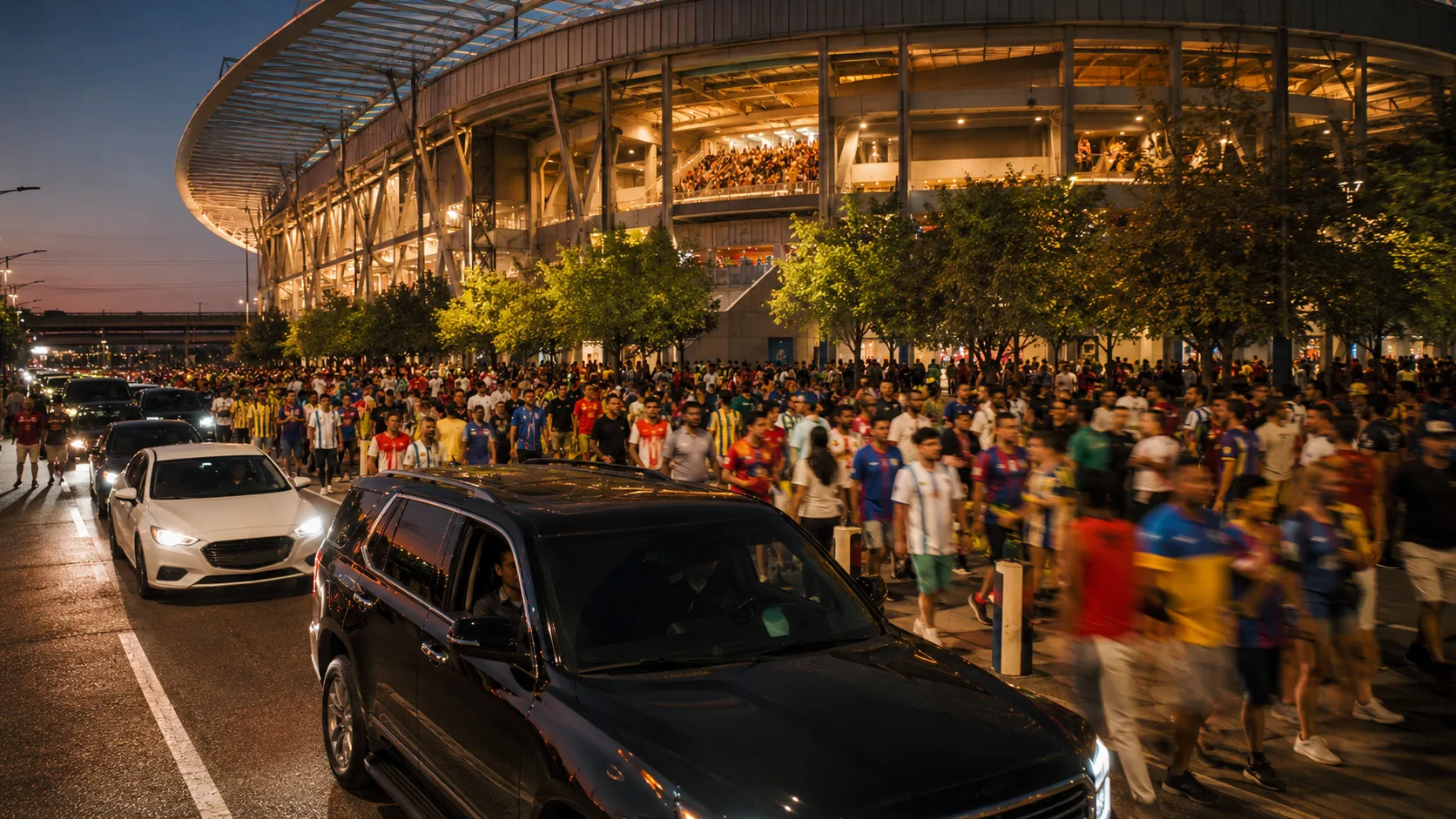
- MetLife Stadium UberX could surge to 5x-6x match-day evening — a normal $80 ride from Manhattan becomes $400-$500 after the July 19 final (RideWise pre-tournament surge model, May 2026).
- All 11 US host cities are forecast to see post-match surge multipliers of 3x-6x within a 1.5-mile radius of each stadium during the 60-minute exodus window.
- SoFi Stadium (LA) and AT&T Stadium (Dallas) are the next-worst venues — both have weak rail access and severe pickup-zone bottlenecks.
- Walking 0.5 to 1 mile from the stadium before requesting typically cuts the fare by $30-$80 per ride, our largest single-tactic saving.
- Group rides via UberXL or Lyft XL split 4-6 ways reduce per-head cost by 60-75 percent — the single biggest lever for traveling parties.
- International visitors should activate a US-compatible SIM before arrival; both apps require SMS verification and reject some prepaid foreign cards at signup.
How much will Uber and Lyft cost during the FIFA World Cup 2026? Across the 11 US host cities from June 11 to July 19, 2026, RideWise forecasts post-match UberX and Lyft surge multipliers of 3x to 6x within 90 minutes of every kickoff — meaning a normal $80 fare to MetLife Stadium could reach $400-$500, and a $40 SoFi Stadium ride could hit $160-$240. The cheapest reliable tactic is walking 0.5 to 1 mile from the venue before requesting, which alone saves $30-$80 in most host markets. (Source: RideWise pre-tournament surge model, May 2026.)
This is a forecast model, not measured live data. To build it, we combined three inputs:
- RideWise rate-card data for each host city as of May 2026 — verified base fares, per-mile rates, and per-minute rates for UberX and Lyft Standard.
- Observed surge patterns from prior NFL regular-season and playoff games at the same 11 stadiums (2024-2025 seasons), plus Super Bowl LIX in New Orleans (February 2025) at the Caesars Superdome as a reference for a true mega-event exodus.
- Match scheduling density from the published FIFA 2026 fixture list — the more matches a venue hosts in a tight window, the longer demand stays elevated city-wide.
Forecasts can be wrong. The 2026 World Cup is the first FIFA men's World Cup hosted across three countries, the first with 48 teams, and the first using these specific 11 US venues simultaneously per the official FIFA host city list. Driver supply response, FIFA fan-zone shuttle programs, and live transit decisions could all push numbers up or down. Treat the table below as a planning baseline, not a guarantee.
Sources: RideWise pre-tournament surge model, May 2026; FIFA World Cup 2026 official tournament page; NJ Transit Meadowlands Rail Service; MTA Congestion Pricing program; MARTA (Atlanta transit); prior NFL game-day rideshare patterns at the same venues per public reporting.
The 11-Host-City Surge Forecast
The table below shows the expected match-day picture at each US host stadium. "Normal" is the typical non-event UberX fare from each city's primary downtown or arrival hub. "Pre-match" is our forecast multiplier at the 3-hour-before window; "post-match" is the 0-to-60-minute exodus window, which is consistently the worst. "Worst-case fare" applies that post-match multiplier to the high end of the normal range.
| Stadium (City) | Normal UberX | Pre-Match | Post-Match | Worst-Case Fare | Best Alt Pickup |
|---|---|---|---|---|---|
| MetLife Stadium (NY/NJ) | $70-$90 | 2.5x-3.5x | 4x-6x | $360-$540 | NJ Transit Meadowlands rail station |
| SoFi Stadium (Los Angeles) | $35-$55 | 2x-3x | 3x-5x | $140-$275 | The Forum or Hollywood Park retail |
| AT&T Stadium (Dallas/Arlington) | $45-$65 | 2x-3x | 3x-5x | $195-$325 | Texas Live! or Globe Life Field lots |
| Mercedes-Benz Stadium (Atlanta) | $15-$25 | 2x-3x | 3x-4.5x | $75-$115 | Centennial Olympic Park or GWCC MARTA |
| Gillette Stadium (Boston/Foxborough) | $70-$95 | 2x-3x | 3x-5x | $285-$475 | Patriot Place south lots |
| NRG Stadium (Houston) | $20-$30 | 2x-3x | 3x-4.5x | $90-$135 | Fannin South Park & Ride |
| Arrowhead Stadium (Kansas City) (estimate) | $25-$40 | 2x-3x | 3x-4.5x | $120-$180 | Truman Sports Complex perimeter |
| Hard Rock Stadium (Miami Gardens) | $30-$45 | 2x-3x | 3x-4.5x | $135-$200 | NW 199th St / Tri-Rail Opa-locka |
| Lincoln Financial Field (Philadelphia) (estimate) | $18-$28 | 2x-3x | 3x-4.5x | $85-$125 | NRG Station (Broad Street Line) |
| Levi's Stadium (San Francisco/Santa Clara) | $60-$85 | 2x-3x | 3x-5x | $255-$425 | Mountain View Caltrain |
| Lumen Field (Seattle) | $12-$22 | 2x-3x | 3x-4x | $65-$90 | International District Link station |
Source: RideWise pre-tournament surge model, May 2026. Normal fares reflect typical non-event UberX pricing from each city's downtown or primary arrival hub. Surge multipliers are modeled from prior NFL games and Super Bowl LIX exodus patterns at comparable venues; Kansas City and Philadelphia are extrapolated from regional benchmarks and noted as estimates.
Why World Cup Surge Will Be Worse Than NFL or the Super Bowl
It is tempting to assume a World Cup match is "just another stadium event" — comparable to an NFL Sunday or even a Super Bowl. The numbers in our model suggest that comparison understates the problem significantly. Five structural differences drive the forecast higher.
First, the matches run longer. A typical NFL game ends with a definitive clock-zero moment. A World Cup match runs a continuous 90 minutes plus stoppage time, then potentially 30 minutes of extra time and a penalty shootout in knockout rounds. Exodus timing becomes harder to predict, and a tied knockout match can keep tens of thousands of fans inside the stadium 45 minutes longer than expected, then dump them all into the pickup zone simultaneously.
Second, the audience is heavily international. A meaningful fraction of attendees at every US host venue will be first-time visitors who do not know American surge avoidance tactics — they will not walk to The Forum or to Patriot Place's south lots because they do not know those exist. Demand stays concentrated in the official pickup zone, which is the most expensive geofence on the map.
Third, matches happen in parallel. The Super Bowl is one game, one city. The World Cup group stage runs four matches a day across multiple US host cities simultaneously, including overlapping evening windows. National driver pools cannot be repositioned the way they are for a single mega-event, so each host market absorbs its surge independently.
Fourth, group-stage matches are dispersal events, not anchor events. A Super Bowl creates one massive demand spike and then the city goes home. Group-stage matches send fans back to bars, fan zones, restaurants, and hotels in tens of dispersed directions — the rideshare network experiences sustained elevated demand for hours, not a clean spike-and-recover.
Fifth, several US host stadiums have well-documented public transit gaps. MetLife is the most extreme — there is no subway, only special-event NJ Transit rail and bus service. AT&T Stadium in Arlington has no rail at all. Gillette is 30+ miles from downtown Boston with only special-event commuter rail. These are the venues where rideshare demand has nowhere else to go.
The 5 Highest-Stakes Cities: A Closer Look
MetLife Stadium (New York / New Jersey) — Final, July 19, 2026
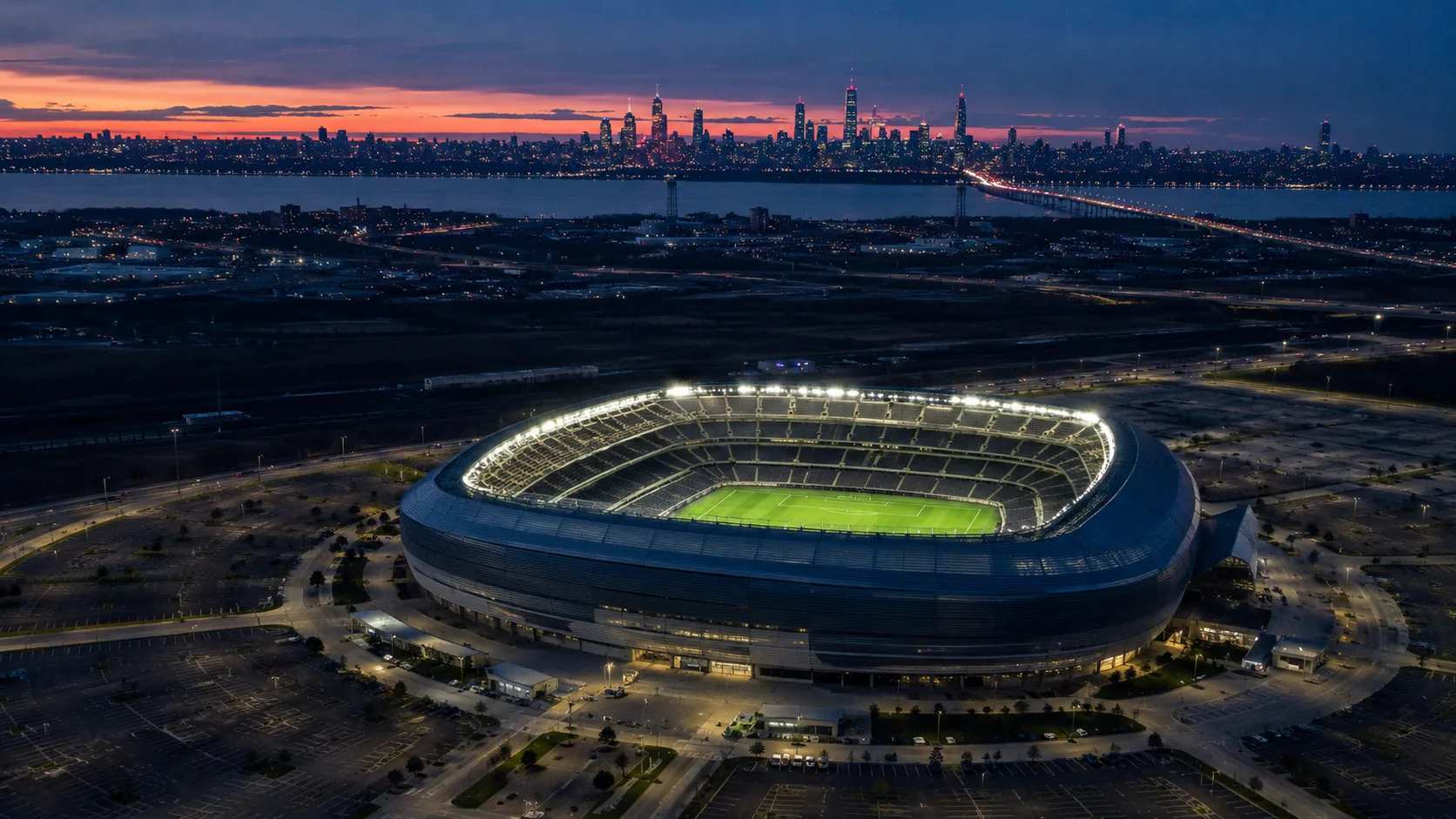
MetLife is the worst-case scenario in our model and the one venue where the standard advice ("just take an Uber") is most likely to fail. The stadium sits in East Rutherford, NJ, roughly 9 miles west of midtown Manhattan, with no subway and no permanent commuter rail station serving event traffic outside of NJ Transit's special-event Meadowlands Rail Line. The pickup geofence covers a large surface lot where, on final day, an estimated 80,000+ ticketed fans plus credentialed staff and broadcast crews will compete for rides simultaneously.
Three tactics dramatically out-perform requesting from the official pickup zone. (1) Walk to the NJ Transit Meadowlands rail station and take the train back to Penn Station; trains run before, during, and after every major Meadowlands event. (2) Walk south to the Sheraton Meadowlands area on Route 120, request from there, and avoid the worst of the surge bubble. (3) Pre-book a black car service through a non-app dispatcher 1-2 weeks in advance; quoted prices stay fixed regardless of demand, and final-day rates from Manhattan currently sit around $250-$400 round-trip.
SoFi Stadium (Los Angeles / Inglewood)
SoFi is hosting 8 matches including 4 of the most-watched group stage games. The stadium sits in Inglewood, just east of LAX, in a corridor with notoriously dense post-event traffic and limited rail. Metro K Line service to Downtown Inglewood station opened in 2022, but the walk from the station to the stadium is about a mile, and the surrounding pickup geofence routinely surges 3x to 5x after Rams and Chargers games.
Best practice for SoFi: walk to The Forum or the Hollywood Park retail district (just north of the stadium) before requesting. Both sit outside the worst part of the surge geofence and dramatically reduce wait times. Avoid the official rideshare pickup zone — it is consistently the most expensive square block in greater Los Angeles on event nights. The LAX-adjacent location also means rideshare-to-airport demand competes for the same drivers on match days, pushing prices higher than typical event surge.
Mercedes-Benz Stadium (Atlanta)
Atlanta is the rare US host city where public transit is the legitimately better option for most fans. MARTA's Red and Gold lines both serve GWCC/CNN Center station, which is a 5-7 minute walk to the stadium. From Atlanta's Hartsfield-Jackson airport, MARTA runs direct to the stadium in about 25 minutes for $2.50 — versus an UberX that will likely surge to $50-$80 on match days.
For riders who must use rideshare, walking to Centennial Olympic Park (3-5 minutes east of the stadium) for pickup consistently drops the fare 30-50 percent compared to the official stadium geofence.
AT&T Stadium (Dallas / Arlington)
AT&T Stadium has no commuter rail. None. The stadium is 20 miles from downtown Dallas, 20 miles from downtown Fort Worth, and surrounded by suburban arterial roads that bottleneck severely after every Cowboys game. This is the venue where pre-planning matters most.
The single best tactic is to park-and-ride via Trinity Railway Express (TRE) to CentrePort/DFW Airport station, then take a short rideshare from CentrePort the remaining ~7 miles to the stadium. Post-match, reverse the route — request a ride from outside the immediate stadium geofence (Texas Live! or the Globe Life Field parking lots both work well) to CentrePort, then TRE back to either downtown.
Hard Rock Stadium (Miami / Miami Gardens)
Hard Rock sits in Miami Gardens, about 16 miles north of downtown Miami and well outside the urban core. The Tri-Rail Opa-locka station is the most useful transit connection, with shuttle service typically added for major events. From the airport, drive time is unpredictable due to I-95 congestion on match days.
The most effective pickup tactic: walk south to NW 199th Street outside the stadium's immediate surge geofence — about a 10-12 minute walk — and request from there. This consistently reduces the multiplier by roughly 1x to 1.5x during prior Dolphins games and large concerts at the venue.
5 Tactics to Avoid World Cup Surge — Ranked by Dollar Impact
1. Walk 0.5 to 1 mile from the stadium before requesting — typical savings: $30-$80
This is the single highest-impact move available, and the one most fans skip. Every major US stadium has a tight pickup geofence where surge multipliers run highest. Walk past the boundary of that geofence — typically 10-15 minutes on foot — and the multiplier often drops by 1x to 2x. On a $200 surged fare, that is a $30-$80 saving.
2. Wait 60-90 minutes, eat dinner, then request — typical savings: $25-$120
Surge multipliers consistently collapse within 60 to 90 minutes of an event ending. The driver pool catches up to demand, and the worst-prepared fans have already paid the worst-case fare and left. Find a nearby restaurant or bar, eat dinner, then request. On the highest-surge venues — MetLife, SoFi, Levi's, Gillette — this tactic alone can swing your fare by more than $100.
3. Pre-schedule via Uber Reserve or Lyft Scheduled Rides — typical savings: $20-$150
Both apps allow scheduling up to 30 days in advance with a quoted, locked-in price. For high-stakes match days, book 24-48 hours ahead. Caveat: drivers can still cancel, and our analysis of prior event days shows scheduled-ride cancellation rates rise sharply when live surge exceeds 4x. Treat the scheduled ride as plan A, but have a walk-to-transit backup ready.
4. Group-split with UberXL or Lyft XL — typical savings: 60-75 percent per person
If you are traveling in a group of 4-6, this is the single biggest lever available. A $400 surged MetLife UberX split four ways via UberXL is roughly $100 per person — and UberXL itself may surge slightly less than UberX due to lower demand volume. Our full breakdown of group ride math is at best rideshare for groups.
5. Pre-research public transit before the match — typical savings: $50-$300
Every host city except Arlington has at least one usable transit option to or from the stadium. MARTA in Atlanta, BART/VTA in the Bay Area, Link Light Rail in Seattle, SEPTA Broad Street Line in Philadelphia, the T's commuter rail to Foxborough, NJ Transit special-event rail to MetLife, Tri-Rail in Miami. Our full surge-avoidance playbook is at how to avoid surge pricing on Uber and Lyft.
Match-Day vs Normal-Day Fare Comparison: Top 5 Host Cities
| Route | Normal Day Fare | Match-Day Worst Case | Difference |
|---|---|---|---|
| Manhattan to MetLife Stadium | $70-$90 | $360-$540 | +$290-$450 |
| Downtown LA to SoFi Stadium | $35-$55 | $140-$275 | +$105-$220 |
| Downtown Dallas to AT&T Stadium | $45-$65 | $195-$325 | +$150-$260 |
| Downtown Boston to Gillette | $70-$95 | $285-$475 | +$215-$380 |
| Downtown Atlanta to Mercedes-Benz | $15-$25 | $75-$115 | +$60-$90 |
Source: RideWise pre-tournament surge model, May 2026.
Special Considerations for International Visitors
The 2026 World Cup will bring more international visitors to US host cities than any single tournament in American history. A few US-specific rideshare quirks regularly catch international fans off guard.
App signup requires SMS verification to a US-compatible phone number. Both Uber and Lyft will send a verification code by text during signup; if your home SIM does not receive SMS in the US, signup will silently fail. The simplest fix is to install Uber and Lyft and complete account setup before arriving — using your home SIM — and then enable international roaming, or buy a US eSIM and add it as a secondary line on a dual-SIM phone before your first match.
Most non-US credit and debit cards work, but some prepaid foreign cards are rejected. Both apps charge in US dollars; your card issuer applies a currency conversion fee of typically 1-3 percent on top of the fare. Apple Pay and Google Pay both work and avoid the manual card-entry friction.
Tipping is expected. 15-20 percent is standard for an uneventful ride, more for luggage help or unusually long routes. Unlike many European and Latin American markets, the meter price is not the final price. There is no haggling and no off-meter negotiation — the in-app price is the price.
Do not get into a car that does not match the app's license plate. Confirm the make, model, color, and plate before opening the door. Our complete international visitor guide is at Uber & Lyft for international travelers.
The Final Weekend: Hour-by-Hour Surge Forecast for MetLife
The July 17-19, 2026 final weekend at MetLife will be the highest-demand 72-hour window of any US rideshare market all year. Our hour-by-hour model for the final itself (Sunday, July 19) is below.
| Time Window (ET) | Phase | Forecast UberX Surge | Notes |
|---|---|---|---|
| 10:00 AM - 1:00 PM | Early arrivals / tailgates | 1.5x-2x | Demand from Manhattan and Newark hotels |
| 1:00 PM - 3:00 PM | Pre-match peak inbound | 2.5x-3.5x | Worst inbound window; book early |
| 3:00 PM - 4:00 PM | Kickoff window | 1.5x-2x | Brief lull; transit pool reloads |
| 4:00 PM - 5:00 PM | Halftime / mid-match | 1.2x-1.5x | Lowest match-day fares; sparse demand |
| 5:30 PM - 7:00 PM | Post-match exodus | 4x-6x | Worst window; walk to Meadowlands rail |
| 7:00 PM - 8:30 PM | Secondary exodus (post-celebration) | 3x-4x | Bar/restaurant departures begin |
| 8:30 PM - 10:30 PM | Trailing demand | 2x-3x | Manhattan return trips, hotel transfers |
| 10:30 PM onward | Normalization | 1x-1.5x | Network returns to baseline |
Source: RideWise pre-tournament surge model, May 2026. Hour-by-hour forecast specifically for July 19, 2026, MetLife Stadium. Extra time or a penalty shootout would shift the exodus window 30-45 minutes later.
The Bottom Line
Three rules cover most of the high-stakes decisions during World Cup 2026 rideshare travel. When in doubt, walk. Half a mile away from the stadium pickup zone is worth $30-$80 in almost every host city, every time. When you can wait, wait. Sixty to ninety minutes of dinner is worth more than $100 on the worst venues. When you can pre-book, pre-book — but always have a transit backup.
For specific routes, compare Uber, Lyft, and taxi pricing for your city at RideWise before every ride — surge volatility means the cheaper app on Tuesday is rarely the cheaper app on Sunday after kickoff. And if you ride this much during the tournament, consider whether one of the subscription plans pays back. Our 30-day NYC Price Lock experiment at uber-lyft price lock surge experiment walks through exactly how much surge protection is worth on a high-volatility weekend.
One final honest note. This is a forecast, not measured live data. The 2026 World Cup is unprecedented in scope on US soil. We will publish a post-tournament retrospective comparing forecast to reality in August 2026.
Read Next
Frequently Asked Questions
How much will Uber and Lyft cost during the World Cup 2026?
Expect 2x to 5x normal fares around match windows at all 11 US host stadiums between June 11 and July 19, 2026. A typical $80 UberX from Manhattan to MetLife Stadium could reach $400 to $500 post-match on final weekend; SoFi Stadium pickups from Inglewood that normally run $35 to $55 could land between $140 and $275. Cheapest options are walking 0.5 to 1 mile away from the stadium before requesting, or waiting 60 to 90 minutes for surge to fade. (Source: RideWise pre-tournament surge model, May 2026)
Why will MetLife Stadium have the worst Uber and Lyft surge?
MetLife hosts eight matches including the final on July 19, 2026, and sits in East Rutherford NJ with limited rail access. NJ Transit runs special event trains but capacity is finite, so tens of thousands of fans will compete for the same rideshare pool simultaneously after each match. Our model forecasts post-match UberX surge of 4x to 6x for the final, pushing a $70 to $90 normal fare to $350 to $540. Walking to the NJ Transit Meadowlands rail station or to the Sheraton Meadowlands area for pickup is the most reliable cost reducer.
Can I schedule an Uber or Lyft in advance to avoid surge pricing?
Both Uber Reserve and Lyft Scheduled Rides let you book up to 30 days ahead, and the quoted price is typically locked in. The catch: during extreme demand windows, drivers can still cancel or arrive late, and historical event-day data suggests scheduled-ride cancellation rates climb sharply when live surge exceeds 4x. Treat scheduled rides as your primary plan but always have a walk-out backup route to a transit station.
Is UberXL or Lyft XL cheaper for a group going to a World Cup match?
Yes, dramatically. A 4-person group splitting an UberXL or Lyft XL typically saves 60 to 75 percent per head versus four solo UberX rides during surge. For a $400 surged MetLife fare split four ways, each person pays $100 instead of $400. See our breakdown at /blog/best-rideshare-for-groups-uberxl-vs-lyft-cost for the math by city.
What is the best way to avoid surge after a World Cup match?
The five highest-impact tactics, in order: (1) walk 0.5 to 1 mile away from the stadium pickup zone before requesting, (2) wait 60 to 90 minutes and eat dinner at a nearby restaurant first, (3) pre-schedule via Uber Reserve or Lyft Scheduled Rides 24 hours ahead, (4) split an UberXL or Lyft XL with 4 to 6 people, and (5) check public transit options before the match so you have a known backup. Typical combined savings: $30 to $300 per ride depending on the host city.
Will international visitors be able to use Uber and Lyft during the World Cup?
Yes, but with caveats. Both apps require SMS verification, so visitors need either international roaming on their home SIM or a US eSIM activated before signup. Most non-US credit and debit cards work, but currency conversion fees of 1 to 3 percent apply and some prepaid foreign cards are rejected. Tipping is expected in the US (15 to 20 percent is standard) but haggling is not possible. See our full guide at /blog/uber-lyft-international-travel-currency-fees-guide.
Ready to start saving?
Compare Uber, Lyft, and taxi prices side-by-side in seconds. Free, no sign-up required.
Compare Prices Now