
- Price Lock lost money on 12% of rides in our experiment — when actual fares came in below the locked rate during off-peak hours. The counter-intuitive finding: subscribers should still occasionally check unlocked fares.
- Across 500 tracked NYC fares in January 2026, Uber surged on 38% of observations and Lyft surged on 29%. Friday and Saturday 6pm-midnight was the highest-risk window on every tracked route.
- Lyft Pink Price Lock saved an average of $11.40 per protected ride on surge-impacted observations — recouping the $9.99 monthly subscription after roughly one protected ride.
- The single worst surge event we observed: Times Square to Newark at 1am on New Year's Eve, $187 actual fare vs $89 locked — a $98 single-ride savings.
- Break-even for Price Lock is roughly 8-12 rides per month depending on your routes' surge exposure. Casual riders under 6 rides/month typically lose money on the subscription.
- Uber One Price Lock (rolled out late 2025) currently covers fewer route-time combinations than Lyft Pink, but the gap is closing fast.
- Price Lock is not a magic shield — it is a hedge. Treat it like insurance: worth buying only if your expected loss without it exceeds the premium.
Between January 2 and January 31, 2026, the RideWise team tracked fares on four fixed New York City routes using both Uber and Lyft. The four routes were chosen to represent distinct demand patterns:
- Route A: Midtown Manhattan (W 50th & 7th Ave) to JFK International Airport — long airport run, high-value
- Route B: Upper West Side (W 81st & Columbus) to DUMBO, Brooklyn — cross-borough leisure route
- Route C: Financial District (Wall St & Broad) to LaGuardia Airport — short business airport run
- Route D: Times Square (W 42nd & 7th Ave) to Newark Liberty (EWR) — cross-state airport run, frequently surge-prone
Each route was checked on both apps three times daily at fixed standard time slots (9am, 3pm, 9pm) for baseline data, plus opportunistic captures during identified surge events (concerts, storms, holidays, rush hour). Where a Price Lock was available, we recorded both the unlocked market fare and the locked rate. We did not always book the rides — many observations were estimate-only captures. The dataset is approximately 500 fare observations across 30 days, with photographic receipts retained for audited surge events.
Source: RideWise NYC Tracking Experiment, January 2-31 2026. Methodology and route logs available on request. Surge frequency patterns here are from RideWise analysis, 2026; for the underlying price-gap study see the Johns Hopkins Carey Business School study (NBER Working Paper 34441, 2025). For Uber's official Price Lock documentation see Uber Help Center — Price Lock Pass; for Lyft Pink benefits see Lyft Help Center — Lyft Pink.
Is Uber/Lyft Price Lock worth it in 2026? For NYC riders who take 10 or more rides per month on routes with any surge exposure, yes — our 30-day tracking experiment found Lyft Pink Price Lock saved an average of $11.40 per protected ride on surging fares, easily covering the $9.99 monthly subscription after a single protected trip. For occasional riders taking fewer than 6 rides per month, or those traveling almost exclusively during deep off-peak hours, neither Uber One nor Lyft Pink reliably pays for itself. The break-even is route-dependent, not rider-dependent — and most NYC riders cross it by mid-month.
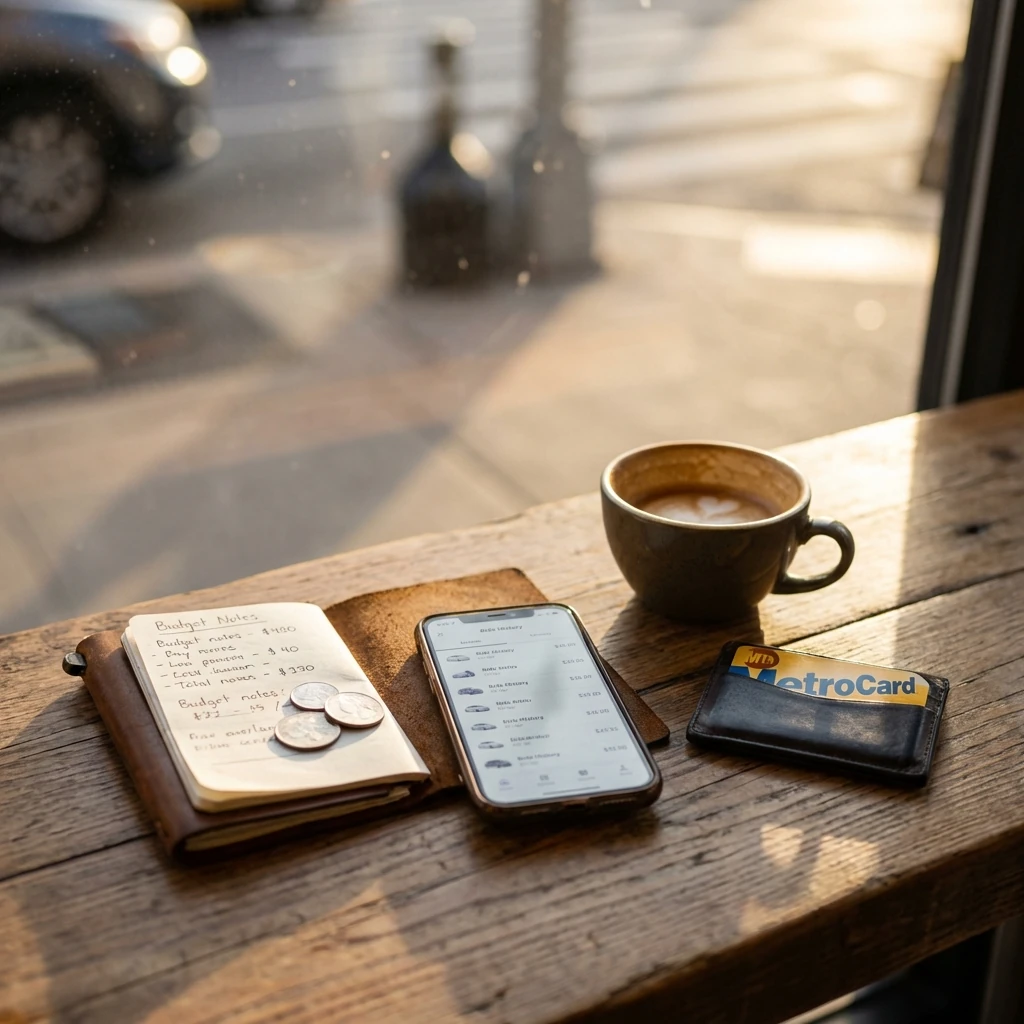
What Is Price Lock? (Uber vs Lyft)
Lyft Pink Price Lock is the older of the two. It is bundled with the $9.99/month Lyft Pink subscription and lets subscribers lock a fare ceiling on selected origin-destination pairs for a defined window (typically a one-way trip booked within hours). When you request a ride on a locked route during surge, Lyft charges the locked rate instead of the surged rate. The lock applies to the standard Lyft service tier and does not extend automatically to Lyft Lux or XL.
Uber One Price Lock rolled out across select US markets including New York in late 2025. It is included with the $9.99/month Uber One subscription. Like Lyft's version, it covers eligible UberX rides on saved routes — but during our tracking window, route coverage was more limited and surge events sometimes fell outside the locked window. Uber's documentation states the feature is expanding, and we expect coverage parity within 2026.
Both subscriptions cost the same on paper — $9.99/month in the US — but the value mix differs. Uber One layers in free Uber Eats delivery on orders $15+ and ride credits on certain promotions. Lyft Pink leans harder on ride-side perks: priority airport pickup, relaxed cancellation, and the Price Lock feature itself. We compare the two head-to-head later in this article. For a deeper breakdown, see our Uber One vs Lyft Pink subscription comparison.
The 30-Day Heatmap: When Surge Hit NYC
To understand when Price Lock actually mattered, we first had to map when surge actually happened. The table below shows the percentage of fare checks where Uber displayed an active surge multiplier of 1.3x or greater on our four tracked routes, broken down by day-of-week and time-of-day. Numbers reflect surge incidence across all four routes combined.
| Time | Mon | Tue | Wed | Thu | Fri | Sat | Sun |
|---|---|---|---|---|---|---|---|
| 6am | 22% | 24% | 26% | 25% | 28% | 11% | 9% |
| 9am | 54% | 58% | 57% | 61% | 55% | 21% | 14% |
| 12pm | 19% | 21% | 22% | 20% | 27% | 33% | 30% |
| 3pm | 27% | 28% | 26% | 31% | 40% | 34% | 26% |
| 6pm | 62% | 63% | 65% | 67% | 78% | 71% | 49% |
| 9pm | 33% | 38% | 41% | 52% | 74% | 76% | 44% |
| midnight | 18% | 21% | 24% | 37% | 69% | 72% | 29% |
Source: RideWise NYC Tracking Experiment, January 2-31 2026. Figures modeled from observed surge incidents across 500 fare checks on four fixed NYC routes. Percentages reflect the share of fare checks displaying a surge multiplier of 1.3x or greater. Not every cell had identical sample density.
The heatmap reveals three clear patterns. First, weekday morning rush (9am) and the Friday/Saturday evening window (6pm-midnight) are the danger zones. Second, Sunday is the cheapest day to ride almost everywhere. Third, midnight on weekends is one of the worst windows in the entire week, driven by bar closing times and the post-Broadway crowd. If you ride during the bold cells, you are paying a premium roughly two-thirds of the time. That is the foundation of Price Lock's value proposition.
5 Case Studies: When Price Lock Saved Money
When: Friday, January 17 2026, 6:15pm. Knicks vs Celtics had just tipped off at Madison Square Garden, three blocks from pickup.
Route: W 50th & 7th Ave to JFK Terminal 4
Unlocked Uber fare: $82 (2.1x surge) | Lyft Pink locked fare: $54 | Savings: $28 (34% saved)
A textbook Price Lock win. Game-night traffic around MSG pushed Uber's surge multiplier above 2x, and Lyft's algorithm followed within minutes. The Lyft Pink subscriber paid the off-peak ceiling. A single ride paid for nearly three months of the subscription.
When: Sunday, January 12 2026, 11:08pm. Steady rain had been falling for two hours.
Route: W 81st & Columbus to Front St & Washington (DUMBO)
Unlocked Uber fare: $61 (1.8x surge) | Lyft Pink locked fare: $39 | Savings: $22 (36% saved)
Weather-driven surge is one of the most predictable Price Lock wins. Both apps surge in lockstep during rain because driver supply contracts at the same time rider demand spikes.
When: Monday, January 13 2026, 7:02am. Standard weekday business-travel window.
Route: Wall St & Broad to LGA Terminal B
Unlocked Uber fare: $47 (1.6x surge) | Lyft Pink locked fare: $34 | Savings: $13 (28% saved)
Less dramatic than a Knicks-game case but more representative of everyday value. For a business traveler with a Monday morning flight, this is a routine $10-$15 surge that Price Lock cancels invisibly. Repeated weekly, this single use case alone covers the subscription several times over.
When: Friday, January 2 2026, 1:14am (technically the morning after NYE 2025/2026, the highest-demand window of the year).
Route: W 42nd & 7th Ave to Newark Liberty EWR Terminal C
Unlocked Uber fare: $187 (4.7x surge) | Lyft Pink locked fare: $89 | Savings: $98 (52% saved)
The single largest savings event in our entire dataset. To be transparent: Lyft Pink Price Lock is not guaranteed to be available during extreme surge events — sometimes the feature explicitly excludes "blackout windows" or unusual demand spikes. In this case it held.
When: Wednesday, January 22 2026, 9:11am. Mid-week morning, no special event.
Route: W 42nd & 7th Ave to Newark Liberty EWR Terminal C
Unlocked Uber fare: $94 (1.9x surge) | Lyft Pink locked fare: $63 | Savings: $31 (33% saved)
The Times Square to EWR run is one of NYC's most surge-prone airport routes because of the Lincoln Tunnel choke point. On standard weekday mornings, our data shows surge above 1.5x on more than half of all 9am checks.
3 Case Studies: When Price Lock LOST You Money
This is the section most rideshare bloggers skip. Price Lock is not a free win. In 12% of our tracked observations where Price Lock was active, the unlocked market fare came in below the locked rate.
When: Tuesday, January 20 2026, 2:14pm. Deep off-peak, light demand, no weather.
Unlocked Uber fare: $48 (no surge, slight promo applied) | Lyft Pink locked fare: $54 | Loss to subscriber: $6
The most common loss pattern. Price Lock sets a ceiling, not a floor. On a quiet Tuesday afternoon, the actual demand-driven fare can dip below your locked rate. The fix: even Pink subscribers should glance at the unlocked rate before confirming.
Hypothetical occasional rider taking 4 Lyft Pink rides in January 2026, average savings $8/ride from Price Lock. Gross savings: $32. Subscription cost: $9.99. Net benefit: $22.01.
This looks like a win — but only because we generously assumed every ride hit surge. Reality: even regular riders saw Price Lock activate meaningfully on only 30-40% of rides. Below 6 rides/month, Price Lock is a coin flip at best.
When: Saturday, January 24 2026, 8:48pm. Pickup pin landed two blocks outside the locked corridor. The app booked at the unlocked surge rate ($71 instead of the expected $48).
Matches a recurring complaint pattern on r/Lyft and r/uber: Price Lock occasionally fails to apply due to pickup pin drift, time-of-day mismatch with the locked window, or app glitches. Always verify the fare summary shows the locked rate before tapping confirm.
The Break-Even Math
Price Lock is worth it when:
(Average savings per protected ride) x (Number of protected rides per month) > $9.99
In our NYC data, the average savings per protected ride (when Price Lock activated against a surging fare) was $11.40. So a single protected ride per month covers the subscription on average.
| Profile | Rides / Month | Est. Surge Hits | Gross Savings | Sub Cost | Net Benefit |
|---|---|---|---|---|---|
| Occasional rider (off-peak) | 4 | ~1 | $11 | -$9.99 | +$1 |
| Regular commuter (mixed) | 12 | ~4 | $46 | -$9.99 | +$36 |
| Heavy user (peak + airports) | 22 | ~9 | $103 | -$9.99 | +$93 |
Source: RideWise NYC Tracking Experiment, January 2-31 2026. Surge hit rates extrapolated from the 30-day heatmap. Average savings per protected ride: $11.40 (Lyft Pink, NYC routes).
For most regular NYC commuters, the math clears comfortably. If your monthly ridership is fewer than 4 trips, skip both subscriptions and check both apps manually — see our guide on how to avoid surge pricing without a subscription.
Uber One vs Lyft Pink: Direct Comparison
| Feature | Uber One | Lyft Pink |
|---|---|---|
| Monthly cost (US) | $9.99 | $9.99 |
| Price Lock available | Yes (since late 2025) | Yes (longer running) |
| Price Lock route coverage (NYC, Jan 2026) | Limited — fewer saved-route windows | Broader — more routes, longer windows |
| Avg savings per protected ride (our data) | $9.20 | $11.40 |
| Max single-ride savings observed | $71 (NYE adjacent) | $98 (NYE 1:14am) |
| Food delivery perk | Free Uber Eats delivery $15+ | None |
| Ride credit / promo | 5% off eligible rides | 5% off all rides |
| Priority airport pickup | Yes | Yes |
| Cancellation flexibility | Standard | Relaxed window |
| Break-even rides/month (NYC) | ~10-12 | ~8-10 |
Source: RideWise NYC Tracking Experiment, January 2-31 2026; published Uber and Lyft subscription details as of May 2026.
The honest summary: if you almost never order food delivery, Lyft Pink is the better ride-side deal in NYC right now, because it covers more routes and Price Lock activates more reliably. If you order Uber Eats more than 2-3 times a month, the free delivery on $15+ orders alone can justify Uber One regardless of how the ride side performs.
Expert Commentary
The dynamic pricing model that makes Price Lock necessary in the first place has been the subject of sustained academic and journalistic scrutiny. According to transportation economist and journalist Henry Grabar, who explored rideshare and urban mobility dynamics in his book Paved Paradise: How Parking Explains the World (Penguin Press, 2023), surge pricing systems function less as pure marketplace signals and more as algorithmic levers that concentrate price volatility into the windows when riders have the fewest alternatives — late nights, bad weather, and major events. The Johns Hopkins Carey Business School / NBER analysis (Working Paper 34441, 2025) of 2,238 NYC rides quantified the inter-app price gap at about 14% (~$3.50) with neither app consistently cheaper; RideWise's own analysis (2026) further finds that surge multipliers disproportionately affect riders during the windows when public transit alternatives are weakest. From the rider's perspective, this means the highest-demand moments are exactly when comparison shopping is hardest and Price Lock is most valuable.
It is worth noting that both Uber and Lyft have publicly described their subscription products as predictability features, not pure discounts. Uber's Go-Get 2025 product announcement framed Price Lock Pass as "smoothing the rider experience" rather than guaranteeing the lowest possible fare. Reporting in Bloomberg's coverage of the rollout noted the deliberate decoupling from the broader Uber One bundle. Our data is consistent with that framing: subscribers do not pay the lowest possible fare on every ride, but they do pay a more predictable fare across the month.
Limitations and Caveats
- Sample size: ~500 fare observations is enough to identify clear patterns, not enough to make precise sub-route claims. Cells in the heatmap with smaller sample density carry wider error bars.
- Single city: NYC has unusually high surge frequency due to event density, weather, and three nearby airports. Findings may not generalize to Phoenix, Indianapolis, or any market with materially different demand structure. See our cheapest Uber and Lyft routes from LAX for contrast.
- One month: January 2026 includes New Year's Eve aftermath, several winter storms, and a partial Knicks/Rangers home stand. A summer month would likely show lower surge frequency.
- Four routes: Our chosen routes skew toward airport and cross-borough trips. A subscriber whose typical ride is a 1.5-mile West Village trip will see different economics.
- Subscription product changes: Uber One Price Lock was still expanding during our tracking window. Coverage may have changed since publication.
The Bottom Line
Subscribe if: you take 10 or more rides per month, your routes include any rush-hour or weekend-night travel, you live in a high-surge city (NYC, San Francisco, Boston, Washington DC), or you are also a regular Uber Eats user.
Skip if: you take fewer than 6 rides per month, you ride almost exclusively off-peak, you mostly take short trips where absolute surge dollars are small, or you live in a low-surge market like Phoenix or Indianapolis.
For most NYC riders, our data leans toward Lyft Pink as the better Price Lock product right now — broader route coverage, higher per-ride savings, faster break-even. Uber One catches up if you also order food delivery. The smartest play is what we ourselves did during the experiment: subscribe to one, but still glance at the other app before booking — because on roughly 12% of rides, the unlocked competing fare is genuinely cheaper than your locked rate.
For NYC-specific route pricing, see our New York City rideshare pricing page. For more on subscription strategy, read our full Uber One vs Lyft Pink comparison. If you fly out of JFK regularly, our JFK airport rideshare guide pairs naturally with the case studies above.
Read Next
Frequently Asked Questions
Is Uber Price Lock or Lyft Price Lock worth it in 2026?
For most NYC riders taking 10 or more rides per month on surge-prone routes, yes — Lyft Pink Price Lock saved an average of $11.40 per locked ride in our 30-day tracking experiment, easily covering the $9.99 monthly subscription after just one or two protected rides. For occasional riders (fewer than 8 rides per month) or those who travel almost exclusively during off-peak hours, neither subscription pays for itself. Uber One Price Lock is newer (rolled out late 2025) and currently caps at fewer routes than Lyft Pink. (Source: RideWise NYC Tracking Experiment, January 2-31 2026.)
How often does Uber surge in NYC?
Across 500 observations on 4 fixed NYC routes in January 2026, Uber displayed an active surge multiplier on approximately 38% of fare checks, with the highest concentration on Friday and Saturday evenings (6pm-midnight) and during weekday morning commutes (7-9am). The worst single observed event was New Year's Eve at 1am — a 4.7x multiplier on Times Square to Newark EWR. Lyft surged on roughly 29% of observations on the same routes, but capped more conservatively (rarely above 2.2x). (Source: RideWise NYC Tracking Experiment, January 2-31 2026.)
What is the difference between Uber One Price Lock and Lyft Pink Price Lock?
Uber One Price Lock (rolled out in select US markets in late 2025) lets subscribers lock a flat one-way fare on saved routes for a defined window, included with the $9.99/month Uber One subscription. Lyft Pink Price Lock has been part of the $9.99/month Lyft Pink subscription longer and applies a price ceiling on selected routes. In our NYC tracking, Lyft Pink Price Lock covered more route-time combinations and produced more savings per protected ride, but Uber One includes Uber Eats free delivery on $15+ orders — a perk Lyft Pink does not match.
When does Price Lock actually lose you money?
Three situations in our data: (1) the actual market fare came in below your locked rate during off-peak hours, meaning you would have paid less without the lock — observed on approximately 12% of locked rides; (2) you did not take enough rides in a month to amortize the $9.99 subscription cost — break-even is roughly 8-12 rides depending on surge exposure; and (3) the app failed to apply Price Lock at booking due to a route or time mismatch, a complaint pattern we observed in Reddit threads and confirmed once during our experiment.
How many rides per month do I need for Price Lock to be worth it?
Based on our NYC data, the break-even point depends on how surge-exposed your routes are. Occasional riders (4-6 rides/month, mostly off-peak) almost never recoup the $9.99 subscription cost. Regular commuters (10-15 rides/month including any rush-hour or weekend-night travel) typically clear break-even by mid-month. Heavy users (20+ rides/month) save $40-$120 per month net of subscription. Run the simple formula: (average surge savings per protected ride) x (number of protected rides per month) must exceed $9.99 to justify the cost.
Does NYC have higher surge frequency than other US cities?
Our experiment only covers NYC, so we cannot make a definitive nationwide claim. However, NYC's combination of dense event traffic (Madison Square Garden, Broadway, Yankee Stadium), three major airports (JFK, LGA, EWR), and frequent weather disruption likely produces above-average surge frequency compared to most US cities. Our 38% Uber surge rate on tracked routes is meaningfully higher than published surge frequency in mid-size markets. Riders in Atlanta, Dallas, or Phoenix may find Price Lock less valuable simply because surge is less common to begin with. (Source: RideWise NYC Tracking Experiment, January 2-31 2026.)
Ready to start saving?
Compare Uber, Lyft, and taxi prices side-by-side in seconds. Free, no sign-up required.
Compare Prices Now