
- Waymo is cheaper than Uber on rides longer than about 8 miles in San Francisco, but only because you do not tip a robot. The 15% tip you would have paid an Uber driver closes the per-mile gap.
- The Waymo-vs-Uber price premium fell from 30-40% in mid-2025 to 12.7% in January 2026 (TechCrunch/Obi). Then it widened again: Obi found Waymo prices rose 18% between January and April 2026 while Uber rose only 5%.
- Waymo gives public rides in 14 US metros as of September 2026. Denver, San Diego, and Tampa opened on September 1. Las Vegas is still employee-only. Washington DC is on hold until at least 2028.
- Average prices in Obi's January 2026 study: Waymo $19.69, Uber $17.47, Lyft $15.47 per trip. Averages hide a sharp distance break-even.
- Waymo is slower to arrive. Average wait: 5.74 minutes for Waymo vs 5.14 for Lyft and 3.15 for Uber (Obi, Bay Area).
- In Austin and Atlanta, Waymo rides are hailed through the Uber app at standard UberX prices, which removes the premium entirely. That deal runs through at least May 2028; Waymo launches its own app there in January 2028.
- Waymo offers no XL, Black, Comfort, or shared option, so groups of 5+ and pool riders still need Uber or Lyft.
- Waymo prices are dynamic and surge-prone in newer markets. Always check Waymo and Uber/Lyft side by side before booking.
We compared Waymo against UberX and Lyft Standard across 17 US cities. Our approach:
- Waymo rates — pulled from the Waymo One app in active markets (April-May 2026), the Waymo support center pricing page, and recent reporting from TechCrunch, Axios, Electrek, and Refresh Miami covering January-April 2026 fare data.
- Uber and Lyft rates — drawn from the RideWise rate-card database (Q1 2026 update), covering published base, per-mile, and per-minute rates for UberX and Lyft Standard in all 300+ US markets we track.
- Break-even distances — computed by setting Waymo total fare equal to Uber total fare plus a 15% tip baseline, then solving for ride length.
- Trip scenarios — built from real route distances using OpenStreetMap routing for typical city, mid-length, and airport trips in each active Waymo market.
Important caveat: Robotaxi pricing is moving weekly. We last reviewed this page on September 10, 2026. Fare pulls are from April-May 2026. City statuses were re-checked against Waymo's own launch posts in September 2026, and we added Obi's spring 2026 price-trend data. Sanity-check any single trip against the live apps. Waymo specifically does not publish a flat per-mile tariff — it uses dynamic pricing that varies by demand, time of day, and route.
Sources: TechCrunch, January 2026; Waymo Trip Pricing Help Center; RideWise rate-card analysis, Q1 2026.
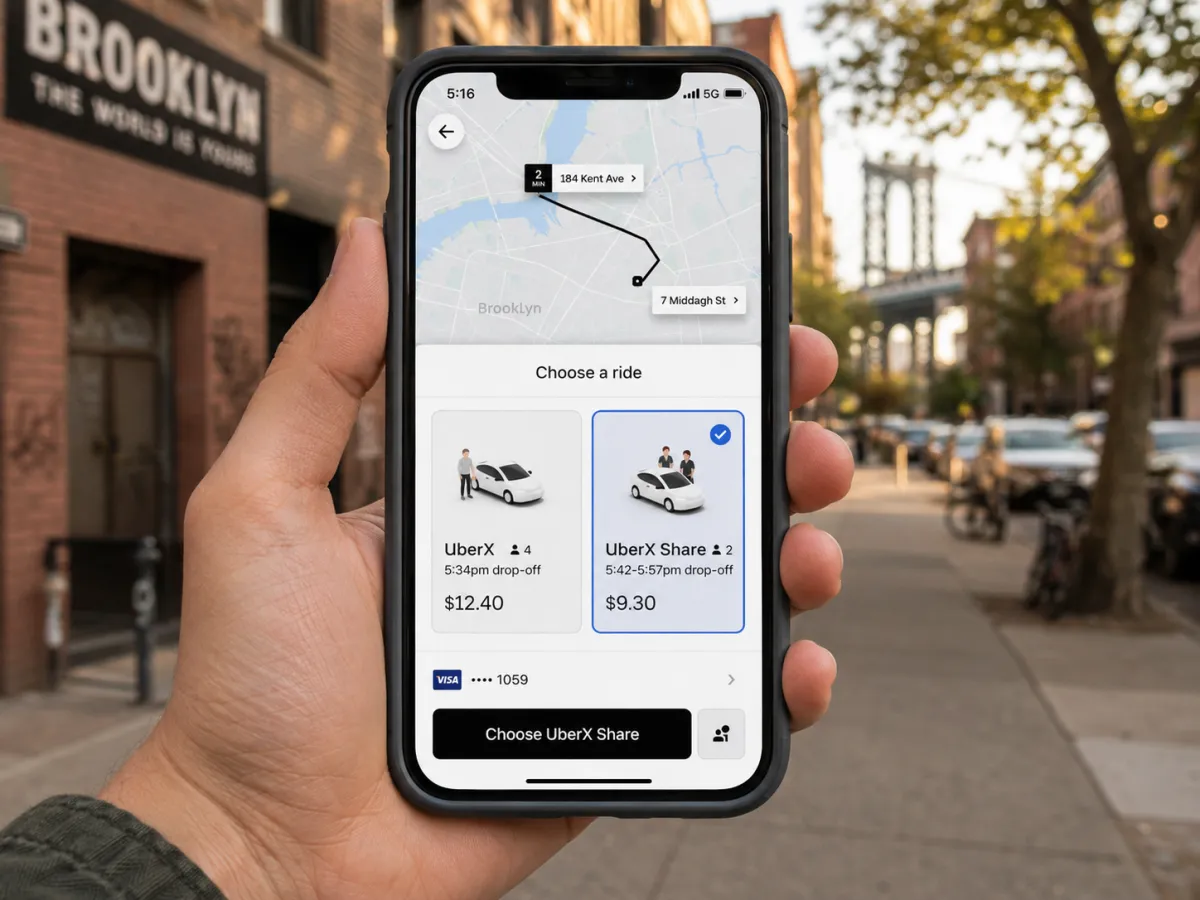
Is Waymo Cheaper Than Uber? The Short Answer
On the headline average, no — Waymo still runs about 12.7% more expensive than Uber and 27.3% more than Lyft as of early 2026 (TechCrunch, January 2026). The average Waymo ride costs $19.69 versus $17.47 for Uber and $15.47 for Lyft. But the average hides a sharp distance break-even: on trips longer than roughly 8 miles in San Francisco, Waymo often becomes the cheaper option once you factor in the tip you would have left a human driver. And in Austin and Atlanta, where Waymo rides are hailed through the Uber app at UberX prices, the price gap disappears entirely.
One caution before the tables. The newest data points the other way. Obi's spring 2026 Bay Area study found Waymo prices rose 18% between January and April, while Uber's rose only 5%. If that holds, the average gap is closer to 25-27% than 13%. We explain what changed below.
The Big Pricing Table: 17 Cities, Active and Announced
Below is our master comparison table. Active Waymo cities show real fare data pulled from the apps in April-May 2026. Cities marked with a tilde (~) show expected Waymo rates based on the SF/Phoenix/LA pricing pattern, paired with current UberX and Lyft Standard rates in those markets. That covers Denver and San Diego (public rides since September 1, 2026), Nashville (on the Waymo app since April 2026), Las Vegas (employee-only), Detroit (announced), and Washington DC (on hold). All Uber and Lyft data is from the RideWise rate-card database, Q1 2026.
| City | Status | Waymo Base | Waymo /mi | Waymo /min | UberX Base | UberX /mi | Lyft /mi | Cheapest at 5 mi | Cheapest at 15 mi |
|---|---|---|---|---|---|---|---|---|---|
| Phoenix, AZ | Active | $2.50 | $2.10 | $0.34 | $1.00 | $1.05 | $1.00 | Lyft | Uber |
| San Francisco, CA | Active | $4.95 | $3.65 | $0.42 | $1.00 | $1.25 | $1.35 | Uber | Waymo* |
| Los Angeles, CA | Active | $3.95 | $2.95 | $0.38 | $1.00 | $0.97 | $0.95 | Lyft | Lyft |
| Austin, TX | Active (via Uber) | $1.00 | $0.93 | $0.18 | $1.00 | $0.93 | $0.93 | Tied | Tied |
| Atlanta, GA | Active (via Uber) | $1.26 | $0.85 | $0.20 | $1.26 | $0.85 | $0.82 | Lyft | Lyft |
| Dallas, TX | Active | $3.00 | $2.35 | $0.32 | $1.00 | $0.86 | $0.82 | Lyft | Lyft |
| Houston, TX | Active | $3.00 | $2.30 | $0.30 | $1.00 | $0.92 | $0.90 | Lyft | Lyft |
| San Antonio, TX | Active | $3.00 | $2.25 | $0.28 | $1.00 | $0.88 | $0.85 | Lyft | Lyft |
| Orlando, FL | Active | $3.50 | $2.50 | $0.32 | $1.00 | $0.95 | $0.92 | Lyft | Lyft |
| Miami, FL | Active | $3.95 | $2.75 | $0.38 | $1.00 | $0.90 | $0.85 | Lyft | Lyft |
| San Jose, CA (Peninsula) | Active | $4.50 | $3.50 | $0.40 | $1.00 | $1.22 | $1.30 | Uber | Waymo* |
| Denver, CO | Active (Sep 1, 2026) | ~$3.50 | ~$2.50 | ~$0.32 | $1.00 | $0.82 | $0.82 | Lyft | Lyft |
| Detroit, MI | Announced | ~$3.00 | ~$2.40 | ~$0.30 | $1.00 | $0.84 | $0.80 | Lyft | Lyft |
| Las Vegas, NV | Employee-only | ~$3.50 | ~$2.60 | ~$0.34 | $1.00 | $1.05 | $1.00 | Lyft | Uber |
| Nashville, TN | Active (Apr 2026) | ~$3.25 | ~$2.45 | ~$0.30 | $1.00 | $0.92 | $0.90 | Lyft | Lyft |
| San Diego, CA | Active (Sep 1, 2026) | ~$3.95 | ~$2.85 | ~$0.38 | $1.00 | $1.05 | $1.02 | Lyft | Lyft |
| Washington, DC | On hold (2028) | ~$3.95 | ~$2.90 | ~$0.38 | $1.10 | $1.18 | $1.15 | Lyft | Waymo* |
Sources: RideWise rate-card analysis (Q1 2026) for Uber and Lyft; Waymo published rates pulled from Waymo One app in active markets, April-May 2026; TechCrunch coverage. Asterisk (*) indicates Waymo wins on raw fare but only after factoring in a 15% tip-equivalent on the Uber comparison.
Break-Even Distance: When Does Waymo Actually Win?
Short answer: Waymo loses on short rides and can win on long ones. Its base fare and per-mile rate are higher. But you do not tip. Past roughly 8 miles in San Francisco, the tip you skip is bigger than the extra per-mile cost, and Waymo comes out ahead. To price the Uber and Lyft side of any trip in your city first, run it through our Uber and Lyft price estimate calculator.
The headline number is "Waymo is 12.7% more expensive than Uber." But every rider intuitively knows that averages lie when fare structures are different. Waymo has a much higher base fare and per-mile rate, but no driver tip. Uber has a lower base, lower per-mile, but most riders tip 15-20%.
That means as ride length grows, Waymo's per-mile disadvantage gets multiplied while the Uber tip also grows — and eventually one catches the other. Below is the break-even distance for the four largest active Waymo markets, computed as the ride length where Waymo total = UberX total + 15% tip.
| City | Waymo Effective /mi | UberX + 15% tip /mi | Break-even Distance | At 15 mi, Waymo saves |
|---|---|---|---|---|
| San Francisco | $3.65 + $0.42/min | $1.44 + $0.36/min | ~8.2 miles | ~$4.10 |
| Phoenix | $2.10 + $0.34/min | $1.21 + $0.27/min | ~9.8 miles | ~$2.50 |
| Los Angeles | $2.95 + $0.38/min | $1.12 + $0.29/min | ~12.4 miles | ~$0.80 |
| Miami | $2.75 + $0.38/min | $1.04 + $0.29/min | ~14.5 miles | ~$0.30 |
Visualizing where Waymo crosses the "Uber + tip" line, ride distance on the x-axis (each block represents one mile):
| City | Distance scale (1 block = 1 mi) | Crossover |
|---|---|---|
| San Francisco | UUUUUUUU█WWWWWWWW | at 8 mi |
| Phoenix | UUUUUUUUUU█WWWWW | at 10 mi |
| Los Angeles | UUUUUUUUUUUUU█WW | at 12 mi |
| Miami | UUUUUUUUUUUUUUU█ | at 14-15 mi |
U = Uber wins; W = Waymo wins; █ = break-even point. Note this assumes a 15% tip baseline — if you do not tip Uber drivers, the break-even moves out by 4-6 miles and Waymo rarely wins.
Three Real-World Trip Scenarios
San Francisco
| Route | Distance | Waymo | UberX | UberX + 15% tip | Lyft | Cheapest |
|---|---|---|---|---|---|---|
| Mission to FiDi | 2.8 mi | $18.40 | $13.20 | $15.18 | $12.40 | Lyft |
| SoMa to SFO area (no airport) | 10.5 mi | $42.10 | $30.70 | $35.30 | $32.20 | UberX |
| Outer Sunset to Marina (long crosstown) | 7.2 mi | $31.50 | $26.40 | $30.36 | $27.60 | UberX (barely) |
Phoenix
| Route | Distance | Waymo | UberX | UberX + 15% tip | Lyft | Cheapest |
|---|---|---|---|---|---|---|
| Downtown to Camelback | 4.5 mi | $13.45 | $8.80 | $10.12 | $8.50 | Lyft |
| Scottsdale to PHX Airport | 13.8 mi | $33.20 | $22.40 | $25.76 | $22.30 | Lyft |
| Tempe to Glendale | 22.0 mi | $51.60 | $33.10 | $38.07 | $32.80 | Lyft |
Austin (Waymo via Uber app)
| Route | Distance | Waymo (via Uber) | UberX (human driver) | Lyft | Cheapest |
|---|---|---|---|---|---|
| South Congress to UT campus | 3.2 mi | $9.40 | $9.40 | $9.10 | Lyft (barely) |
| Downtown to AUS Airport | 9.3 mi | $20.65 | $20.65 | $20.10 | Lyft (barely) |
| Mueller to Domain | 7.8 mi | $17.95 | $17.95 | $17.40 | Lyft (barely) |
The Austin numbers reveal the key consequence of the Uber-app integration: Waymo Austin is priced at UberX. You request UberX in Uber, and you may get a Waymo (no human driver) or a regular UberX. Either way the bill is the same. The implication is that tipping is optional when you get matched with a Waymo — Uber explicitly does not prompt for a tip on the autonomous match — so the effective price drops by ~15% on every Waymo-served UberX trip in Austin.
Is the Price Gap Still Closing? What 2026 Data Shows
In June 2025, Waymo rides ran 30-40% more than UberX on comparable routes. By January 2026, that premium had fallen to 12.7% versus Uber and about 27% versus Lyft (TechCrunch, citing Obi). That was the story for most of a year: robotaxi prices falling, rideshare prices rising, the two meeting in the middle.
Then spring 2026 complicated it. Obi's follow-up study, covering Bay Area rides from March 1 to April 14, 2026 against a late-2025 baseline, found average prices rose for everyone, but not evenly:
| Service | Average price change, Jan to Apr 2026 (Bay Area) |
|---|---|
| Tesla Robotaxi | +41% |
| Waymo | +18% |
| Lyft | +12% |
| Uber | +5% |
Source: Obi, April 2026. Obi did not publish new dollar averages. If you apply these changes to the January figures, you get roughly $23 for Waymo vs $18 for Uber, a gap near 27%. Treat that as our estimate, not a measured number.
So the honest 2026 answer is: the gap closed fast through January, then reopened in the spring as Waymo demand outgrew its fleet. Waymo's own wait times tell the same story (see below). Four forces drove the 2025 convergence, and they still matter.
1. Waymo scale economics kicked in. Alphabet raised $5.6 billion for Waymo in 2024 and an additional $16 billion in 2025, funding a massive fleet expansion. As vehicle utilization climbed and per-mile sensor amortization fell, Waymo started cutting headline rates in San Francisco — its most mature market.
2. Uber and Lyft fares went up. California's AB 1340 (driver compensation legislation) and similar bills in Massachusetts and Washington forced Uber/Lyft to raise per-mile rates 8-12% over the last year. National rideshare inflation has been running ahead of headline CPI since mid-2024. The net result: the meet-in-the-middle dynamic between rising rideshare prices and falling robotaxi prices accelerated.
3. Tipping expectations matter more than ever. Uber prompts for tips of 15%, 20%, and 25% by default. Lyft does the same. Industry surveys put average tip rates in the 12-18% range. Waymo prompts for nothing — there is nobody to tip. On any apples-to-apples accounting of out-of-pocket cost, that gap closes ~15% of the price premium automatically.
4. No-driver unit economics. A traditional rideshare fare is split: roughly 70-75% to the driver, the rest to the platform. Waymo's entire operating cost is energy, sensor maintenance, depot logistics, and remote-supervision staff. According to Alphabet's investor disclosures, Waymo unit economics improve as fleet utilization rises.
Where Waymo Wins Over Uber and Lyft
- Long rides where per-mile dominates. In San Francisco and the South Bay, any trip over ~8 miles favors Waymo once a 15% Uber tip is included.
- Surge-prone events and times. Waymo does not surge the way Uber and Lyft do. Waymo's dynamic pricing exists but tends to be milder and more predictable. (See our Uber vs Lyft surge comparison for context.)
- Tip-conscious riders. If you reliably tip 15-20%, you are effectively paying 15-20% more for every Uber/Lyft ride than the headline fare suggests. Waymo strips out that line item entirely.
- Privacy and zero-interaction trips. No conversation, no music negotiation, no rating awkwardness.
- Consistency. Same vehicle type, same in-cabin experience, same cleanliness standard.
- Best cities for Waymo win-rate today: San Francisco (any 8+ mile trip), Silicon Valley/Peninsula, and Phoenix on Scottsdale-to-PHX.
Where Waymo Loses to Uber and Lyft
- Short rides where the base fare dominates. A 2-3 mile trip in any active Waymo city is almost always cheaper on UberX or Lyft.
- Pool and shared rides. Waymo does not offer a UberX Share or Lyft Shared equivalent.
- Groups of 4+ or extra luggage. Waymo runs sedan and SUV models that seat 4 passengers max.
- Premium tiers. Waymo has no Uber Black or Lyft Lux equivalent.
- Cities Waymo does not yet serve. Outside the 14 metros with public rides, Waymo is not an option. New York, Chicago, Boston, Seattle, and Philadelphia all still need Uber and Lyft.
- Pickup wait times in newer markets. In Denver, San Diego, and Tampa (public since September 2026), and to a lesser degree Miami and Orlando, fleets are still small. Waits of 8-15 minutes are common at peak times.
- Geofenced neighborhoods. Even "active" Waymo cities exclude certain neighborhoods and most freeway segments outside SF and Phoenix.
Wait Times and Safety: What the Price Does Not Tell You
Two things riders ask about that never show up on a fare estimate.
Waymo takes longer to arrive. Obi's Bay Area study, reported by TechCrunch in January 2026, measured average pickup waits:
| Service | Average wait (Bay Area, Jan 2026) |
|---|---|
| Uber | 3.15 minutes |
| Lyft | 5.14 minutes |
| Waymo | 5.74 minutes (up from 4.28 in April 2025) |
| Tesla | 15.32 minutes |
Waymo's wait got longer over the year, not shorter. That is a demand problem, not a technology problem: more people want the cars than the fleet can serve. It is also the same reason prices climbed in the spring. In the three newest markets, expect worse than the table for the first few months.
Waymo is safer, by its own published numbers. Waymo's Safety Hub compares its crash record against human drivers on the same roads. Its latest data shows roughly 90% fewer serious-injury crashes per mile than human drivers. Third parties such as IIHS and NHTSA track this too, but the Waymo figures are self-reported, so read them as a strong signal rather than an audit. In Obi's rider survey, 39.8% of respondents preferred Waymo over any other service, the highest share of the four.
Put the two together and the trade is clear: Waymo costs a bit more and arrives a bit later, and many riders pay that for the predictability.
Waymo's 2026 Geographic Expansion Calendar
Status as of September 10, 2026, checked against Waymo's own launch posts. "Public" means anyone can download the app and ride. "Invites" means public riders are being let in from a waitlist.
| City | Status (September 2026) | Which app | Public since |
|---|---|---|---|
| Phoenix, AZ | Public. Full metro, PHX airport, freeways | Waymo One (left the Uber app June 2026) | 2020 |
| San Francisco, CA | Public. City, SFO, freeways | Waymo One | 2023 |
| Los Angeles, CA | Public. Expanding geofence, freeways | Waymo One | 2024 |
| Austin, TX | Public | Uber app only (Waymo app coming Jan 2028) | 2025 |
| Atlanta, GA | Public | Uber app only (Waymo app coming Jan 2028) | 2025 |
| Silicon Valley / San Jose, CA | Public. Includes SJC airport | Waymo One | 2026 |
| Miami, FL | Public | Waymo One | Jan 2026 |
| Dallas, TX | Public. Opened to everyone Aug 4, 2026 | Waymo One | Feb 2026 |
| Houston, TX | Public. Opened to everyone Aug 20, 2026 | Waymo One | Feb 2026 |
| San Antonio, TX | Public. Includes SAT airport | Waymo One | 2026 |
| Orlando, FL | Public | Waymo One | 2026 |
| Nashville, TN | Public. Opened to everyone Jun 25, 2026 | Waymo One (Lyft app later in 2026) | Apr 2026 |
| Denver, CO | Invites. No airport or freeway yet | Waymo One | Sep 1, 2026 |
| San Diego, CA | Invites. No airport or freeway yet | Waymo One | Sep 1, 2026 |
| Tampa, FL | Invites. No airport or freeway yet | Waymo One | Sep 1, 2026 |
| Las Vegas, NV | Driverless, employee-only. Airport approval Aug 2026 | Waymo One (interest list) | Not yet |
| Detroit, MI | Announced, no date | TBD | Not yet |
| Washington, DC | On hold. City bill bars commercial service before Jan 2028 | TBD | 2028 at the earliest |
| London, UK | Testing with safety drivers, no public rides | TBD | Not yet |
| Tokyo, Japan | Testing | TBD | Not yet |
| Munich, Germany | Announced Aug 2026 | TBD | Target late 2027 |
Sources: Waymo, Sep 1, 2026 (Denver, San Diego, Tampa); Waymo, Nashville open to all; Waymo, Dallas; Waymo, Houston; TechCrunch, Jun 29, 2026 (Phoenix); CNBC, Jul 24, 2026 (Austin/Atlanta 2028); Greater Greater Washington (DC bill); FOX5 Las Vegas, Aug 26, 2026; Waymo, Munich.
Which App Do You Use? Uber, Lyft, or Waymo One (and the 2028 Split)
This changed twice in 2026, so here is the current map:
- Austin and Atlanta: Uber app only. You cannot use the Waymo app there yet. Per CNBC (July 24, 2026), Waymo told Uber it will launch its own app in both cities in January 2028, and Waymo cars stay on Uber through at least May 2028. So for now, Uber is the only door.
- Phoenix: Waymo app only. Waymo cars came off the Uber app in Phoenix in June 2026, ending a three-year arrangement (TechCrunch). If you still expect a Waymo match on UberX in Phoenix, you will not get one.
- Nashville: Waymo app now, Lyft app later in 2026. Waymo says Nashville riders will also be able to hail through Lyft later this year. That will be the first Waymo-on-Lyft market.
- Everywhere else: Waymo app.
Austin and Atlanta still deserve a closer look because the pricing is unusual. When you request UberX there, Uber's matching system decides whether to send a human-driven UberX or a Waymo. Either way, the price is identical: standard UberX rates apply.
What this means practically:
- You cannot specifically request a Waymo in Austin or Atlanta. You request UberX (or UberX Comfort or UberX Electric) and you may or may not get matched with a Waymo.
- The price is UberX, not the Waymo direct price. This is a huge consumer advantage: Austin and Atlanta riders effectively get the Waymo experience at Uber prices.
- Tipping when matched with a Waymo — Uber does not prompt for a tip when the matched vehicle is autonomous. There is nobody to tip.
- When you might pay more — if Uber is surging in Austin and Waymo would not normally surge, you pay the Uber surge price even on a Waymo match.
- When you might pay less — riders who normally tip 15-20% get an automatic 15-20% effective discount any time they are matched with a Waymo in Austin or Atlanta.
Waymo vs Tesla Robotaxi vs Zoox: The Newest Price Points
Two more robotaxis started charging real fares in 2026. Here is how they stack up against Waymo, Uber, and Lyft on the routes that have been measured.
- Austin, Tesla Robotaxi (paid service began September 4, 2026). On day one, the Austin American-Statesman compared a Montopolis-to-downtown ride: $19.58 on Tesla vs $12.96 on Uber, which dispatches Waymo in Austin. The next day, a similar Tesla ride was quoted at $12.15. Tesla's prices move a lot: Obi measured a 41% rise in Tesla fares between January and April 2026, the biggest jump of any service.
- Las Vegas, Zoox (paid rides since August 2026). The Las Vegas Review-Journal priced six Strip drop-offs and found Zoox averaged $22.62 vs $14.44 on Lyft, 57% higher. Waymo is not yet open to the public in Las Vegas, so Zoox is the only robotaxi option there for now.
The pattern matches Waymo's own early years: new robotaxi services launch expensive and slow, then get cheaper as the fleet grows. For the full head-to-head, see our Tesla Robotaxi vs Waymo comparison.
Limitations and Caveats
- Prices change weekly. Waymo's dynamic pricing model means published per-mile rates are indicative, not committed.
- Geofencing. "Active in San Francisco" does not mean every block of SF. Waymo has neighborhood-level restrictions in most cities.
- Invites. Denver, San Diego, and Tampa are on rolling invites as of September 2026. Dallas and Houston opened to everyone in August 2026, and Nashville in June.
- No flat per-mile tariff. Waymo does not publish a single per-mile rate the way Uber and Lyft do.
- Surge dynamics differ. Waymo does surge — it just tends to surge differently. In limited-supply markets like Miami, Waymo's peak-time prices can move 20-40% above the baseline.
- Tip baseline assumption. Our 15% tip baseline reflects industry survey averages. If you reliably tip 20-25%, Waymo's break-even distances shrink by ~2 miles.
The Bottom Line: When to Choose What
Choose Waymo when:
- You are taking a long ride (8+ miles in SF, 10+ miles in Phoenix, 12+ miles in LA) and you would normally tip 15%+.
- You want a predictable, no-driver-interaction trip.
- You are traveling during a known surge window and Uber/Lyft are showing multipliers above 1.5x.
- You are in a Waymo-active city and you value consistency over the lowest possible headline price.
- You ride Waymo often in SF, LA, or Phoenix and can get into Waymo Premier ($29.99 a month, 10% back in Waymo Cash, invite-only for now). The math is in our Waymo cost guide.
Choose Uber when:
- You are taking a short ride (under 5 miles in most cities).
- You need UberXL, Uber Black, Uber Comfort, or any tier other than the standard solo-passenger sedan.
- You are in Austin or Atlanta — there's a chance you'll get a Waymo at UberX prices, which is the best of both worlds (and Uber is the only way to get a Waymo there until 2028).
- You need a pickup faster than 5-8 minutes in a newer Waymo market.
Choose Lyft when:
- You want the lowest baseline price in most US cities — our Uber vs Lyft pricing analysis shows Lyft wins on per-mile in 6 of the 10 largest US markets.
- You are subscribed to Lyft Pink and want surge protection. (See our Uber One vs Lyft Pink comparison.)
- You are traveling in a city without Waymo and price-sensitivity matters more than service tier.
The single most important habit, regardless of which app you prefer: open all three (Waymo, Uber, Lyft) before booking. The 30 seconds it takes to compare can save $3-$8 per ride, and on long airport runs the gap can be $15+. For a full breakdown of Waymo's own rates, city tables, and the new Premier subscription, see our guide to how much Waymo costs in 2026. For the deeper per-mile economics, see our Uber cost per mile breakdown. For the Tesla vs Waymo head-to-head, see our Tesla Robotaxi vs Waymo comparison. And before you plan an airport run around a robotaxi, check which airports actually allow one — only four do — in our robotaxi airport access tracker.
Read Next
- ComparisonTesla Robotaxi vs Waymo vs Uber: Full Price Comparison (2026)11 min read
- Original ResearchWhy Is Lyft More Expensive Than Uber Now? What 263 Million Real NYC Trips Show11 min read
- Airport GuidesCan You Take a Robotaxi to the Airport? Every US Airport With Waymo, Tesla & Zoox Access (2026)11 min read
Frequently Asked Questions
Is Waymo cheaper than Uber in 2026?
Not on average. Waymo rides averaged $19.69 vs $17.47 for Uber in Obi's January 2026 data, a 12.7% premium, and Obi's follow-up found Waymo prices rose 18% between January and April while Uber rose 5%. But on rides longer than about 8 miles in San Francisco, Waymo can come out ahead once you count the tip you would have given a human driver. A 15% tip on a $25 Uber adds $3.75, which often closes the gap on longer trips.
In which cities is Waymo available in 2026?
Waymo gives public rides in 14 US metros as of September 2026: Phoenix, the San Francisco Bay Area (including the Peninsula and San Jose), Los Angeles, Austin and Atlanta (Uber app only), Miami, Orlando, Nashville, Dallas, Houston, San Antonio, and, since September 1, 2026, Denver, San Diego, and Tampa. Las Vegas is driverless but still employee-only. Detroit is announced. Washington DC is on hold because the city's bill does not allow commercial robotaxi service until January 2028.
How does Waymo pricing compare to Lyft?
Waymo is consistently more expensive than Lyft per trip. Obi's January 2026 data put Waymo about 27% above Lyft: $19.69 vs $15.47 per trip. The gap narrows on rides between roughly 3 and 6 miles, where Waymo is only about 17% pricier than Lyft. Lyft is usually the cheapest of the three on short city hops.
Do you tip a Waymo?
No. Waymo has no human driver and no tipping prompt in the app. That saves riders 15-20% on every trip versus an Uber or Lyft where most riders tip. For a typical $25 ride, skipping the tip saves $3.75-$5.00, often enough to close the Waymo price premium on rides over 8 miles.
Is Waymo cheaper than Uber in San Francisco?
Usually not on short trips. A 2.8-mile Mission-to-Financial District ride ran $18.40 on Waymo vs $13.20 on UberX in our pulls. Waymo starts to win past roughly 8 miles, once you count the 15% tip most riders add on Uber. San Francisco is Waymo's best city for long-ride savings because UberX per-mile rates there are the highest in the country.
Is Waymo cheaper than Uber in Phoenix?
On shorter Phoenix trips, no. Waymo Phoenix fares start around a $2.50 base plus per-mile rates that run about 15-20% above UberX. On rides over 10 miles, like Scottsdale to PHX, the raw price difference often falls to $1-$2, and once you add a 15% tip on UberX, Waymo is the cheaper option. Note that Waymo left the Uber app in Phoenix in June 2026, so you now book through the Waymo app there.
Is Waymo cheaper than Uber in Austin?
They cost the same. In Austin and Atlanta, Waymo rides are only available through the Uber app at standard UberX prices, and Uber does not prompt for a tip when you get a Waymo. That makes a Waymo match in Austin effectively 15% cheaper than a human-driven UberX for riders who normally tip. Waymo plans to launch its own app in both cities in January 2028, and its cars stay on Uber through at least May 2028.
Is Waymo faster than Uber?
No. In Obi's Bay Area data reported by TechCrunch in January 2026, the average wait was 5.74 minutes for Waymo, 5.14 for Lyft, and 3.15 for Uber. Waymo's wait was up from 4.28 minutes a year earlier as demand outgrew the fleet. In brand-new markets like Denver, San Diego, and Tampa, expect longer waits while the fleet ramps up.
Is Waymo cheaper than Tesla Robotaxi?
In Austin, yes so far. On Tesla's first day of paid Robotaxi service (September 4, 2026), the Austin American-Statesman found a Montopolis-to-downtown ride quoted at $19.58 on Tesla vs $12.96 on Uber, which dispatches Waymo in Austin. Tesla's quote on a similar ride dropped to $12.15 the next day. Tesla prices are also the most volatile: Obi measured a 41% rise in Tesla fares between January and April 2026.
When will Waymo launch in more cities?
The newest openings were Denver, San Diego, and Tampa on September 1, 2026, on rolling invites. Las Vegas is next: Waymo has permission to run driverless at Harry Reid airport, but rides are employee-only for now. Detroit is announced with no date. Washington DC cannot start commercial service before January 2028 under the current bill. Abroad, London and Tokyo are still testing, and Munich is targeted for late 2027.
Ready to start saving?
Compare Uber, Lyft, and taxi prices side-by-side in seconds. Free, no sign-up required.
Compare Prices Now