
Average Uber Cost Per Mile in 2026
Across the 31 US cities in the RideWise rate card, UberX averages $1.25 per mile and $0.24 per minute, plus a $1.10–$2.55 base fare and a $2.00–$3.85 booking fee. San Antonio is the cheapest market ($1.05/mi) and New York the most expensive ($1.75/mi).
In real money: a 5-mile ride costs $10.65–$23.58 and a 10-mile ride costs $16.06–$35.34 without surge, depending on the city.
| Fare component | Range across 31 cities | Average |
|---|---|---|
| Per mile | $1.05–$1.75 | $1.25 |
| Per minute | $0.18–$0.35 | $0.24 |
| Base fare | $1.10–$2.55 | $1.56 |
| Booking / service fee | $2.00–$3.85 | $2.30 |
| Minimum fare | $5.40–$8.00 | $6.38 |
| Typical 5-mile / 20-min ride | $10.65–$23.58 | — |
| Typical 10-mile / 25-min ride | $16.06–$35.34 | — |
Source: RideWise regional rate card, September 2026 — the same data behind our ride cost calculator and city pages. Jump to the 31-city per-mile leaderboard →
The per-mile rate is the number everyone asks about, but it is only about half of a typical fare. Time, the base fare and the booking fee make up the rest, which is why a short ride can cost $4 or more per mile all-in while a long highway ride drops under $2. The sections below give you the exact formula, the rate for every city, and a calculator that does the math for you.
The Uber Fare Formula: How Every Ride Is Priced
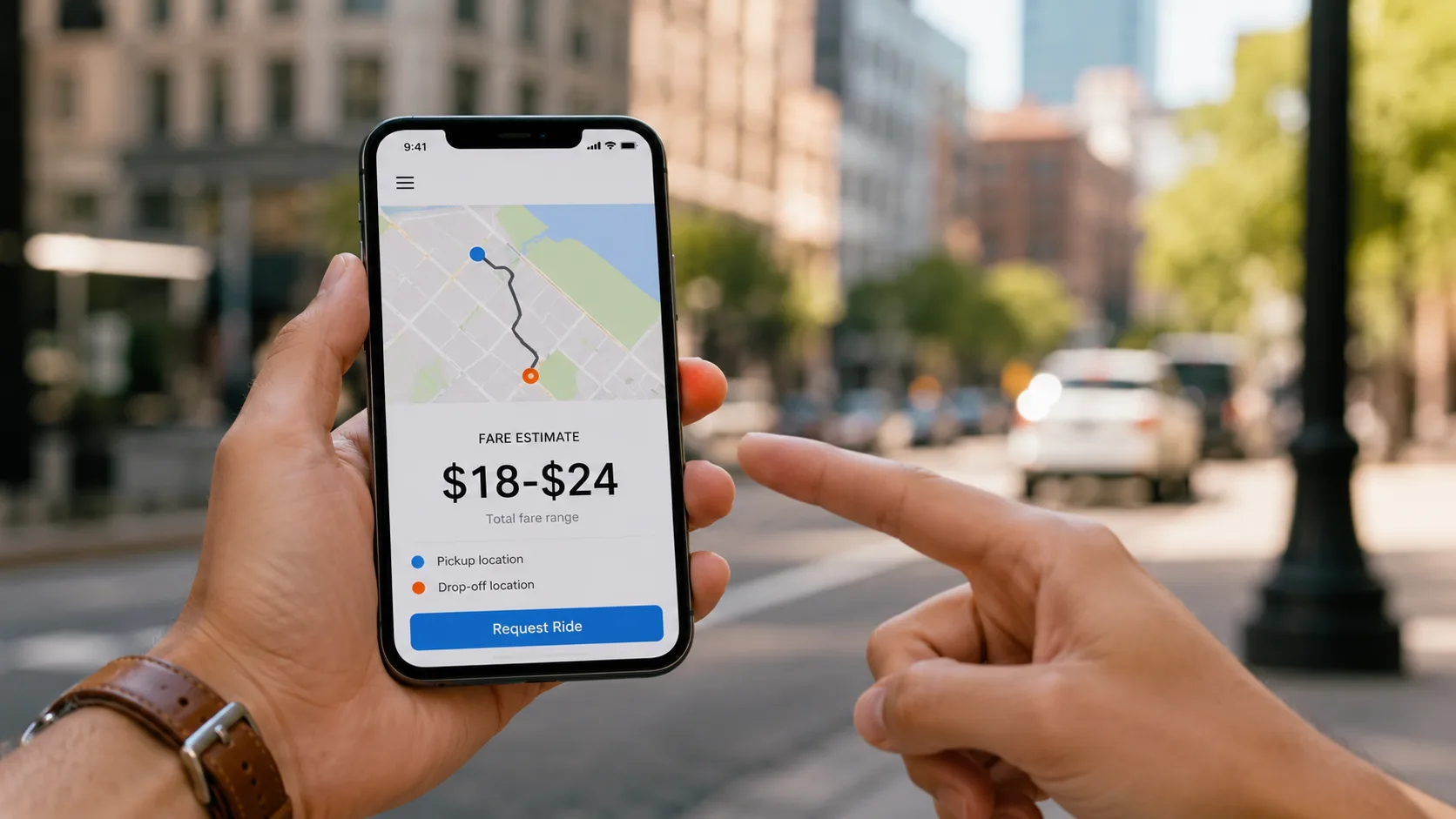
Every UberX estimate is built from the same handful of inputs. The structure is the same everywhere; only the city's rates change.
then add tolls, airport or city surcharges, and tip
Two rules matter. First, surge multiplies only the trip portion (base, distance and time), not the booking fee, tolls or surcharges. Second, if the result is lower than the city's minimum fare, you pay the minimum instead.
Worked example: Chicago UberX, 7 miles, 20 minutes, no surge.
| Line item | Amount |
|---|---|
| Base fare | $1.70 |
| Distance: 7 mi × $1.35 | $9.45 |
| Time: 20 min × $0.28 | $5.60 |
| Booking / service fee (never surged) | $2.30 |
| Estimated fare | $19.05 |
The same ride at a 1.4× surge:
| Line item | Amount |
|---|---|
| Base fare | $1.70 |
| Distance: 7 mi × $1.35 | $9.45 |
| Time: 20 min × $0.28 | $5.60 |
| Surge: trip portion × 1.4 | +$6.70 |
| Booking / service fee (never surged) | $2.30 |
| Estimated fare | $25.75 |
Because real trips vary with traffic and routing, RideWise shows every estimate as a range of plus or minus 12% around that number: $16.76–$21.34 without surge and $22.66–$28.84 at 1.4×. Uber's live upfront price also reacts to real-time demand and route conditions, so use the formula to budget and the app to book.
Want this done for your own trip? The ride cost calculator runs the same formula for Uber, Lyft and taxi side by side, with no login.
What Each Component of Your Uber Fare Actually Is
1. Base fare ($1.10–$2.55)
A flat amount charged the moment the trip starts, regardless of distance. Most cities sit near $1.56; New York is the highest at $2.55.
2. Per-mile rate ($1.05–$1.75)
The biggest variable on most rides. The 31-city average is $1.25 per mile, from $1.05 in San Antonio to $1.75 in New York. It is charged on road distance, not straight-line distance.
3. Per-minute rate ($0.18–$0.35)
Charged for every minute you are in the car, moving or not. This is what makes congested cities expensive: 5 miles in New York costs $18.52–$23.58 at 20 minutes but $24.68–$31.42 if traffic stretches it to 40.
4. Booking / service fee ($2.00–$3.85)
A flat per-ride fee that is never multiplied by surge. On a short trip it can be a third of the total, which is the main reason a 1-mile ride feels overpriced.
5. Minimum fare ($5.40–$8.00)
The floor for any trip. If base + distance + time + booking fee comes in below it, you are charged the minimum. See our minimum fare study for the distance at which each city clears the floor.
6. Surge multiplier
When demand outruns drivers in a small area, the trip portion is multiplied, commonly by 1.2× to 2× and occasionally much higher around events, storms and bar close. Details in the surge section below.
7. Trip-specific extras
Tolls, airport pickup fees, city or state surcharges, wait-time charges and tips are added on top and are not part of the per-mile math. Our airport fee guide and toll guide list them by city.
Uber Price Per Mile by City: Big-Table Rate Card for 30 US Cities
This is the full UberX rate card for 31 US cities, with a ready-made 5-mile and 10-mile estimate for each. Find your city, read across, and you have a usable budget in ten seconds.
| City | Base | Per mile | Per minute | Service fee | Minimum | 5-mile estimate | 10-mile estimate |
|---|---|---|---|---|---|---|---|
| New York, NY | $2.55 | $1.75 | $0.35 | $2.75 | $8.00 | $18.52–$23.58 | $27.76–$35.34 |
| San Francisco, CA | $2.20 | $1.55 | $0.30 | $2.45 | $7.50 | $16.19–$20.61 | $24.33–$30.97 |
| Los Angeles, CA | $1.65 | $1.35 | $0.26 | $2.30 | $6.50 | $13.99–$17.81 | $21.08–$26.82 |
| Chicago, IL | $1.70 | $1.35 | $0.28 | $2.30 | $6.75 | $14.39–$18.31 | $21.56–$27.44 |
| Dallas, TX | $1.35 | $1.10 | $0.20 | $2.10 | $5.75 | $11.40–$14.50 | $17.12–$21.78 |
| Miami, FL | $1.50 | $1.20 | $0.22 | $2.20 | $6.00 | $12.41–$15.79 | $18.66–$23.74 |
| Atlanta, GA | $1.40 | $1.12 | $0.21 | $2.15 | $5.85 | $11.75–$14.95 | $17.60–$22.40 |
| Phoenix, AZ | $1.35 | $1.08 | $0.20 | $2.05 | $5.50 | $11.26–$14.34 | $16.90–$21.50 |
| Houston, TX | $1.30 | $1.18 | $0.20 | $2.10 | $5.70 | $11.70–$14.90 | $17.78–$22.62 |
| Philadelphia, PA | $1.75 | $1.38 | $0.26 | $2.30 | $6.80 | $14.21–$18.09 | $21.43–$27.27 |
| Washington, DC | $1.85 | $1.45 | $0.28 | $2.35 | $7.00 | $15.00–$19.10 | $22.62–$28.78 |
| Boston, MA | $2.00 | $1.48 | $0.30 | $2.40 | $7.25 | $15.66–$19.94 | $23.50–$29.90 |
| Seattle, WA | $1.80 | $1.40 | $0.27 | $2.30 | $7.00 | $14.52–$18.48 | $21.87–$27.83 |
| Denver, CO | $1.45 | $1.15 | $0.22 | $2.15 | $6.00 | $12.10–$15.40 | $18.13–$23.07 |
| San Diego, CA | $1.10 | $1.28 | $0.31 | $3.85 | $7.95 | $15.44–$19.66 | $22.44–$28.56 |
| Minneapolis, MN | $1.48 | $1.18 | $0.23 | $2.12 | $5.95 | $12.41–$15.79 | $18.61–$23.69 |
| Portland, OR | $1.60 | $1.30 | $0.25 | $2.20 | $6.40 | $13.46–$17.14 | $20.28–$25.82 |
| Las Vegas, NV | $1.55 | $1.28 | $0.25 | $2.25 | $6.50 | $13.38–$17.02 | $20.11–$25.59 |
| Detroit, MI | $1.50 | $1.20 | $0.22 | $2.20 | $6.00 | $12.41–$15.79 | $18.66–$23.74 |
| Baltimore, MD | $1.85 | $1.45 | $0.28 | $2.35 | $7.00 | $15.00–$19.10 | $22.62–$28.78 |
| St. Louis, MO | $1.50 | $1.20 | $0.22 | $2.20 | $6.00 | $12.41–$15.79 | $18.66–$23.74 |
| Tampa, FL | $1.35 | $1.10 | $0.20 | $2.08 | $5.65 | $11.38–$14.48 | $17.10–$21.76 |
| Orlando, FL | $1.35 | $1.10 | $0.20 | $2.08 | $5.65 | $11.38–$14.48 | $17.10–$21.76 |
| Charlotte, NC | $1.44 | $1.24 | $0.21 | $2.15 | $6.10 | $12.31–$15.67 | $18.69–$23.79 |
| Nashville, TN | $1.42 | $1.15 | $0.22 | $2.10 | $5.90 | $12.03–$15.31 | $18.06–$22.98 |
| Austin, TX | $1.45 | $1.22 | $0.24 | $2.15 | $6.10 | $12.76–$16.24 | $19.18–$24.42 |
| San Antonio, TX | $1.25 | $1.05 | $0.18 | $2.00 | $5.40 | $10.65–$13.55 | $16.06–$20.44 |
| Columbus, OH | $1.20 | $1.12 | $0.20 | $3.10 | $7.80 | $12.23–$15.57 | $18.04–$22.96 |
| Indianapolis, IN | $1.32 | $1.08 | $0.19 | $2.05 | $5.80 | $11.06–$14.08 | $16.65–$21.19 |
| Pittsburgh, PA | $1.50 | $1.20 | $0.22 | $2.20 | $6.00 | $12.41–$15.79 | $18.66–$23.74 |
| Kansas City, MO | $1.50 | $1.20 | $0.22 | $2.20 | $6.00 | $12.41–$15.79 | $18.66–$23.74 |
Source: RideWise regional rate card, September 2026. Some cities share a regional rate. See the methodology or download the raw rate inputs (CSV).
What Uber really costs per mile, all-in
Divide the whole fare by the miles driven and the picture changes. Fixed fees are spread over more miles on longer trips, so the effective per-mile cost falls fast:
| City | Listed per-mile rate | 2 mi / 8 min | 5 mi / 20 min | 10 mi / 25 min | 20 mi / 40 min |
|---|---|---|---|---|---|
| New York | $1.75 | $5.80/mi | $4.21/mi | $3.16/mi | $2.71/mi |
| San Francisco | $1.55 | $5.08/mi | $3.68/mi | $2.76/mi | $2.38/mi |
| Los Angeles | $1.35 | $4.37/mi | $3.18/mi | $2.40/mi | $2.07/mi |
| Chicago | $1.35 | $4.47/mi | $3.27/mi | $2.45/mi | $2.11/mi |
| Atlanta | $1.12 | $3.74/mi | $2.67/mi | $2.00/mi | $1.72/mi |
The takeaway: for a quick budget, figure roughly $3–$5 per mile for short city hops and $2–$3 per mile for airport-length trips, then add tolls and tip. For more distances, see how much a 10-mile Uber costs and Uber cost by trip length.
Quick Uber fare estimator
Estimate a non-surge fare from the 2026 rate card. This is an estimate, not a live quote — your in-app upfront price is the price you pay.
| Service | Estimated fare |
|---|---|
| Uber (UberX) | $16.98–$21.62 |
| LyftCheapest | $16.55–$21.06 |
| Taxi | $18.48–$23.52 |
Taxi shown at metered rates (no booking fee, surge not applied). Tip not included. For a city-by-city comparison with live routes, use the RideWise rate comparison tool.
Uber Ride Type Comparison: Prices for the Same Trip
The same New York trip (5 miles, 20 minutes, no surge) priced on each Uber tier:
| Ride type | Estimated fare |
|---|---|
| UberX | $18.52–$23.58 |
| Uber Comfort | $23.19–$29.51 |
| UberXL | $27.15–$34.55 |
| Uber Black | $34.10–$43.40 |
As a rule of thumb, Comfort runs about 20–30% above UberX, UberXL about 50–70% above, and Uber Black two to three times the UberX price. What each tier gets you: Uber ride types explained, the Comfort car list, the UberXL car list and the Uber Black car list. Travelling with bags? Check the UberXL luggage guide before you pay for the bigger car.
Estimate Your Uber Fare in 3 Steps (Worked Example)
- Get the driving distance. Drop both pins in Google or Apple Maps and read the road miles, not the straight-line distance.
- Get the drive time for when you will actually travel. Maps shows a typical range for a future departure; if unsure, use the high end, because you pay per minute.
- Apply your city's row from the table, or skip the arithmetic and type the three numbers into the calculator.
Example: Manhattan to JFK, 17 miles, 45 minutes.
| Line item | Amount |
|---|---|
| Base fare | $2.55 |
| Distance: 17 mi × $1.75 | $29.75 |
| Time: 45 min × $0.35 | $15.75 |
| Booking / service fee (never surged) | $2.75 |
| Estimated fare | $50.80 |
That gives a planning range of $44.70–$56.90 before tolls, the airport fee, New York's congestion surcharges and tip. For comparison, a yellow cab on the same run is a $70 flat fare plus surcharges, tolls and tip, so at rush hour the taxi is often the better deal. Full breakdown in our JFK guide.
Uber Cost Per Mile in 30 Cities: Cheapest to Most Expensive Leaderboard
All 31 cities ranked by UberX per-mile rate. The cheapest Uber markets are in Texas, the Southeast and the Mountain West; the most expensive are the dense coastal metros, where per-minute rates are also highest.
| Rank | City | Per mile | Per minute |
|---|---|---|---|
| 1 | San Antonio | $1.05 | $0.18 |
| 2 | Indianapolis | $1.08 | $0.19 |
| 3 | Phoenix | $1.08 | $0.20 |
| 4 | Dallas | $1.10 | $0.20 |
| 5 | Orlando | $1.10 | $0.20 |
| 6 | Tampa | $1.10 | $0.20 |
| 7 | Atlanta | $1.12 | $0.21 |
| 8 | Columbus | $1.12 | $0.20 |
| 9 | Denver | $1.15 | $0.22 |
| 10 | Nashville | $1.15 | $0.22 |
| 11 | Houston | $1.18 | $0.20 |
| 12 | Minneapolis | $1.18 | $0.23 |
| 13 | Detroit | $1.20 | $0.22 |
| 14 | Kansas City | $1.20 | $0.22 |
| 15 | Miami | $1.20 | $0.22 |
| 16 | Pittsburgh | $1.20 | $0.22 |
| 17 | St. Louis | $1.20 | $0.22 |
| 18 | Austin | $1.22 | $0.24 |
| 19 | Charlotte | $1.24 | $0.21 |
| 20 | Las Vegas | $1.28 | $0.25 |
| 21 | San Diego | $1.28 | $0.31 |
| 22 | Portland | $1.30 | $0.25 |
| 23 | Chicago | $1.35 | $0.28 |
| 24 | Los Angeles | $1.35 | $0.26 |
| 25 | Philadelphia | $1.38 | $0.26 |
| 26 | Seattle | $1.40 | $0.27 |
| 27 | Baltimore | $1.45 | $0.28 |
| 28 | Washington | $1.45 | $0.28 |
| 29 | Boston | $1.48 | $0.30 |
| 30 | San Francisco | $1.55 | $0.30 |
| 31 | New York | $1.75 | $0.35 |
Ranking by per-mile rate alone slightly understates the gap: New York is 67% more expensive per mile than San Antonio, but its 5-mile fare ($18.52–$23.58 vs $10.65–$13.55) is further apart because the base fare, time rate and booking fee are all higher too. Why rates keep rising: why is Uber so expensive. City-by-city detail: Uber rates by city.
Why Your Upfront Price Sometimes Differs From Your Final Charge
Uber's upfront price is what you pay in most cases. It changes in five situations:
- You change the destination. The fare is recalculated for the new trip.
- You add a stop mid-ride. Stops added before you request are already in the quote; stops added later are not.
- The driver waits. Per-minute wait charges start after a short grace period at pickup (two minutes on UberX).
- Tolls. Tolls on the route actually driven are passed through. See how Uber charges for tolls.
- Tip. Never included in the upfront price.
Cancelling is separate from the fare: it is free within the first two minutes after a driver accepts, and a fee can apply after that. Steps and exceptions are in our Uber cancellation guide. A pending card authorization that is higher than your fare is a temporary hold, not a second charge.
Uber Fare vs Lyft vs Taxi: 5 Routes Across 5 Cities
Per-mile rates only matter relative to the alternatives. Here are five common airport runs priced on all three, using the same distance and time for each:
| Route | Trip | UberX | Lyft | Taxi |
|---|---|---|---|---|
| Times Square → JFK | 25 mi / 60 min | $61.64–$78.46 | $59.22–$75.38 | $70.00 flat base |
| Downtown LA → LAX | 20 mi / 45 min | $37.53–$47.77 | $35.77–$45.53 | $63.10–$80.30 meter model |
| Mission District → SFO | 14 mi / 35 min | $32.43–$41.27 | $31.06–$39.54 | $47.74–$60.76 meter model |
| Loop → ORD | 20 mi / 45 min | $38.37–$48.83 | $36.65–$46.65 | $51.26–$65.24 meter model |
| Downtown Atlanta → ATL | 12 mi / 25 min | $19.57–$24.91 | $18.68–$23.78 | $32.38–$41.22 meter model |
Lyft usually lands within a few percent of UberX, close enough that the cheaper app flips from hour to hour with surge. Taxis lose on most routes but win where a flat airport fare applies (JFK to Manhattan is the classic case) and whenever rideshare is surging, because meters do not surge. Check your own route in the Uber vs Lyft vs taxi comparison tool.
- JFK: the $70 taxi flat fare beats a surging Uber.
- LAX: rideshare pickup is at LAX-it, a shuttle ride from the terminal; taxis pick up there too.
- SFO: UberX and Lyft pick up in the domestic garage; BART is the budget option.
- ORD: the Blue Line is a fraction of any car fare if you are headed to the Loop.
- ATL: MARTA runs from inside the terminal to Downtown and Midtown.
More on the head-to-head: Uber vs Lyft: which is cheaper, the three-way taxi comparison, how much Lyft costs, or get a Lyft price estimate directly.
5 Hidden Fees That Inflate Your Uber Estimate
- The booking fee. $2.00–$3.85 on every ride, and the piece people forget when they multiply miles by the per-mile rate.
- Airport pickup fees. Most major airports add a few dollars per trip, passed straight to the rider. City-by-city list in the airport fee guide.
- City and state surcharges. New York's congestion charges and Chicago's downtown zone fee are the biggest; smaller per-trip fees apply in several states.
- Tolls. Bridges, tunnels and express lanes are passed through, sometimes including the driver's return toll.
- Wait time and tip. Wait charges start after the grace period at pickup, and a 15–20% tip adds $3–$10 to a typical ride.
The complete list with amounts: Uber fees explained.
How Surge Pricing Affects Your Uber Estimate
Surge multiplies the trip portion of the fare (not the booking fee). Here is the Chicago 7-mile, 20-minute ride at each level:
| Surge level | Estimated fare |
|---|---|
| No surge (1.0×) | $16.76–$21.34 |
| 1.25× | $20.45–$26.03 |
| 1.5× | $24.13–$30.72 |
| 2× | $31.50–$40.10 |
| 3× | $46.24–$58.86 |
Surge is local and short-lived. It peaks at weekday rush hours, Friday and Saturday nights around bar close, during rain and snow, and when a stadium or concert lets out. Waiting 10–15 minutes, walking a few blocks out of the hot zone, or checking Lyft often knocks the multiplier down. Hour-by-hour patterns are in the cheapest time to book an Uber or Lyft, and tactics in how to avoid surge pricing.
6 Ways to Lower Your Uber Fare
- Compare Uber and Lyft every time. The cheaper app changes by the hour; it takes 30 seconds.
- Shift your departure 15 minutes when surge is active.
- Move your pin a block or two out of a surge zone or away from a one-way loop that adds distance.
- Size the car once. One UberXL is nearly always cheaper than two UberX rides.
- Use the flat-rate taxi or train on airport routes where one exists.
- Do the membership math. Uber One pays for itself only above a certain monthly spend; see is Uber One worth it and the Uber One vs Lyft Pink break-even.
Uber vs Other Apps: Same NYC FiDi-to-JFK Route, Side-by-Side
One route, every option: Financial District to JFK, 20 miles and 50 minutes, no surge.
| Service | Estimated fare | Notes |
|---|---|---|
| UberX | $50.86–$64.74 | Regional model; availability requires an app check |
| Uber Comfort | $63.45–$80.75 | Regional model; availability requires an app check |
| UberXL | $77.97–$99.23 | Regional model; availability requires an app check |
| Uber Black | $100.76–$128.24 | Regional model; availability requires an app check |
| Lyft Standard | $48.88–$62.22 | Regional model; availability requires an app check |
| NYC yellow taxi | $70.00 flat base | JFK–Manhattan tariff; surcharges, tolls and tips are extra |
UberX and Lyft are effectively tied, the yellow cab's flat fare undercuts both in heavy traffic, and Uber Black costs roughly double. Run the same comparison for your own trip with the calculator.
Uber Fare Calculator FAQs
How much does Uber charge per mile?
$1.05–$1.75 per mile for UberX in 2026, averaging $1.25 across 31 US cities, plus $0.18–$0.35 per minute, a base fare and a booking fee.
How much is a 30-minute Uber?
It depends on the distance covered. A 12-mile, 30-minute UberX models at $32.38–$41.22 in New York, $24.60–$31.30 in Los Angeles and $20.50–$26.08 in Atlanta, before surge and extras. More durations in Uber cost by trip length.
How much is an Uber for 1 mile?
Usually the minimum fare, $5.40–$8.00 depending on the city, because base plus booking fee plus one mile rarely clears the floor.
Is Uber cheaper than a taxi per mile?
Usually, outside of surge. Taxi meters charge more per mile in most cities but never surge, so a cab wins at peak times and on flat-rate airport routes. See taxi rates for 18 cities.
Can I get an Uber estimate without logging in?
Yes. The RideWise calculator needs only a city, distance and drive time, no account. Open Uber afterwards for the live upfront price.
How to Get the Lowest Uber Fare in 2026
Budget with the numbers: $1.05–$1.75 per mile, $0.18–$0.35 per minute, and about $3.85 in fixed fees before you move an inch. That is $10.65–$23.58 for a typical 5-mile ride and $16.06–$35.34 for 10 miles. Then compare Uber, Lyft and a taxi for your exact trip in the ride cost calculator before you open either app.
Read Next
Frequently Asked Questions
How much does an Uber cost per mile in 2026?
UberX costs $1.05–$1.75 per mile across the 31 US cities in the RideWise rate card, averaging $1.25 per mile. San Antonio is the cheapest at $1.05 and New York the most expensive at $1.75. On top of mileage you pay $0.18–$0.35 per minute, a $1.10–$2.55 base fare and a $2.00–$3.85 booking fee, so the effective all-in cost of a 5-mile ride is closer to $3–$5 per mile.
How much is a 5-mile or 10-mile Uber ride?
A 5-mile, 20-minute UberX costs $10.65–$23.58 depending on the city, and a 10-mile, 25-minute ride costs $16.06–$35.34, before surge, tolls, airport fees and tip. In New York the 5-mile ride models at $18.52–$23.58; in Atlanta it is $11.75–$14.95.
How do I estimate my Uber fare before booking?
Use the formula base fare + (miles × per-mile rate) + (minutes × per-minute rate) + booking fee, then multiply the trip portion by any surge. Or enter your city, distance and drive time into the RideWise fare calculator, which runs the same math for Uber, Lyft and taxi without logging in. Open the Uber app for the final upfront quote.
Does Uber charge by distance or time?
Both. Every UberX fare has a per-mile charge ($1.05–$1.75) and a per-minute charge ($0.18–$0.35) that runs the whole time you are in the car, including at red lights. That is why the same 5 miles costs more in rush-hour traffic than late at night.
What is the minimum Uber fare?
UberX minimum fares run $5.40–$8.00 in the cities we track. Any trip whose calculated price is below the minimum is charged the minimum, which is why a 1-mile ride rarely costs less than about $7–$9.
Does the RideWise calculator show live Uber surge pricing?
No. The calculator uses published-style regional rate inputs and a surge multiplier you choose yourself. It does not pull live quotes or detect current demand, so treat it as a budget range and confirm the upfront price in the app.
Why is my final Uber charge different from the estimate?
The upfront price changes if you edit the destination, add a stop, keep the driver waiting past the grace period, or the route incurs tolls that were not in the original quote. Tips are always added after the ride and are never part of the estimate.
Ready to start saving?
Compare Uber, Lyft, and taxi prices side-by-side in seconds. Free, no sign-up required.
Compare Prices Now