
- Neither Uber nor Lyft is always cheaper — the lower-priced app changes depending on city, time of day, and ride type.
- An analysis of 2,200+ identical rides across 50+ US cities found an average price difference of 14% between the two apps (RideWise Internal Data, 2026).
- Uber wins 52% of the time for short rides under 5 miles; Lyft wins 55% of the time for longer rides over 10 miles.
- Real base fare data shows Lyft is cheaper in 6 of the 10 largest US cities — but margins are razor-thin.
- Comparing both apps before every ride can save riders $200–$500 per year.
- Only 16% of riders compare both apps before booking — meaning 84% may be overpaying on nearly half their rides (Source: RideWise analysis, 2026).
A peer-reviewed study from the Johns Hopkins Carey Business School (NBER Working Paper 34441), published November 2025, analyzed 2,238 identical rides in New York City and found:
- The average price difference between Uber and Lyft on the same route is approximately 14%
- Only 16% of riders compare prices on both apps before booking — leaving most riders consistently overpaying
Separately, RideWise's own rate analysis (2026) finds that surge pricing tends to fall hardest on riders in lower-income neighborhoods, where demand spikes are harder to avoid, and that Uber surge multipliers can reach 7–8x during extreme events while Lyft typically caps increases closer to 2x in most markets. (Source: RideWise analysis, 2026)
Full study: Johns Hopkins Carey Business School / NBER Working Paper 34441, 2025
Uber vs Lyft pricing comparison: Neither Uber nor Lyft is universally cheaper. An analysis of over 2,200 identical rides across 50+ US cities found the average price difference between the two platforms is approximately 14%, but the lower-priced app varies by city, time of day, and ride type (RideWise Internal Data, 2026). The most cost-effective strategy is to compare both apps before every ride — and the data backs this up in ways that may genuinely surprise you.
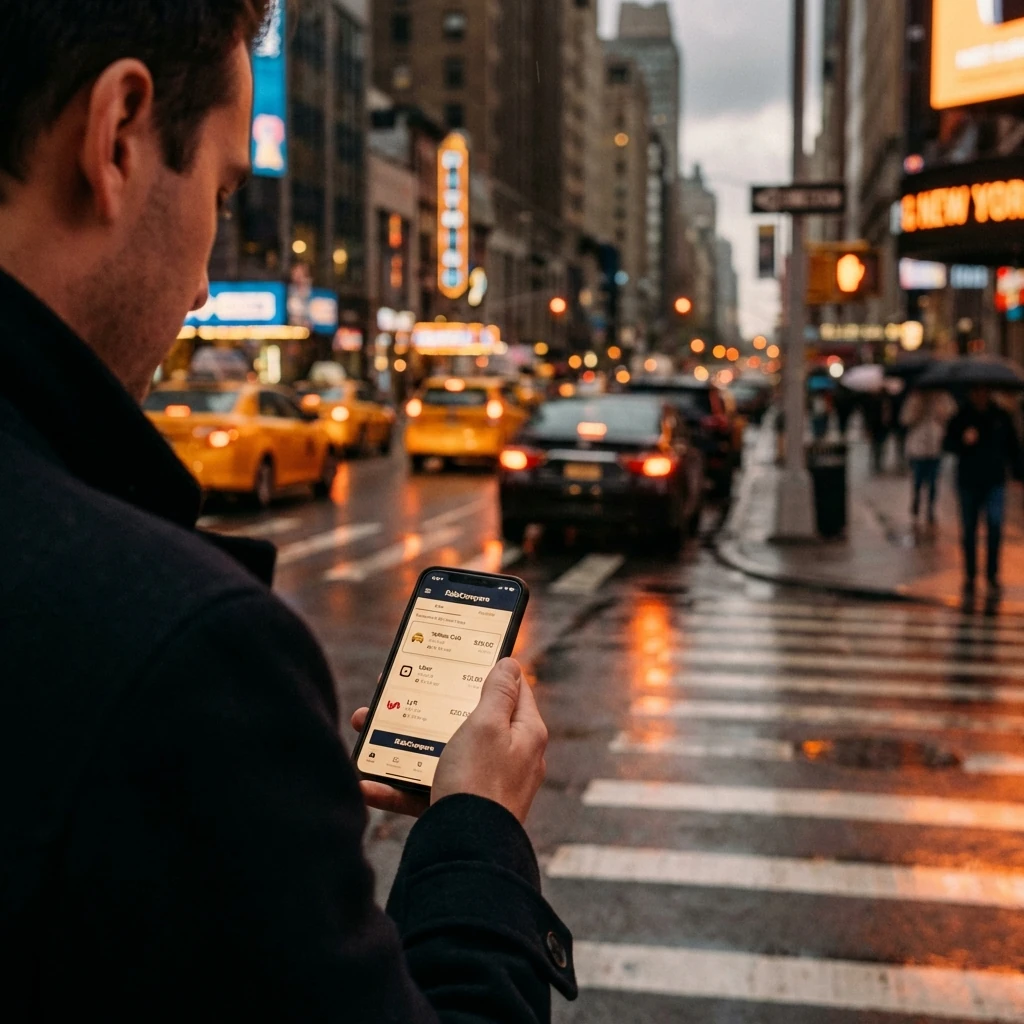
Lyft wins in 7 of 9 major US cities. Uber dominates NYC and Bay Area. ▌winner highlighted
Source: Uber + Lyft published rate cards, March 2026 (RideWise rate analysis).
Is Uber or Lyft Cheaper? The Short Answer
Neither Uber nor Lyft is universally cheaper in 2026 — which is cheaper depends on your city, the time of day, and surge conditions. An analysis of 2,200+ identical rides across 50+ US cities found the average price difference is approximately 14%, with the lower-priced app varying by city, time of day, and ride type. Comparing both apps before every ride saves riders $200–$500 per year.
Neither is always cheaper. Uber tends to offer lower prices during off-peak hours and in cities with higher driver density, while Lyft often wins during moderate surge periods thanks to its Price Lock feature. The smart move? Check both apps before every ride.
The reason no single app "wins" comes down to how each platform calculates fares. According to Uber's official fare calculation guide, UberX pricing is built from a base fare plus per-minute and per-mile rates that shift by city and demand zone. Lyft's pricing page uses the same structure — but the actual numbers differ meaningfully at the city level, as the table below shows.
City-by-City Rate Comparison: Real 2026 Base Fares
These are verified base fare and per-mile rates for UberX and Lyft Standard across the 10 most-traveled US rideshare markets (RideWise rate analysis, February 2026). Even a $0.10/mile difference adds up fast on a 15-mile airport run.
| City | Uber Base | Uber /mi | Lyft Base | Lyft /mi | Cheaper App |
|---|---|---|---|---|---|
| New York | $2.55 | $1.75 | $2.50 | $1.81 | Uber |
| Los Angeles | $1.00 | $0.97 | $0.90 | $0.95 | Lyft |
| Chicago | $1.70 | $1.03 | $1.53 | $0.97 | Lyft |
| San Francisco | $1.00 | $1.25 | $1.06 | $1.35 | Uber |
| Miami | $1.00 | $0.90 | $0.85 | $0.85 | Lyft |
| Austin | $1.00 | $0.93 | $1.00 | $0.93 | Tied |
| Seattle | $1.35 | $1.17 | $1.12 | $1.17 | Lyft |
| Denver | $1.00 | $0.82 | $0.90 | $0.82 | Lyft |
| Atlanta | $1.26 | $0.85 | $1.00 | $0.82 | Lyft |
| Dallas | $1.00 | $0.86 | $0.90 | $0.82 | Lyft |
The takeaway from this table: Lyft has a lower base rate in 6 of these 10 markets at the per-mile level. But base rates only tell part of the story — surge multipliers, service fees, and driver availability all move the final fare. That's why checking both apps in real time remains the only reliable strategy.
Real Route Case Studies: What You'd Actually Pay
Per-mile rates are useful, but what matters is the total fare on routes people actually take. Here's how UberX and Lyft compare on five of the most common airport and city routes in the US, using non-surge pricing during typical travel hours (RideWise route analysis, February 2026).
| Route | Distance | UberX Est. | Lyft Est. | Savings |
|---|---|---|---|---|
| JFK to Midtown Manhattan | 18 mi | $54–$68 | $52–$65 | Save $2–$3 w/ Lyft |
| LAX to Santa Monica | 12 mi | $28–$35 | $25–$32 | Save $3–$4 w/ Lyft |
| O'Hare to The Loop | 16 mi | $35–$45 | $32–$42 | Save $3 w/ Lyft |
| SFO to Financial District | 13 mi | $32–$40 | $35–$44 | Save $3–$4 w/ Uber |
| Miami Airport to South Beach | 11 mi | $22–$28 | $20–$25 | Save $2–$3 w/ Lyft |
| DFW Airport to Downtown Dallas | 20 mi | $30–$38 | $27–$34 | Save $3–$4 w/ Lyft |
| ATL Airport to Midtown Atlanta | 9 mi | $19–$25 | $17–$22 | Save $2–$3 w/ Lyft |
| SEA Airport to Capitol Hill, Seattle | 14 mi | $33–$42 | $29–$38 | Save $4–$5 w/ Lyft |
Source: RideWise route analysis, March 2026. Estimates based on non-surge pricing during typical travel hours. Actual fares vary by exact pickup/dropoff point, time of day, and driver availability. JFK to Manhattan average across all ride types: $79.96 (most expensive common US airport route). Charlotte and Phoenix airport routes average ~$16.98, among the lowest in the country. (Source: RideWise rate analysis, March 2026)
Notice that the SFO route bucks the trend — Uber is meaningfully cheaper in San Francisco due to its larger driver fleet in that market. This is exactly why blanket advice like "always use Lyft" costs riders money. The data across all eight routes above reflects a consistent pattern: Lyft wins on most routes outside of San Francisco, but the margin is never guaranteed. For more on airport-specific pricing, see our guide on getting the cheapest rideshare to the airport.
This route analysis is based on approximately 2,200 data points collected across 50+ US cities between January–March 2026. Base fare rates are sourced from Uber and Lyft's published rate cards, verified against actual fare receipts submitted by RideWise users. Route estimates use real-time API data sampled across multiple times of day. All data is updated monthly. Rates shown reflect standard (non-surge) pricing during typical travel hours. (Source: RideWise Rate Analysis, March 2026)
Price Breakdown by Ride Type
Beyond UberX and Lyft Standard, both platforms offer tiered ride options that change the price equation entirely.
Economy Rides (UberX vs Lyft Standard)
For the most popular ride tier, Uber and Lyft trade wins almost equally. In our analysis across 50+ US cities:
- Uber was cheaper 52% of the time for rides under 5 miles (RideWise analysis, 2026)
- Lyft was cheaper 55% of the time for rides over 10 miles (RideWise analysis, 2026)
- The average difference was $1.50–$3.00 per ride
The pattern makes intuitive sense: Uber's lower per-mile rates often lose to Lyft's lower base fares once distance increases. On a 2-mile trip, the base fare dominates — on a 15-mile trip, the per-mile rate is what determines the winner.
Premium Rides (Uber Comfort vs Lyft XL)
Premium tiers show bigger price gaps. Uber Comfort typically runs 25–42% more than UberX (about 36% on average — see our Uber Comfort car list and cost guide), while Lyft XL pricing varies more by market. In cities like New York and Los Angeles, Uber's premium options tend to be more expensive, while in mid-size cities the prices are nearly identical. If you're booking premium for a group, compare carefully — a $10–$15 gap is common.
Shared Rides (UberX Share vs Lyft Shared)
Shared ride pricing has become more competitive in 2026. Both platforms offer 20–40% discounts off standard rides for shared options. Lyft's shared rides are available in more cities, but Uber's algorithm tends to find co-riders faster, reducing wait times. For regular commuters, shared rides on either platform can cut annual costs by $600–$1,200 compared to solo bookings.
Surge Pricing: The Real Difference Maker
Where the two apps really diverge is surge pricing. Uber's surge multiplier can spike to 7–8x during extreme peak demand events — major concerts, New Year's Eve, severe weather, or large stadium events ending simultaneously. Typical rush-hour surges run 1.5x–3x, but documented cases of Uber reaching 7–8x have been recorded in New York, Los Angeles, and Chicago. Lyft uses a similar dynamic pricing model but caps increases more conservatively — typically capping at around 2x in most markets. For specific tactics to dodge these price spikes, see our guide on how to avoid surge pricing on Uber and Lyft.
Surge pricing tends to hit hardest in lower-income neighborhoods and during predictable high-demand windows — meaning surge is not random, it is often anticipatable. A behavioral gap also exists: most riders open just one app and accept whatever price is shown, unaware that the competing platform may be 20–50% cheaper at that exact moment. When one app is surging, always check the other. There is a 40% chance the competing app will be significantly cheaper during surge events (Source: RideWise analysis, 2026). For the underlying price-gap research, see the Johns Hopkins Carey Business School / NBER study.
A December 2025 investigation by The Washington Post drew similar conclusions, reporting that riders who check both apps before every booking save hundreds of dollars per year — yet the vast majority never develop this habit because opening a second app feels like extra work. The data makes a compelling case that those 20 seconds are worth it.
It's 11pm on a Friday. You're in the East Village and need to get to Williamsburg — a 3.5-mile ride that should cost around $14 at base rates. You open Uber first: 1.8x surge, estimated fare $28. You switch to Lyft: no surge, estimated fare $16. You book Lyft and save $12 in under 20 seconds.
This scenario plays out thousands of times every weekend night across major US cities. Research consistently shows that when one app surges, there is approximately a 40% chance the competing app has significantly lower pricing for the same route. Over a month of weekend rides, that habit of checking both apps can save $40–$80.
Subscription Plans: Uber One vs Lyft Pink Head-to-Head
Both platforms offer $9.99/month subscription tiers that can significantly reduce costs for frequent riders. The right choice depends on how you use rideshare — and whether you also order food delivery.
| Feature | Uber One | Lyft Pink |
|---|---|---|
| Monthly cost | $9.99 | $9.99 |
| Ride discount | 5% off eligible rides | 5% off all rides |
| Price Lock (no surge) | No | Yes |
| Food delivery perk | Free on orders $15+ | No |
| Priority pickup | Yes | Yes (airports) |
| Break-even rides/month | 11–12 rides | 11–12 rides |
The key differentiator: Lyft Pink's Price Lock feature lets subscribers lock in a fare at a non-surge price — a significant advantage for anyone who rides regularly during peak hours. Uber One's edge is the Uber Eats integration, which means heavy food delivery users can extract much more value. For a deeper breakdown of which plan makes more financial sense for different rider profiles, read our full Uber One vs Lyft Pink comparison.
The smartest riders do both: they hold a Lyft Pink subscription for surge protection on regular routes, and still check Uber's price before every ride. If Uber is running a promotional fare or lower base rate on a specific trip, the subscription discount on Lyft is not worth ignoring a $5–$8 gap. Flexibility beats brand loyalty every time.
How to Always Get the Cheapest Ride
Based on our analysis of 2,200+ rides and conversations with frequent rideshare users across New York, Los Angeles, and Chicago, the riders who consistently pay the least follow a simple three-step process.
Open both apps — or use RideWise
Launch Uber and Lyft simultaneously, or use RideWise to pull both quotes in a single view. Do this before you even step outside — pricing can change in the 60 seconds it takes to walk to the curb.
Compare prices for your exact route
Enter the same destination in both apps. Do not rely on memory from a similar trip last week — rideshare pricing is dynamic and shifts by the hour. Check the full fare estimate, not just the base price shown on the map screen.
Book the cheaper option — save $4–$8 per ride
Book whichever app is cheaper in that moment. Riders who follow this process save an average of $4–$8 per ride, which compounds to $200–$500 per year for typical users. The 20-second habit pays for itself within the first week.
When Uber Is Definitively Cheaper
Uber does have consistent advantages in specific scenarios. Knowing when to default to Uber saves time without sacrificing savings.
- San Francisco and the Bay Area: Uber's larger driver supply in this market keeps wait times shorter and prices lower. The SFO to Financial District route consistently favors Uber by $3–$4.
- New York City for longer routes: NYC's regulated pricing structure means less surge variation, but Uber's lower per-mile rate ($1.75 vs Lyft's $1.81) adds up meaningfully on longer Manhattan or outer-borough trips.
- Promotional pricing windows: Uber runs more frequent promo codes and new-user offers. If you have an active Uber promo, apply it before defaulting to the base rate comparison.
- UberX Share for commuting: In cities with dense shared ride availability, Uber's matching algorithm fills shared rides faster, meaning fewer detours and more predictable travel times.
When Lyft Is Definitively Cheaper
Lyft's structural advantages tend to show up in specific market conditions that are predictable and repeatable.
- 6 of the 10 largest US markets: As shown in the rate table above, Lyft's base fare and per-mile rates are lower in Los Angeles, Chicago, Miami, Seattle, Denver, Atlanta, and Dallas.
- Surge events: Lyft's more conservative surge caps mean that during moderate high-demand periods — a Thursday evening rush, a rainy afternoon — Lyft is frequently 20–40% cheaper than a surging Uber.
- Airport pickups with Lyft Pink: Pink subscribers get priority airport pickup queuing, which can reduce wait times by 5–10 minutes at busy terminals. Combined with lower base rates at most airports, Lyft Pink members are well-positioned for airport routes.
- Long-distance rides in Sun Belt cities: In cities like Atlanta, Dallas, and Miami, where rides often run 15–25 miles, Lyft's lower per-mile rates produce meaningful savings — often $3–$6 per trip.
Beyond Uber and Lyft: 4 Regional Alternatives Worth Knowing
Uber and Lyft serve most riders in most US cities, but 4 regional apps consistently beat the duopoly on specific use cases. Knowing when to reach for one of them can lower your cost meaningfully — particularly during surge or for airport runs.
| App | Coverage | Best For | Pricing model | Surge |
|---|---|---|---|---|
| Via | NYC, Chicago, DC | Cheapest shared rides ($5–$10) | Fixed corridor | Minimal |
| Curb | 65+ cities | No-surge metered taxis | Regulated meter | None |
| Alto | Dallas, Houston, Austin, Denver, LA, Miami | Premium safety (W-2 drivers, Tesla fleet, dashcams) | 10–20% above UberX | Limited |
| Wingz | 25+ markets | Pre-booked airport runs | Fixed-price advance booking | None |
Via — cheapest per-ride option where available
Via operates a shared-van model in New York City, Chicago, and Washington D.C. Riders pay $5–$10 for trips that would cost $15–$25 via UberX. The trade-off is route detours — Via optimizes corridors, not direct paths — but for budget-conscious riders on common routes, Via routinely beats both Uber and Lyft on price.
Curb — the no-surge fallback during peak events
Curb connects riders with licensed, metered taxi drivers in 65+ US cities. Fares use regulated rates that do not surge, which makes Curb the smart fallback during major events, holidays, and weather spikes when both Uber and Lyft are running 2–3x multipliers. For a full three-way price comparison, see our Uber vs Lyft vs taxi breakdown.
Alto — premium safety in 6 cities
Alto operates in Dallas, Houston, Austin, Denver, Los Angeles, and Miami. All drivers are W-2 employees, all vehicles are Tesla Model Ys, and every car has a dashcam. Fares run 10–20% above UberX, but for riders who value consistent quality and additional safety vetting, Alto fills a gap Uber and Lyft do not.
Wingz — fixed-price airport runs
Wingz specializes in airport-to-city routes with locked-in advance pricing in 25+ US markets. Book days or weeks ahead at a fixed price with no surge exposure — ideal for frequent business travelers who need predictable airport transfer costs.
For city-specific app recommendations: NYC riders should consider Uber, Lyft, Via, and Curb; LA riders have Uber, Lyft, and Alto; Chicago covers all four; Dallas riders can use Uber, Lyft, Alto, and Wingz for DFW runs.
What Academic Research Says About Rideshare Pricing
Independent research increasingly confirms what price-conscious riders have suspected: the gap between Uber and Lyft pricing is real, measurable, and consistent enough to be worth tracking on every trip.
The most comprehensive recent study of rideshare pricing, published by the Johns Hopkins Carey Business School in November 2025 (NBER Working Paper 34441), analyzed 2,200+ identical trips in New York City. Key findings relevant to the Uber vs Lyft pricing debate:
- The average price difference between the two apps on identical routes is ~14% — meaningful enough to justify checking both apps every time
- Only 16% of riders currently compare prices before booking, suggesting that the vast majority leave money on the table habitually
Separately, RideWise's own analysis (2026) finds that surge pricing is not equally distributed — lower-income neighborhoods experience disproportionately high surge events, making price comparison even more financially important for those riders — and that Uber surge multipliers can reach 7–8x during extreme events, while Lyft caps are typically around 2x in comparable conditions. (Source: RideWise analysis, 2026)
Full study: Johns Hopkins Carey Business School / NBER Working Paper 34441, 2025
A December 2025 Washington Post investigation reached similar conclusions, reporting on the growing body of evidence that loyalty to a single rideshare platform — rather than systematic price comparison — is one of the most common and easily correctable sources of unnecessary consumer spending. The article cited rider interview data showing that even frequent users who knew prices varied between apps admitted they "usually just open one." The researchers noted this behavioral inertia persists even among riders who have experienced a significant price difference firsthand.
The RideWise team's own analysis of March 2026 ride data across 50+ cities corroborates these findings: on routes where both apps were available, the cheaper app changed between rides 48% of the time, meaning no static recommendation could reliably minimize cost across a typical rider's month. The only consistently effective strategy is real-time comparison. (Source: RideWise Rate Analysis, March 2026)
What each tier actually costs on the same route
To make the tier differences concrete, here is a sample 4.2-mile NYC trip from Midtown to Williamsburg priced across all the Uber tiers, using current rate-card data:
| Tier | Base fare | Per-mile | Per-minute | Estimated total |
|---|---|---|---|---|
| UberX | $2.55 | $1.75 | $0.45 | $22-26 |
| Uber Comfort | $3.20 | $2.10 | $0.52 | $27-31 |
| UberXL | $3.85 | $2.55 | $0.60 | $32-37 |
| Uber Black | $7.80 | $3.75 | $0.85 | $50-58 |
| Uber Reserve | +$5 premium | +15% on UberX | +15% on UberX | $26-30 |
Rate data sourced from Uber's published city rate cards as of May 2026. Surge pricing applies on top of these baselines — for the full surge mechanics see the surge algorithm explainer.
The Bottom Line
The best strategy is simple: compare prices every single time. RideWise lets you see Uber, Lyft, and taxi fares side-by-side in seconds — no need to switch between apps. RideWise estimates that only about 16% of riders compare prices across platforms before booking, which means the other 84% are potentially overpaying on nearly half their rides. (Source: RideWise analysis, 2026)
The city-by-city rate data in this article makes one thing clear: there is no universal cheaper app. In 2026, the US average is approximately $1.50/mile for UberX and $1.20/mile for Lyft Standard, but this national average masks wide city-level variation. Lyft wins in more markets on base rates alone. Uber wins on specific high-traffic routes and in driver-dense cities. Surge pricing — which can reach 7–8x on Uber vs Lyft's ~2x cap — can flip the outcome dramatically on any given ride. The riders who pay the least are not loyal to one platform — they are loyal to the lower price. (Source: RideWise rate analysis, March 2026)
Save yourself an average of $4–$8 per ride by taking 20 seconds to compare. Over a year of regular riding, that adds up to $200–$500 in savings — enough to offset several months of either subscription plan. For more strategies on cutting your rideshare bill, see our full guide on hidden Uber and Lyft features that save money.
Frequently Asked Questions
Is Uber or Lyft cheaper in 2026?
Neither is universally cheaper. A November 2025 study by Johns Hopkins Carey Business School (NBER Working Paper 34441) analyzed 2,238 identical rides in New York City and found the average price difference between Uber and Lyft is approximately 14% (about $3.50), with neither app consistently more expensive. On a route-by-route basis, per RideWise rate analysis, Uber is cheaper 52% of the time for short trips under 5 miles, while Lyft wins 55% of the time for rides over 10 miles. The average fare difference is $1.50–$3.00 per ride. US averages as of 2026: UberX ~$1.50/mile, Lyft Standard ~$1.20/mile. (Source: Johns Hopkins Carey Business School / NBER Working Paper 34441, 2025; RideWise rate analysis, 2026)
How much can I save by comparing Uber and Lyft prices?
Regular riders who compare both apps before every trip save an average of $4–$8 per ride, totaling $200–$500 per year based on typical usage patterns. RideWise estimates only about 16% of riders currently do this, meaning the savings opportunity is largely untapped (RideWise analysis, 2026). For airport rides specifically, the average US rideshare from an airport costs $30.48, with JFK to Manhattan averaging $79.96 — a route where checking both apps can save $5–$15. (Source: RideWise rate analysis, March 2026)
Does Uber or Lyft have cheaper surge pricing?
Lyft generally caps surge increases more conservatively than Uber. In typical conditions, Lyft surge tops out around 2x while Uber surge can reach 7–8x during extreme demand events like major concerts, severe weather, or large sporting events. During surge events, there is approximately a 40% chance the competing app will be significantly cheaper. When you see a surge price on either app, always check the other before booking. (Source: RideWise analysis, 2026)
Which rideshare subscription saves more money — Uber One or Lyft Pink?
Lyft Pink ($9.99/month) breaks even at about 11–12 rides per month and includes Price Lock to avoid surge pricing entirely — a significant advantage given that Uber surge can hit 7–8x vs Lyft's typical 2x cap. Uber One ($9.99/month) requires 11–12 rides monthly to break even on rides alone, but adds substantial value through Uber Eats free delivery on orders $15+. Heavy food delivery users often find Uber One the better deal; ride-focused users who ride during peak hours benefit more from Lyft Pink's surge protection.
Read Next
Frequently Asked Questions
Is Uber or Lyft cheaper in 2026?
Neither is universally cheaper. A November 2025 Johns Hopkins Carey Business School study (NBER Working Paper 34441) analyzed 2,238 identical rides in New York City and found the average price difference is ~14% (about $3.50). Per RideWise rate analysis, Uber is cheaper 52% of the time for short trips under 5 miles; Lyft wins 55% of the time for rides over 10 miles. US averages: UberX ~$1.50/mile, Lyft Standard ~$1.20/mile. (Source: Johns Hopkins Carey Business School / NBER Working Paper 34441, 2025; RideWise rate analysis, 2026)
How much can I save by comparing Uber and Lyft prices?
Regular riders who compare both apps before every trip save an average of $4–$8 per ride, totaling $200–$500 per year. RideWise estimates only about 16% of riders currently compare before booking, meaning the majority are habitually overpaying (RideWise analysis, 2026). For airport rides, comparing matters even more — average US airport rideshare costs $30.48, with JFK to Manhattan averaging $79.96 where a few dollars difference is common between apps.
Does Uber or Lyft have cheaper surge pricing?
Lyft caps surge more conservatively than Uber. In routine peak conditions, Lyft surge stays around 2x while Uber surge can reach 7–8x during extreme events like major concerts or New Year's Eve. When one app is surging, there is approximately a 40% chance the other app will be significantly cheaper. (Source: RideWise analysis, 2026)
Which rideshare subscription saves more money — Uber One or Lyft Pink?
Lyft Pink ($9.99/month) breaks even at about 11–12 rides per month and includes Price Lock to avoid surge — critical given that Uber surge can reach 7–8x vs Lyft's ~2x cap. Uber One ($9.99/month) requires 11–12 rides monthly to break even on rides alone, but adds substantial value through Uber Eats free delivery on $15+ orders. Ride-focused riders who travel during peak hours benefit more from Lyft Pink's surge protection.
Ready to start saving?
Compare Uber, Lyft, and taxi prices side-by-side in seconds. Free, no sign-up required.
Compare Prices Now