
Key Takeaways
- Uber offers 10+ ride types across economy, premium, group, specialty, and pre-scheduled tiers — each with distinct vehicle requirements, pricing, and use cases.
- UberX Share is the cheapest option (20–40% below UberX); Uber Black SUV is the most expensive (3–4x UberX pricing).
- Lyft has a direct equivalent to every major Uber tier — always compare both apps for premium rides where price gaps can exceed 25% for the same route.
- Uber Reserve guarantees driver assignment up to 10 minutes before pickup and includes 15 minutes of free wait time — the most reliable option for airport departures.
- Uber Comfort delivers a meaningfully better experience for roughly 25–35% more than UberX — the best value upgrade for longer or business-adjacent trips.
Choosing the right Uber ride type can mean the difference between a $12 economy ride and a $45 luxury trip — for the exact same route. As of March 2026, Uber offers over 10 distinct ride categories, and Lyft has equivalent options for most tiers. Knowing which tier fits your situation saves money, time, and frustration. This complete guide breaks down every ride type available in the US, including vehicle requirements, typical cost multiples versus UberX baseline, and specific scenarios for when each tier makes the most sense.
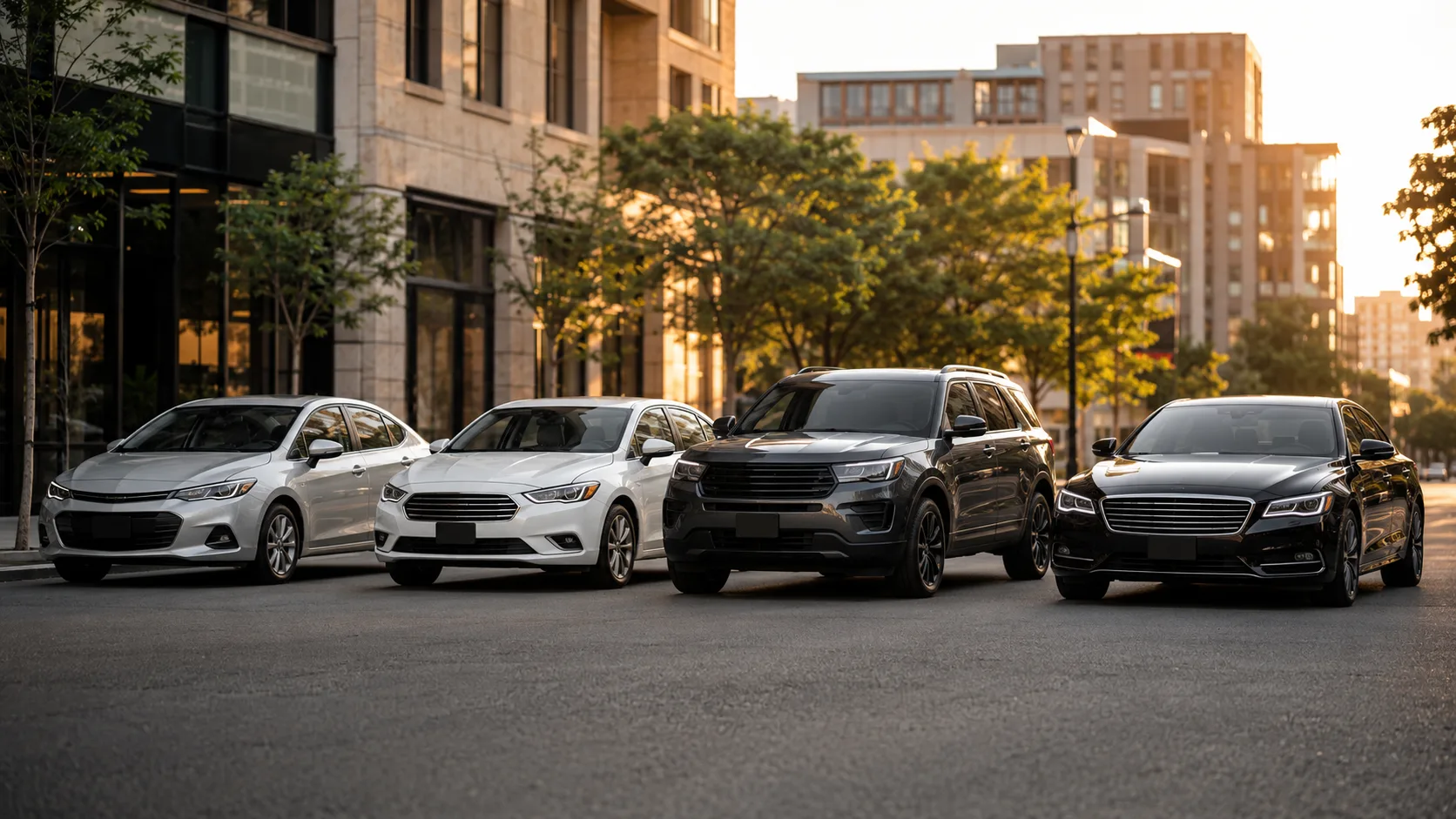
Service tier definitions and vehicle requirements are documented directly in Uber's Comfort page, Uber's Black page, and Uber's XL page. Lyft's equivalent tiers are documented at Lyft's help center.
The Complete Uber Ride Type Comparison Table
Uber offers 8+ ride types in 2026, from budget UberX Share (20–40% cheaper than UberX) to premium Uber Black SUV (2.5–3.5x more expensive). UberX is the standard option averaging $1.50/mile nationally. Uber Comfort adds legroom and quiet mode for 20–40% more, while Uber XL fits up to 6 passengers at 40–80% above UberX pricing.
Here is a full overview of every Uber ride tier available in the US, with typical pricing relative to UberX as the baseline:
| Ride Type | vs. UberX | Max Passengers | Vehicle Standard | Best For |
|---|---|---|---|---|
| UberX Share | –20% to –40% | 1–2 | Any UberX vehicle | Budget solo travel, flexible timing |
| UberX | Baseline (1x) | 1–4 | Any qualifying 4-door | Everyday rides |
| Uber Green | +5% to +15% | 1–4 | Hybrid or electric vehicle | Eco-conscious riders |
| Uber Pet | +10% to +20% | 1–4 + pet | Pet-friendly driver opt-in | Riding with dogs or cats |
| Uber Comfort | +20% to +35% | 1–4 | 2016+, extra legroom, 4.85+ driver rating | Long trips, business casual, airport |
| Uber Comfort Electric | +25% to +40% | 1–4 | EV, Comfort standards | Eco-conscious + comfort |
| Uber XL | +40% to +60% | 1–6 | SUV or minivan, 6+ seats | Groups of 5–6 |
| Uber Reserve | +15% to +25% | 1–4 | Comfort or Black driver, top-rated | Airport departures, critical meetings |
| Uber Hourly | Varies by duration | 1–4 | UberX, Comfort, or Black driver | Multiple stops, all-day errands |
| Uber Assist | Same as UberX | 1–4 | Any UberX vehicle, trained driver | Riders needing boarding assistance |
| Uber Black | +200% to +300% | 1–4 | Luxury sedan, commercial license | Business, client rides, formal occasions |
| Uber Black SUV | +300% to +400% | 1–6 | Luxury SUV, commercial license | Luxury group travel, VIP transport |
Economy Tier: UberX and UberX Share
UberX — The Standard Ride
UberX is Uber's core product and the baseline all other tiers are measured against. Any driver with a qualifying 4-door vehicle, a valid license, adequate insurance, and a successful background check can operate UberX. Vehicle quality varies widely — you might get a 2024 Toyota Camry or a 2017 Honda Civic; both qualify as long as they meet the vehicle age and condition requirements for that market. UberX is the right call for the vast majority of everyday rides: daily commutes, errands, bar nights, and standard airport trips.
UberX pricing follows a base fare plus per-mile plus per-minute structure, with surge multipliers applied during high-demand periods. For a detailed breakdown of exactly how fares are calculated, see our guide on how Uber and Lyft calculate your fare. In most US cities, UberX costs between $1.20 and $2.20 per mile depending on the market.
For a direct cost comparison between UberX and Lyft's equivalent Standard tier across dozens of US cities, see our detailed Uber vs Lyft pricing comparison.
UberX Share — The Budget Option
UberX Share (rebranded from Uber Pool) matches your ride request with other passengers traveling in a similar direction in exchange for a 20–40% discount off the solo UberX fare. The tradeoffs are real and worth knowing: your trip will typically take 5–15 extra minutes, you will share the vehicle with one or more strangers, and your pickup or drop-off point may be slightly offset from your exact address to accommodate route efficiency.
UberX Share works best in these scenarios:
- Solo travelers with flexible timing who are not rushing to a flight or a meeting
- Longer rides where the percentage discount translates to larger absolute dollar savings
- High-surge situations — the shared tier is often significantly discounted relative to the surged solo fare
- Frequent riders on a tight budget who are comfortable with the slight experience tradeoff
UberX Share availability is not universal — it operates in major US cities and is less available during off-peak hours when fewer co-riders are requesting. Always check whether it is offered on your route before counting on it.
Mid-Tier: Uber Comfort and Uber Comfort Electric
Uber Comfort — The Most Underrated Tier
Uber Comfort may be the most underused feature in the Uber product lineup. For 20–35% more than UberX, you get a meaningfully better experience across several dimensions: vehicle must be on Uber's Comfort list for your city (2020 or newer for mainstream SUVs, 2018 or newer for premium and electric models on the 2026 lists — see our Uber Comfort car list) with more legroom than UberX, and — most importantly — drivers must have achieved a 4.85 or higher rating. That threshold puts you in the top-performing subset of the entire UberX driver pool.
Comfort also activates a quiet mode preference, where drivers are instructed not to initiate conversation unless the rider does first. For business travelers, those recovering from a long flight, or anyone who values a calm, low-friction ride, this feature alone can justify the premium on longer trips. Comfort drivers also earn higher per-ride pay, which creates a meaningful incentive for better vehicle maintenance and more professional behavior.
Uber Comfort is the clear choice for:
- Longer trips of 30 minutes or more, where comfort differences compound over the ride
- Airport trips where a clean, professional pickup matters
- Business-casual situations where Uber Black is overkill but UberX quality is inconsistent
- Riders who are tall (over 6 feet) or routinely need extra legroom
- Anyone who wants the quiet mode feature without paying luxury tier prices
Uber Comfort Electric
Uber Comfort Electric meets all Comfort standards but exclusively in electric vehicles — Tesla Model 3 and Model Y, Polestar 2, Rivian R1S, and comparable EVs. It runs approximately 5–10% more than standard Comfort. Availability today is concentrated in cities with strong EV infrastructure and adoption: San Francisco Bay Area, Los Angeles, Denver, and Seattle. In most other markets, Uber Green (the hybrid/EV option at a lower price premium) is the more reliably available eco-conscious choice.
Group Rides: Uber XL and Uber Black SUV
Uber XL — Best Value for Groups of 5 or 6
Uber XL provides a vehicle with six-passenger capacity — typically a Ford Explorer, Chevrolet Suburban, Toyota Sienna minivan, or equivalent. It costs 40–60% more than a standard UberX. But the per-person math changes dramatically when you fill those seats:
- A $30 UberX ride scales to roughly $45 as an Uber XL
- Split four ways: $11.25 per person versus $30 for four separate UberX rides
- Split six ways: $7.50 per person — less than a bus fare for a luxury door-to-door ride
For any group of 5 or 6 people traveling the same route, Uber XL is almost always the most economical choice when accounting for per-person cost. Uber XL is not a luxury tier — vehicle quality matches standard UberX driver vehicles, just larger. If your group needs both size and luxury, Uber Black SUV is the appropriate upgrade.
Uber Black SUV — Luxury Group Transport
Uber Black SUV provides a large-format luxury vehicle — Cadillac Escalade, Lincoln Navigator, Chevrolet Suburban LTZ, or equivalent — with a commercially licensed and insured driver held to the same professional standards as Uber Black sedan drivers. It costs 3–4x the UberX rate. This tier is appropriate for corporate group travel, VIP pickups, wedding and event transportation, and any scenario where a luxury group vehicle with a professional driver is the expectation rather than a preference.
Premium Tier: Uber Black
Vehicle and Driver Requirements
Uber Black is Uber's original luxury tier and the benchmark for premium rideshare. Vehicle requirements are strict: a high-end sedan (Lincoln Town Car, Mercedes-Benz E-Class or S-Class, BMW 5 or 7 Series, Cadillac CT6, or comparable) within the allowed model year range and in pristine, professionally maintained condition. Drivers must hold a commercial driver's license and carry commercial vehicle insurance — placing this in a fundamentally different category from the peer-to-peer UberX driver model. Uber Black drivers are effectively professional chauffeurs operating within the Uber platform.
When Uber Black Makes Financial Sense
Uber Black typically costs 2–3x the UberX rate for the same route. At that premium, it makes economic sense only in specific, well-defined scenarios:
- Client-facing business travel: Picking up an investor, client, or executive partner from the airport is a situation where the vehicle signals professionalism and attention to detail
- Corporate expense accounts: For travelers expensing rides through a business account, the reliability and receipt quality of Black tier is often preferred
- Special occasions: Weddings, anniversary dinners, awards events, or any context where the vehicle experience is part of what you are paying for
- Late-night premium safety: In some cities, the commercial licensing and insurance standards of Uber Black provide meaningful additional assurance for solo late-night travel
For everyday business travel where you need a clean, quiet, professional ride, Uber Comfort at roughly one-third of the Black price delivers most of the experience for a fraction of the cost. Always compare your options using RideWise before committing to a Black ride when Comfort might serve equally well.
For more on expensing rideshare rides and which tier works best for corporate travel policies, see our guide to Uber and Lyft for business travel expenses.
Accessibility: Uber Assist
Uber Assist — Extra Help at No Extra Cost
Uber Assist is a specialized ride type for passengers who need extra assistance boarding and exiting the vehicle but do not require a wheelchair-accessible vehicle (WAV). Uber Assist drivers complete additional training in passenger assistance techniques, including folding wheelchairs, handling walkers, and offering a steadying arm.
Uber Assist is priced the same as UberX — there is no additional surcharge. It is available in most major and mid-size US cities. Use Uber Assist if you:
- Use a folding wheelchair, walker, or cane and need help with equipment
- Have limited mobility and need a steadying hand getting in or out of the vehicle
- Are an older adult who values the additional patience and training of Assist-certified drivers
For riders who need a wheelchair-accessible vehicle (WAV), see our complete guide to Uber and Lyft wheelchair accessible rides.
Specialty Tiers: Pet, Green, Hourly, and Reserve
Uber Pet
Uber Pet allows riders to travel with pets — dogs, cats, and similar animals — for a small surcharge above UberX pricing (typically $3–$5 extra, or 10–20% more than UberX). Drivers who opt into the Pet tier have agreed to accept animal passengers. Bringing a crate is not required but is considered courteous for anxious or larger animals. Availability is solid in major metro areas but limited in smaller markets. Uber Pet eliminates the uncomfortable situation of a standard UberX driver declining your ride after seeing your dog — a situation that hurts both the rider experience and the driver's cancellation rate.
Uber Green
Uber Green matches riders with hybrid or fully electric vehicles at a small premium above UberX — typically 5–15% more. It is available in most major US cities and works well for riders who want to reduce the carbon footprint of their trips without the higher price point of Comfort Electric. Vehicle standards are otherwise identical to UberX; the only requirement is a qualifying hybrid or EV powertrain. In cities like San Francisco and Denver, availability is robust enough to make Uber Green a reliable daily choice.
Uber Hourly
Uber Hourly is a fundamentally different product from per-trip pricing. You book a driver for a set number of hours (minimum typically 1–2 hours), and that driver stays with you through multiple stops, waiting at each location until you are ready to move. It is priced at an hourly rate rather than per trip.
Uber Hourly is particularly valuable for:
- Running multiple errands in a single outing — grocery store, pharmacy, dry cleaner, all in one booking
- All-day event transportation where you need a driver available throughout the day
- Business travel days with multiple meeting locations across a city
- Airport-to-hotel, hotel-to-meetings, meetings-to-airport itineraries that would otherwise require 3 separate bookings
For trips involving 3 or more stops, Uber Hourly typically comes out 15–30% cheaper per mile than booking each stop as a separate ride, in addition to the convenience of not re-requesting and waiting for a new driver at every stop. Hourly is available with UberX, Comfort, or Black drivers depending on the market and availability.
Uber Reserve — The Hidden Premium Feature
Uber Reserve is one of the most underappreciated ride types in the Uber product lineup — and arguably the most important to know about for high-stakes travel. Unlike standard scheduled rides (which only assign a driver when you are approaching the pickup window), Reserve guarantees driver assignment up to 10 minutes before the scheduled pickup time — effectively a professional car service experience operating within the Uber app.
Key Reserve benefits that justify its 15–25% premium over standard scheduled UberX:
- Guaranteed driver assignment well before your pickup window — you know who your driver is and where they are
- 15 minutes of free wait time, compared to just 2 minutes free on standard UberX — critical for airport arrivals with luggage
- Higher-rated drivers fulfilling Reserve requests (Comfort-tier or Black drivers)
- Locked fare at booking, completely insulating you from real-time surge at pickup time
- Professional pickup protocol — Reserve drivers are trained to meet riders at the designated location rather than waiting at the curb
Reserve is the right choice for airport departures (especially early-morning flights), important business meetings where being late has real consequences, and any trip where driver no-shows or late arrivals are simply not acceptable. For a full guide to using rideshare at airports, including when Reserve vs. standard scheduling makes sense, see our complete airport rideshare guide.
Lyft Ride Types: The Full Equivalent Breakdown
Lyft's ride tier structure mirrors Uber's closely but uses different branding. Here is the complete mapping between the two platforms for riders who compare across apps:
| Lyft Tier | Uber Equivalent | vs. Lyft Standard | Key Notes |
|---|---|---|---|
| Lyft Shared | UberX Share | –20% to –35% | Matched rides, major cities |
| Lyft Standard | UberX | Baseline | Core everyday ride |
| Lyft XL | Uber XL | +40% to +60% | 6-passenger SUV or minivan |
| Lyft Lux | Uber Comfort | +30% to +50% | Slightly higher than Comfort in most markets |
| Lyft Lux Black | Uber Black | +200% to +280% | Luxury sedan, commercially licensed driver |
| Lyft Lux Black XL | Uber Black SUV | +280% to +380% | Luxury SUV, commercial license required |
A naming note first: Lyft retired the Lux names in 2025. Lyft Lux is now Extra Comfort, Lux Black is Lyft Black, and Lux Black XL is Black SUV. Two things to note when comparing across platforms at the premium tier level: Lyft Extra Comfort pricing tends to run 10–20% higher than Uber Comfort for equivalent vehicle and driver standards, while Lyft Lux Black and Lux Black XL sometimes come in slightly under Uber Black and Black SUV in competitive markets like New York, Los Angeles, and Chicago. On a $60 premium ride, that difference represents real money — always run the comparison before booking. Use RideWise to see Uber and Lyft fares side by side for your specific route and tier.
Availability by City: What Is Actually Available Where
Not every ride type is available in every market. Here is a practical availability breakdown:
- UberX, Lyft Standard: All US cities where Uber and Lyft operate
- Uber Comfort, Lyft Lux: All major US cities; limited or unavailable in smaller markets
- Uber XL, Lyft XL: Most mid-size and large US cities
- Uber Black, Lyft Lux Black: Major metropolitan areas only — New York, Los Angeles, Chicago, San Francisco, Miami, Houston, Dallas, Atlanta, Boston, Seattle, Phoenix
- Uber Comfort Electric: Best availability in San Francisco Bay Area, Los Angeles, Denver, Seattle
- Uber Reserve: Available in most major markets where Comfort or Black is active
- Uber Hourly: Select major markets — check the app for your city
- Uber Pet: Most major US cities; limited in smaller markets
- Uber Assist: Most major and mid-size US cities — broader availability than WAV
Which Ride Type Should You Choose? A Quick Decision Guide
Use this framework to match your situation to the right tier without overthinking it:
- Everyday commute or short trip: UberX or Lyft Standard — there is no reason to pay a premium for routine rides
- Traveling solo, not in a rush: UberX Share or Lyft Shared for maximum savings
- Long trip (30+ minutes), want to arrive comfortable: Uber Comfort or Lyft Lux — the premium pays for itself on longer hauls
- Traveling with a pet: Uber Pet — eliminates driver refusals and uncomfortable situations
- Group of 5 or 6 people: Uber XL or Lyft XL — almost always cheaper per person than separate rides
- Airport departure, cannot miss the flight: Uber Reserve — guaranteed driver, locked fare, 15-minute wait buffer
- Business travel or client meeting: Uber Comfort for professional-but-not-flashy; Uber Black for high-stakes client impressions
- Multiple stops across the city: Uber Hourly — more efficient and often cheaper than separate bookings
- Need extra boarding help: Uber Assist — same price as UberX with a trained driver
- Luxury occasion or VIP group: Uber Black or Uber Black SUV depending on party size
Subscriptions and Ride Types: Do They Stack?
Yes — Uber One and Lyft Pink ($9.99/month each) apply their 5% discount across all eligible ride types, including premium tiers like Uber Comfort and Uber Black, and stack on top of the tier's normal pricing.
Both Uber and Lyft offer subscription plans that apply discounts across all eligible ride types. Uber One ($9.99/month) provides 5% off all eligible rides including Comfort and Black, plus priority matching. Lyft Pink ($9.99/month) gives 5% off all rides including Lux tiers, plus Price Lock surge protection.
For frequent riders of premium tiers, the math is straightforward: 5% off a $40 Comfort ride is $2 saved per trip. Twelve trips per month covers Uber One's cost and every subsequent trip is pure savings. For a complete analysis of whether either subscription makes financial sense for your usage pattern, see our detailed breakdown of Uber One vs Lyft Pink. And to understand which platform is cheaper across all ride types in your city, start with our Uber vs Lyft pricing comparison.
The Bottom Line
Most riders stick to one or two ride types out of habit, leaving real value on the table. UberX Share saves 30%+ on flexible solo trips. Uber Comfort delivers a genuinely better experience for roughly a quarter more than economy pricing — a worthwhile upgrade for any ride over 20 minutes. And Uber Reserve is the most reliable option for time-sensitive trips — a fact most riders do not discover until they have once missed a flight waiting for a standard scheduled ride.
Before choosing a tier for your next ride, take 30 seconds to compare prices across both platforms. RideWise shows Uber and Lyft fares side by side for all available ride types on your route — so you can book the right tier at the right price, every time.
May 2026 update — what changed since I first wrote this
I revisit this guide every few months because Uber and Lyft keep quietly renaming and consolidating product tiers. Three things have shifted since the last refresh that are worth knowing:
UberX Share matching is more reliable. When the product relaunched in 2022 the match rate was painful — I'd book Share and ride solo at the discount price more often than not. In my own tracking through Q1 this year, match rates in dense cities have climbed to around 65–70%, which means the routing detour is now the bigger factor in deciding whether Share is worth it, not the question of whether matching will work at all. I broke down the full math in a new piece on shared rides in 2026.
The Uber Black supply problem has not gotten better. Black wait times in mid-tier markets (Denver, Minneapolis, Nashville, Pittsburgh) are still routinely 10–15 minutes longer than UberX during peak. If you genuinely need Black for a client pickup, schedule it via Uber Reserve — the surcharge is worth it for the supply guarantee.
Lyft Lux availability tightened. A few markets where Lyft Lux used to be a real option (Atlanta and Phoenix, for me) have effectively no Lux supply now during off-peak hours. If you're in those markets and need a luxury vehicle, you're back to Uber Black as the default.
The broader picture is that the tier system is converging: both companies are de-emphasizing the middle tiers (Comfort, Lux) and concentrating effort on the cheap base tier plus the premium black-car tier. Expect more tier consolidation in 2026–2027.
Read Next
Frequently Asked Questions
What is the difference between UberX and Uber Comfort?
UberX is Uber's standard economy option — any qualifying 4-door vehicle whose driver meets basic requirements. Uber Comfort is a step up: it requires newer vehicles (2018 or 2020 model year and up, depending on the model), more legroom, and drivers with a 4.85+ rating. Comfort rides are typically 20–35% more expensive than UberX but offer noticeably more space and a quieter ride, including opt-in quiet mode for drivers.
When should I use Uber Black instead of UberX?
Uber Black is best for business travel, client pickups, airport arrivals where appearance matters, or special occasions. It costs 2–3x more than UberX but provides a luxury vehicle (Lincoln Town Car, Mercedes-Benz, Cadillac Escalade class), a commercially licensed and insured driver, and typically faster pickup times in dense urban areas. It is rarely cost-effective for everyday commuting.
What is the cheapest Uber ride type?
UberX Share (formerly Uber Pool) is the cheapest ride type available — it matches you with other riders going in a similar direction for a 20–40% discount off standard UberX. If you are traveling solo, are not in a rush, and are comfortable sharing the vehicle, UberX Share is consistently the lowest-cost Uber option. Standard UberX is the cheapest solo-only ride tier.
What is Uber Reserve and how is it different from scheduling a regular ride?
Uber Reserve is a premium pre-scheduled tier that guarantees driver assignment up to 10 minutes before your scheduled pickup — far earlier than standard scheduled rides. Reserve rides are fulfilled by higher-rated Comfort or Black drivers, include up to 15 minutes of free wait time, and carry a slightly higher base fare. It is the best option for high-stakes trips like early-morning flights or important business meetings where reliability is non-negotiable.
Does Lyft have the same ride types as Uber?
Lyft has equivalent tiers but uses different names: Lyft Standard equals UberX, Lyft XL equals Uber XL, Lyft Extra Comfort equals Uber Comfort, Lyft Black equals Uber Black, and Lyft Black SUV equals Uber Black SUV (Lyft retired the old Lux names in 2025). Pricing is comparable across equivalent tiers, though availability of premium tiers varies by city. Always compare both apps before booking a premium tier — the price difference can reach 15–25% for the same route.
Ready to start saving?
Compare Uber, Lyft, and taxi prices side-by-side in seconds. Free, no sign-up required.
Compare Prices Now