
- Lyft is cheaper than Uber in all 22 metro regions we analyzed, saving riders an average of $0.69 per 5-mile trip.
- A standard rideshare in New York costs 74% more than the same distance in San Antonio, the cheapest major US metro.
- Evening surge pricing adds 30-50% to your fare depending on city, with Los Angeles and Las Vegas seeing the highest evening surges at 50%.
- Taxis cost 40-65% more than rideshare in most cities, but are competitive in NYC and New Orleans where taxi rates are regulated.
- A 10-mile airport ride costs $18-$33 by rideshare vs $29-$45 by taxi across 22 metros, making rideshare the clear winner for airport transfers.
About This Report
RideWise maintains a real-time rideshare pricing database covering 74 US cities across 22 distinct metro pricing regions, plus fare data for 47 major airports. This report analyzes that data to answer the questions rideshare riders ask most: Is Uber or Lyft cheaper? How much does location affect price? And when should you avoid booking?
Our pricing data includes base fares, per-mile rates, per-minute rates, booking fees, minimum fares, and time-of-day surge multipliers for 8 service tiers: UberX, Uber Comfort, Uber XL, Uber Black, Lyft Standard, Lyft XL, Lyft Lux, and standard taxi. All fare calculations use the formula: (base fare + per-mile rate × miles + per-minute rate × minutes + booking fee) × surge multiplier, with a minimum fare floor.
Fare estimates are calculated from published rate cards for each metro pricing region as of March 2026. We use a standardized 5-mile, 20-minute trip as our benchmark for cross-city comparison. Airport comparisons use a 10-mile, 30-minute trip. Actual fares vary based on real-time demand, traffic conditions, and route. Sources include Uber and Lyft rate card disclosures, city transportation commission filings, and RideWise's own fare monitoring data.
Uber vs Lyft: Which Is Cheaper in 2026?
Lyft is cheaper than Uber in every major US metro region. Across all 22 metro pricing regions in our database, Lyft’s standard ride (Lyft Standard) costs less than Uber’s equivalent (UberX) for the same trip. The savings range from $0.47 in San Antonio to $0.80 in the San Francisco Bay Area.
This finding aligns with a November 2025 study by Johns Hopkins Carey Business School (NBER Working Paper 34441), which analyzed 2,238 identical Uber-vs-Lyft rides in New York City and found the average price gap is about $3.50 (~14% of fare). RideWise's own analysis indicates riders who compare prices before booking save roughly 20% per ride (RideWise analysis, 2026). Our data, drawn from a broader sample of 74 cities and 22 regions, confirms a consistent Lyft price advantage at the standard service tier.
Price Comparison: Standard 5-Mile Ride by Metro Region
The table below shows estimated fares for a standard 5-mile, 20-minute ride at normal (non-surge) pricing in each metro region, sorted from most to least expensive:
| Metro Region | UberX | Lyft Standard | Taxi | Cheaper App | Savings |
|---|---|---|---|---|---|
| NYC Metro | $21.05 | $20.30 | $23.50 | Lyft | $0.75 (3.6%) |
| SF Bay Area | $18.40 | $17.60 | $25.75 | Lyft | $0.80 (4.3%) |
| Boston Metro | $17.80 | $17.10 | $22.20 | Lyft | $0.70 (3.9%) |
| DC Metro | $17.05 | $16.35 | $19.30 | Lyft | $0.70 (4.1%) |
| Seattle Metro | $16.50 | $15.80 | $26.10 | Lyft | $0.70 (4.2%) |
| Chicago Metro | $16.35 | $15.65 | $19.50 | Lyft | $0.70 (4.3%) |
| Philadelphia Metro | $16.15 | $15.43 | $21.60 | Lyft | $0.72 (4.5%) |
| LA Metro | $15.90 | $15.15 | $22.95 | Lyft | $0.75 (4.7%) |
| Portland Metro | $15.30 | $14.62 | $21.00 | Lyft | $0.68 (4.4%) |
| Las Vegas Metro | $15.20 | $14.48 | $25.10 | Lyft | $0.72 (4.7%) |
| Austin Metro | $14.50 | $13.88 | $20.10 | Lyft | $0.62 (4.3%) |
| Miami Metro | $14.10 | $13.40 | $23.50 | Lyft | $0.70 (5.0%) |
| Minneapolis Metro | $14.10 | $13.38 | $20.00 | Lyft | $0.72 (5.1%) |
| Denver Metro | $13.75 | $13.05 | $20.25 | Lyft | $0.70 (5.1%) |
| Nashville Metro | $13.67 | $13.00 | $19.35 | Lyft | $0.67 (4.9%) |
| Atlanta Metro | $13.35 | $12.72 | $20.15 | Lyft | $0.63 (4.7%) |
| Houston Metro | $13.30 | $12.57 | $19.30 | Lyft | $0.73 (5.5%) |
| New Orleans Metro | $13.16 | $12.47 | $17.50 | Lyft | $0.69 (5.2%) |
| Dallas-Fort Worth | $12.95 | $12.25 | $18.75 | Lyft | $0.70 (5.4%) |
| Orlando Metro | $12.93 | $12.25 | $18.50 | Lyft | $0.68 (5.3%) |
| Phoenix Metro | $12.80 | $12.18 | $18.65 | Lyft | $0.62 (4.8%) |
| San Antonio Metro | $12.10 | $11.63 | $18.05 | Lyft | $0.47 (3.9%) |
Average savings from checking both apps: $0.69 per trip. For someone taking 3 rides per week, that adds up to roughly $108 per year — just from spending 10 seconds comparing prices before booking.
The US Rideshare Price Gap: Most Expensive vs. Cheapest Cities
Where you live matters more than which app you use. A standard 5-mile UberX ride in New York City costs $21.05 — 74% more than the same ride in San Antonio at $12.10. That $8.95 difference per trip means a daily commuter in NYC pays roughly $4,650 more per year in rideshare costs than their counterpart in San Antonio.
What Drives These Differences?
Three factors create the price gap between cities:
- Per-mile rates: NYC charges $1.75/mile for UberX vs. $1.05/mile in San Antonio — a 67% premium. Higher per-mile rates reflect congestion, regulatory fees, and driver pay requirements in expensive markets.
- Booking and base fees: NYC’s $2.75 booking fee is 38% higher than San Antonio’s $2.00. These fixed costs hit short trips hardest.
- Per-minute rates: NYC charges $0.35/min vs. $0.18/min in San Antonio. In heavy traffic, the per-minute charge becomes the dominant cost component.
City Pricing Tiers
Based on our data, US metros fall into three pricing tiers for a standard 5-mile ride:
| Tier | UberX Range | Metro Regions |
|---|---|---|
| Expensive ($16+) | $16.15 – $21.05 | NYC, SF Bay Area, Boston, DC, Seattle, Chicago, Philadelphia |
| Mid-Range ($13–$16) | $13.16 – $15.90 | LA, Portland, Las Vegas, Austin, Miami, Minneapolis, Denver, Nashville, Atlanta, Houston, New Orleans |
| Affordable (<$13) | $12.10 – $12.95 | Dallas-Fort Worth, Orlando, Phoenix, San Antonio |
Surge Pricing: When Rideshare Gets Expensive
Surge pricing is the single biggest factor that can make a cheap ride expensive. Our data tracks surge multipliers across four time periods: standard (off-peak), morning rush (7–9 AM), evening rush (4–7 PM), and late night (11 PM–4 AM). Evening rush is consistently the most expensive time to ride in every city.
Evening Surge by City: How Much More You’ll Pay
| Metro Region | Uber Evening Surge | Lyft Evening Surge | UberX Fare (Surged) | Lyft Fare (Surged) |
|---|---|---|---|---|
| Los Angeles | +50% | +50% | $23.85 | $22.73 |
| Las Vegas | +50% | +50% | $22.80 | $21.72 |
| San Francisco | +45% | +50% | $26.68 | $26.40 |
| Washington DC | +45% | +45% | $24.72 | $23.71 |
| New Orleans | +45% | +45% | $19.08 | $18.08 |
| New York City | +40% | +45% | $29.47 | $29.43 |
| Boston | +40% | +40% | $24.92 | $23.94 |
| Nashville | +40% | +40% | $19.14 | $18.20 |
| San Antonio | +25% | +25% | $15.13 | $14.54 |
Key insight: during evening rush in LA, a $15.90 UberX ride becomes $23.85 — that’s $7.95 more for the exact same trip. Annual cost for a daily commuter hitting evening surge: an extra $2,067 per year. The cheapest strategy is to leave 30 minutes before or after peak surge windows when possible.
One notable finding: in New York during evening rush, Lyft’s standard fare ($29.43) is almost identical to Uber’s ($29.47). NYC is the only metro where the two apps converge during surge — because Lyft has a higher surge multiplier (+45%) even though its base rate is lower.
Airport Rides: Rideshare vs. Taxi at 47 US Airports
Airport transfers are one of the most common rideshare use cases. We analyzed fare estimates for a standard 10-mile, 30-minute airport-to-city ride across all 22 metro regions covering 47 airports.
Rideshare is cheaper than a taxi for airport rides in every single metro we analyzed. The savings range from $6 in New Orleans to $19 in Seattle.
Airport Ride Cost: Rideshare vs. Taxi (10-mile trip)
| Metro / Airport(s) | UberX | Lyft | Taxi | Savings vs Taxi |
|---|---|---|---|---|
| NYC (JFK, LGA, EWR) | $33.30 | $32.05 | $38.50 | $6.45 (17%) |
| SF Bay Area (SFO, OAK) | $29.15 | $27.90 | $42.50 | $14.60 (34%) |
| Seattle (SEA) | $26.20 | $25.05 | $44.60 | $19.55 (44%) |
| Boston (BOS) | $28.20 | $27.05 | $39.00 | $11.95 (31%) |
| Las Vegas (LAS) | $24.10 | $22.88 | $42.90 | $20.02 (47%) |
| LA (LAX, BUR) | $25.25 | $24.05 | $39.75 | $15.70 (39%) |
| Miami (MIA, FLL) | $22.30 | $21.15 | $39.50 | $18.35 (46%) |
| Denver (DEN) | $21.70 | $20.55 | $34.50 | $13.95 (40%) |
| Dallas (DFW, DAL) | $20.45 | $19.30 | $31.75 | $12.45 (39%) |
| Phoenix (PHX) | $20.20 | $19.18 | $31.70 | $12.52 (39%) |
Biggest taxi ripoff: Las Vegas. Taking a taxi from Harry Reid International (LAS) to The Strip costs an estimated $42.90, while Lyft charges $22.88 for the same trip — a 47% savings. In Seattle, rideshare saves you 44% compared to a taxi from SEA-TAC.
The exception: New York City has the smallest rideshare-vs-taxi gap at just 17%, because NYC’s regulated taxi fares are more competitive. If you’re at JFK, the flat taxi fare to Manhattan ($70 including tolls and tip) can actually beat rideshare during surge pricing.
How Uber and Lyft Calculate Your Fare
Both Uber and Lyft use the same basic formula to calculate fares:
If the calculated total is below the minimum fare for your city, the minimum fare applies instead. Here’s how the rate components break down across metros:
| Component | Cheapest Metro | Most Expensive Metro | Range |
|---|---|---|---|
| UberX Base Fare | San Antonio ($1.25) | NYC ($2.55) | $1.25 – $2.55 |
| UberX Per Mile | San Antonio ($1.05) | NYC ($1.75) | $1.05 – $1.75 |
| UberX Per Minute | San Antonio ($0.18) | NYC ($0.35) | $0.18 – $0.35 |
| UberX Booking Fee | San Antonio ($2.00) | NYC ($2.75) | $2.00 – $2.75 |
| UberX Minimum Fare | Phoenix ($5.50) | NYC ($8.00) | $5.50 – $8.00 |
How to Save Money on Rideshare in 2026
Based on our data analysis, here are the most impactful strategies to reduce your rideshare spending:
- Always compare both apps before booking. RideWise analysis indicates riders save roughly 20% on average by checking both Uber and Lyft (RideWise analysis, 2026). Our data confirms Lyft is cheaper in every metro at standard rates, but surge pricing varies — sometimes Uber surges less. Use a free comparison tool to check in real time.
- Avoid evening rush (4–7 PM). Surge pricing adds 30–50% to your fare during this window. If your schedule is flexible, waiting until 7:30 PM can save $5–$10 per ride.
- Consider a subscription. Uber One ($9.99/month) offers 5% off rides and no delivery fees. Lyft Pink ($9.99/month) gives 5% off standard rides. If you spend $200+/month on rideshare, a subscription saves money.
- Use scheduled rides for airports. Both apps offer lower rates when you book 30+ minutes ahead. This locks in a fare before surge pricing kicks in.
- Walk a block or two from high-demand zones. Moving your pickup away from a stadium, airport terminal, or concert venue often reduces surge multipliers because the algorithm prices by exact location.
Driver economics behind the 2026 prices
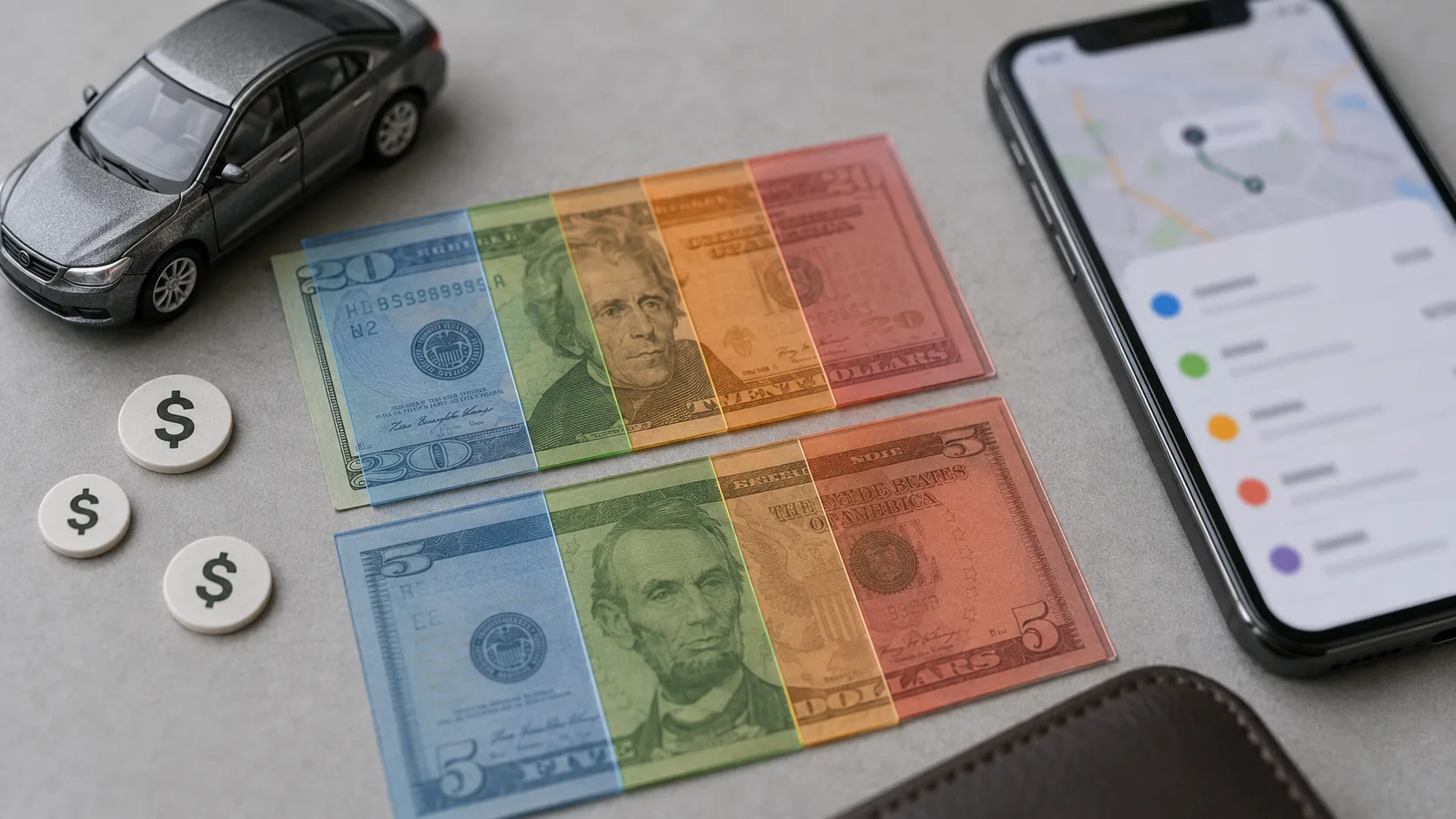
To make sense of the price data above, it helps to understand what's actually going on underneath. Rideshare prices aren't set by Uber and Lyft executives at headquarters — they're the output of three layered systems: rate cards (which encode the fundamental per-mile and per-minute math), city-level regulatory floors (which set minimum-pay requirements in regulated markets), and real-time surge multipliers (which respond to local demand). The interaction of these three layers is what produces the wide intercity price variation we observed.
What the SEC filings tell us about platform take
The most reliable source for industry-wide pricing context is the public 10-K filings. Uber's 10-K discloses blended take-rate (service fee + adjustments divided by total bookings) at roughly 22-28% over the past three years. Lyft's 10-K shows a similar range, generally 1-3 percentage points lower. These are global blended numbers; within specific US cities the spread is wider.
The implication: across the 74 cities in our report, drivers are receiving somewhere between 55-78% of the fare you pay, with the floor in unregulated southern markets (Houston, Dallas, Atlanta) and the ceiling in regulated markets with minimum-pay rules (NYC, Seattle, Minneapolis, California). For the city-by-city breakdown of where the driver share sits in 2026, see our driver-pay breakdown article.
BLS wage data on rideshare drivers
The US Bureau of Labor Statistics tracks the rideshare driver occupational category as part of its Occupational Employment and Wage Statistics. The 2024 release showed median annual earnings significantly below the comparable taxi/limo driver category — which surprised many observers given the technology premium Uber and Lyft charge. The gap is largely explained by the difference between fare revenue and driver take-home: the regulator-protected taxi industry returns a higher share to drivers, while the rideshare model captures more of the price through platform commission and booking fees.
The BLS data also reveals significant regional variation in driver earnings, even within the same platform. A full-time UberX driver in NYC reports a median hourly take-home (post-platform-fee, pre-tax) of $24-28, while the same role in Houston or Phoenix reports $14-18. The 70%+ premium in NYC is almost entirely attributable to the TLC's minimum-pay floor — without the regulatory floor, the city economics would converge toward the unregulated baseline.
Regulatory frameworks that shape 2026 prices
Three regulatory regimes account for most of the 2026 pricing variation we observed:
NYC Taxi & Limousine Commission rules — The TLC sets a minimum-pay floor for rideshare drivers and applies a $2.75 congestion surcharge to every Manhattan rideshare trip below 96th Street. Both factors push NYC's UberX base fares to roughly 90% higher than the cheapest US markets. Full rule documentation: NYC TLC aggregated reports.
California Prop 22 — Following the 2020 ballot measure and 2024 California Supreme Court ruling, drivers remain independent contractors but receive a guaranteed earnings floor calculated as 120% of the local minimum wage. Implementation details are documented at the California Department of Industrial Relations. The Prop 22 floor pushes California prices higher than equivalent Texas or Arizona markets.
Seattle PayUp ordinance — Effective January 2024, Seattle's minimum-pay rule requires platforms to pay drivers no less than a defined per-minute and per-mile rate. Full text at the Seattle Office of Labor Standards. Comparable ordinances exist in Minneapolis, with Massachusetts following a settlement-driven approach.
The implication for the price data: cities in regulated jurisdictions (NYC, Seattle, Minneapolis, California, Massachusetts) consistently rank in the top quartile of 2026 prices, while cities in unregulated jurisdictions (Texas, Arizona, Georgia, Florida, Tennessee) rank in the bottom half. The technology and the platforms are the same; the regulatory environment is the variable.
Data Limitations and Notes
This report has several important limitations:
- Rate card data, not real-time fares. Our estimates are based on published rate cards and average surge multipliers. Actual fares fluctuate in real time based on demand, weather, events, and driver availability.
- Regional pricing, not city-specific. Many nearby cities share a pricing region (e.g., Dallas and Fort Worth use the same rates). Rates may vary slightly within a region.
- Standard service tiers only. This report focuses on UberX and Lyft Standard for comparisons. Premium tiers (Uber Black, Lyft Lux) have different competitive dynamics.
- No tips included. Fare estimates exclude tips, which typically add 15–20% to the total cost.
- March 2026 data. Rideshare companies adjust rates periodically. This data reflects rates as of March 2026 and will be updated quarterly.
For real-time fare comparisons for your specific route, use the RideWise comparison tool, which calculates estimates based on your exact pickup and destination.
Read Next
Frequently Asked Questions
Is Uber or Lyft cheaper in 2026?
Based on RideWise data covering 74 cities and 22 metro regions, <strong>Lyft is cheaper than Uber in every major US metro</strong> at the standard service tier (UberX vs Lyft Standard). The average savings is $0.69 per 5-mile trip, or about 4-5%. However, during surge pricing periods, the gap narrows and sometimes reverses — always compare both apps before booking.
What is the most expensive city for Uber and Lyft?
New York City is the most expensive metro for rideshare in the US. A standard 5-mile UberX ride costs $21.05 in NYC compared to $12.10 in San Antonio — a 74% price difference. San Francisco ($18.40) and Boston ($17.80) are the second and third most expensive metros.
What is the cheapest city for Uber and Lyft?
San Antonio, Texas is the cheapest major US metro for rideshare. A 5-mile UberX ride costs $12.10, and Lyft Standard costs $11.63. Other affordable metros include Phoenix ($12.80 UberX), Orlando ($12.93), and Dallas-Fort Worth ($12.95).
How much does surge pricing add to a rideshare fare?
Evening surge pricing (4-7 PM) adds 25-50% to your fare depending on the city. Los Angeles and Las Vegas have the highest evening surges at 50%, meaning a $15.90 standard ride becomes $23.85. San Antonio has the lowest surge at 25%. The best way to avoid surge is to ride before 4 PM or after 7:30 PM.
Is Uber or Lyft cheaper for airport rides?
Lyft is cheaper for airport rides in all 22 metro regions we analyzed. For a 10-mile airport-to-city trip, Lyft saves $1-2 compared to Uber. Both rideshare apps are significantly cheaper than taxis — the savings range from 17% in NYC (where taxis are regulated) to 47% in Las Vegas.
Is it cheaper to take a taxi or rideshare from the airport?
Rideshare (Uber or Lyft) is cheaper than a taxi for airport transfers in every major US metro. The biggest savings are in Las Vegas (47% cheaper), Miami (46%), and Seattle (44%). The smallest gap is in New York City (17%), where regulated taxi fares are more competitive. However, at JFK the flat taxi fare to Manhattan can beat rideshare during heavy surge pricing.
How much does an Uber cost per mile in 2026?
UberX per-mile rates range from $1.05 in San Antonio to $1.75 in New York City. The national average across all 22 metro regions is approximately $1.28 per mile. Lyft is slightly cheaper at $1.00-$1.69 per mile. These per-mile rates do not include the base fare, booking fee, and per-minute charges that are also part of every ride.
How much can you save by comparing Uber and Lyft?
At standard (non-surge) rates, comparing Uber and Lyft saves an average of $0.69 per 5-mile trip — about $108/year if you ride 3 times per week. During surge pricing, the savings can be much larger since Uber and Lyft surge differently. RideWise analysis indicates riders who compare prices save about 20% per ride on average (RideWise analysis, 2026).
Ready to start saving?
Compare Uber, Lyft, and taxi prices side-by-side in seconds. Free, no sign-up required.
Compare Prices Now