
Key Takeaways
- According to AAA's 2025 annual driving cost study, the average new car costs $12,182 per year to own and operate — urban drivers with parking pay $18,000–$23,000/year.
- That same $12,000/year budget buys 667 Uber/Lyft rides at $18 average fare — more than 12 rides per week, every week of the year.
- Drivers traveling fewer than 8,000 miles/year are almost always better off financially going car-free or car-light.
- The Bureau of Labor Statistics Consumer Expenditure Survey shows transportation is the second-largest household expense at 16.8% of income — behind only housing.
- A hybrid approach — car share for weekends plus rideshare for daily trips — can save $6,000–$10,000/year compared to full car ownership while retaining 90% of car access.
Most Americans dramatically underestimate what their car actually costs them. According to AAA's 2025 annual driving cost study, the average new car costs $12,182 per year to own and operate — and that figure does not even include parking, which adds $2,400–$5,160/year in major cities. The Bureau of Labor Statistics Consumer Expenditure Survey confirms that transportation is the second-largest household expense at 16.8% of average income, trailing only housing. Meanwhile, a Department of Energy analysis found that over 52% of all car trips in the US are under 3 miles — distances that are fast and inexpensive by rideshare or transit. For a growing number of urban and suburban Americans, the question is no longer whether they can afford to go car-free — it is whether they can afford not to. This guide breaks down every dollar of car ownership, compares it against real rideshare costs at different usage levels, and gives you a step-by-step framework to determine which option saves you more money.
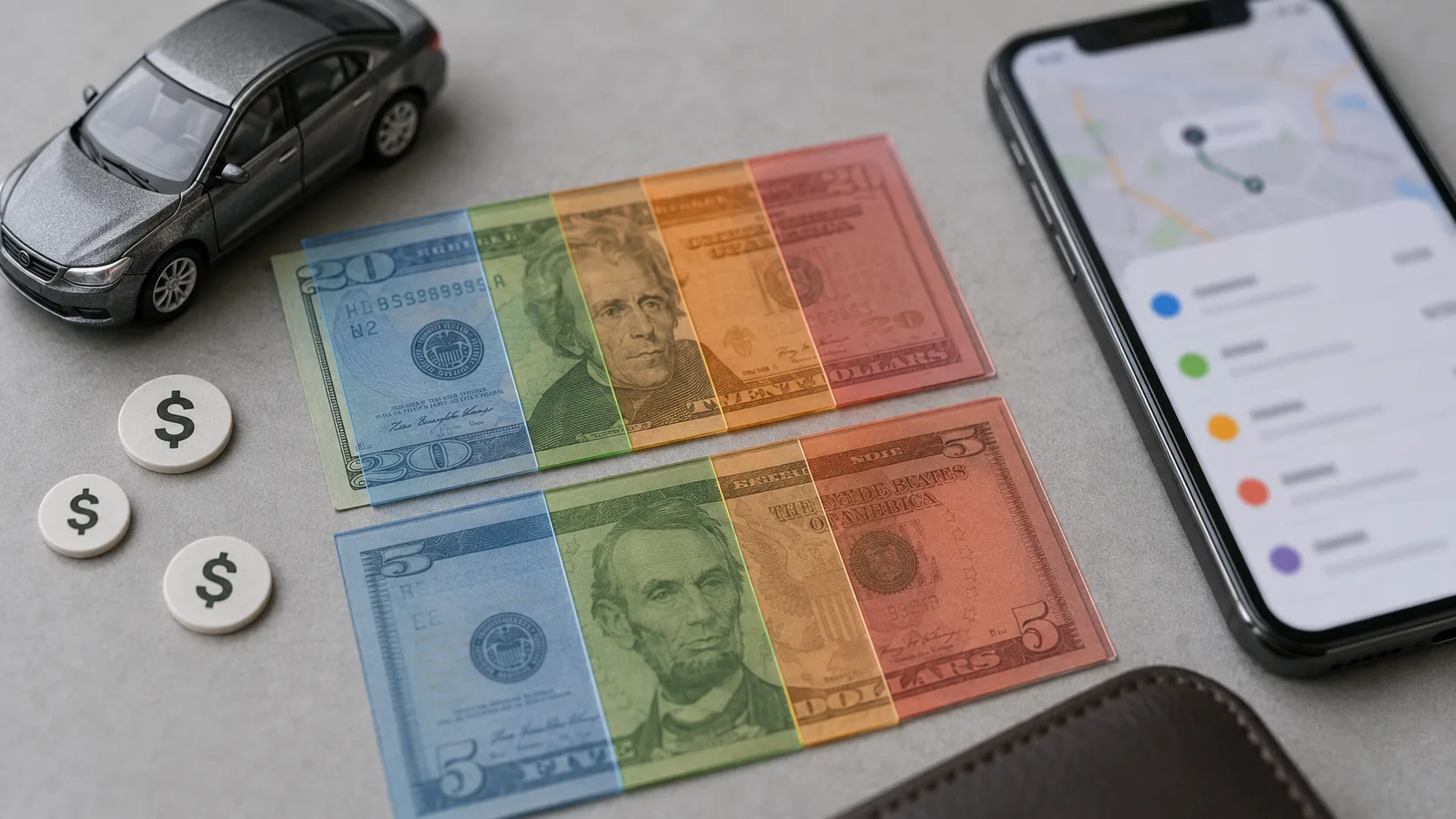
Owning a mid-size sedan costs ~$12,300/year (AAA). Rideshare-only commuting breaks even at ~40 rides/month.
Source: AAA Your Driving Costs 2025, IRS standard mileage 2026, BLS Consumer Expenditure Survey.
What a Car Actually Costs Per Year: The Full Breakdown
The average new car costs $12,182 per year to own and operate according to AAA’s 2025 study, including loan payments, insurance, gas, maintenance, and depreciation. Switching fully to Uber and Lyft breaks even at roughly 5,000–7,000 miles per year. Urban residents who drive under 10,000 miles annually often save $3,000–$6,000 per year by going car-free.
Americans tend to think of car costs as "the payment plus gas." In reality, the full picture includes at least seven categories of expense — several of which are invisible on a monthly basis. According to AAA's 2025 annual driving cost study, the average new car costs $12,182 per year to own and operate. Here is where that money goes:
| Expense Category | Annual Cost (New Car) | Annual Cost (Used, Paid Off) | Notes |
|---|---|---|---|
| Car payment | $8,820 | $0 | $735/mo avg, 72-month loan |
| Auto insurance | $2,150–$4,000 | $1,200–$2,000 | Full coverage vs liability only |
| Gas / fuel (15k mi @ 28 MPG) | $1,820 | $1,820 | At $3.40/gal national avg |
| Maintenance & repairs | $1,200 | $1,500–$2,500 | Higher for older vehicles |
| Depreciation | $3,500–$7,000 | $800–$1,500 | New cars lose ~20% in year 1 |
| Registration & taxes | $150–$700 | $150–$500 | Varies by state |
| Parking (urban) | $2,400–$5,160 | $2,400–$5,160 | $200–$430/mo in major cities |
| Total (urban driver) | $18,000–$23,000 | $8,000–$13,000 | With paid parking |
| Total (suburban driver) | $10,000–$14,000 | $5,000–$8,000 | Free home parking |
Sources: AAA 2025 Your Driving Costs, Bureau of Labor Statistics Consumer Expenditure Survey
Notice how the biggest line items — depreciation, the car payment, and parking — are costs that vanish entirely when you eliminate the car. That is the leverage point that makes the rideshare math work for millions of Americans. Even a paid-off used car in the suburbs costs $5,000–$8,000/year when you honestly account for insurance, gas, maintenance, and depreciation.
Car Ownership vs Rideshare: Annual Cost Comparison
The question most people ask is: "How many rides does that money buy?" Here is a side-by-side comparison at different usage levels. For a deeper look at which rideshare platform is cheaper, see our detailed Uber vs Lyft comparison.
| Scenario | Annual Cost | Equivalent Rides @ $18 avg | Rides per Week |
|---|---|---|---|
| New car, urban driver | $18,000–$23,000 | 1,000–1,278 | 19–25 |
| New car, suburban driver | $10,000–$14,000 | 556–778 | 11–15 |
| Used car (paid off), urban | $8,000–$13,000 | 444–722 | 9–14 |
| Used car (paid off), suburban | $5,000–$8,000 | 278–444 | 5–9 |
| Rideshare only (light, 5 rides/wk) | $4,680 | 260 | 5 |
| Rideshare only (moderate, 10/wk) | $9,360 | 520 | 10 |
| Rideshare only (heavy, 15/wk) | $14,040 | 780 | 15 |
| Hybrid: rideshare + car share | $5,000–$8,000 | — | 8–12 + car access |
The table reveals the core insight: an urban driver spending $18,000–$23,000/year on a new car could take 19–25 rideshare trips per week for the same money. Most people do not need that many rides, which means they would come out ahead without the car. Even a heavy rideshare user taking 15 rides per week spends less than a new-car urban driver.
The Break-Even Analysis: Your Mileage Threshold
Your annual mileage is the single strongest predictor of which option saves money. Here are the three tiers:
- Under 8,000 miles/year: Going car-free is almost certainly cheaper. You are paying full fixed costs (insurance, depreciation, registration) for a vehicle that sits parked most of the time. Your car budget converts to 444+ rides per year — more than enough for most lifestyles. The Bureau of Labor Statistics reports that the average American drives about 13,500 miles/year, but the median is lower — many households have a second car that barely hits 5,000 miles annually.
- 8,000–15,000 miles/year: This is the gray zone. The answer depends on whether you have a car payment, how much you pay for parking, and your city's rideshare pricing. Run the step-by-step calculation below to find your personal break-even point. Many drivers in this range save the most with the hybrid approach.
- Over 15,000 miles/year: If you are commuting long distances daily, car ownership is usually more economical — particularly if you own a fuel-efficient used car with no loan. However, even high-mileage drivers should consider the hybrid approach below for a portion of their trips. Combining rideshare for nights out with car ownership for commuting can still reduce total transportation spending.
City-by-City Comparison: Where Going Car-Free Saves the Most
Not all cities are equal when it comes to the car-free calculation. Parking costs, transit quality, and rideshare availability all shift the math. Here is how the top US metros compare for car-free living potential. For city-specific fare data, see our Uber vs Lyft price comparison or our rideshare vs public transit cost analysis.
| City | Avg Parking (mo) | Transit Score | Avg Rideshare Fare | Annual Car-Free Savings |
|---|---|---|---|---|
| New York City | $430 | 89/100 | $19–$24 | $10,000–$16,000 |
| San Francisco | $350 | 80/100 | $17–$22 | $8,000–$14,000 |
| Chicago | $250 | 65/100 | $15–$20 | $7,000–$12,000 |
| Boston | $300 | 72/100 | $16–$21 | $7,000–$13,000 |
| Washington, D.C. | $270 | 69/100 | $16–$20 | $6,500–$11,000 |
| Seattle | $240 | 57/100 | $16–$21 | $5,500–$10,000 |
| Los Angeles | $200 | 36/100 | $15–$20 | $3,000–$7,000 |
| Houston | $150 | 25/100 | $14–$18 | $1,000–$4,000 |
Transit scores from WalkScore.com. Savings estimates assume replacement of a new car with payment and urban parking, using a mix of transit and rideshare.
The pattern is clear: cities with high parking costs and strong transit offer the biggest car-free savings. New York City is the undisputed leader — the combination of $430/month parking, a comprehensive subway system, and dense rideshare availability makes car ownership genuinely counterproductive for most Manhattan and inner-borough residents. At the other end, car-dependent Sun Belt cities like Houston offer smaller savings because parking is cheap and transit coverage is limited, requiring more rideshare trips to replace the car.
Case Study: Sarah in Chicago — From Two Cars to One Car Plus Rideshare
Sarah and her partner lived in Lincoln Park, Chicago, with two cars. Her Honda Civic was their second vehicle — used primarily for her 4-mile commute to work, weekend errands, and occasional trips to visit family in the suburbs. Annual cost of the second car: $11,400 (payment: $380/mo, insurance: $170/mo, parking: $220/mo, gas: $80/mo, maintenance + depreciation: $100/mo).
They sold the Civic and switched to a combination strategy: CTA train for the daily commute ($105/month pass), Uber and Lyft for evenings and weekends (average 8 rides/week at $16 = $512/month), and Zipcar for suburban trips twice a month ($140/month average). New annual cost: $9,084.
Annual savings: $2,316 — plus they eliminated the stress of street parking, insurance paperwork, and maintenance appointments. Within six months, Sarah said the biggest surprise was not the money saved but how little she missed the car.
How to Calculate If You Can Go Car-Free: A Step-by-Step Framework
The generic averages above are useful, but your situation is unique. Follow these five steps to calculate your personal break-even point. This takes about 30 minutes and produces a number you can trust.
Calculate Your True Annual Car Cost
Add up all seven expense categories from the table above using your actual numbers: car payment (or opportunity cost if paid off), insurance premium, gas spend, maintenance receipts from the past 12 months, parking costs, registration and taxes, and depreciation (check your car's value on KBB.com now vs. one year ago). Most people are shocked to find the total is 30–50% higher than they assumed because depreciation and opportunity cost are invisible expenses.
Track Your Actual Trips for Two Weeks
Open the Notes app on your phone and log every car trip for 14 days: destination, distance, and purpose (commute, errands, social, kids). Do not change your behavior — just observe. This gives you an honest baseline of how many trips you take and how far they are. Most people find they take 8–14 car trips per week, with over half being under 5 miles.
Price Each Trip as a Rideshare Ride
Open RideWise or the Uber and Lyft apps and get fare estimates for each trip in your two-week log. Multiply the weekly average by 52 to get your annual rideshare cost. Factor in transit for commute trips — a $2.75 subway ride replacing a $16 rideshare commute saves over $3,400/year. For a full comparison of rideshare vs transit costs, see our rideshare vs public transit analysis.
Add Car-Share Costs for What Rideshare Cannot Replace
Some trips — IKEA runs, road trips, hauling sports equipment — genuinely require a car. Price these as Zipcar or Turo rentals. Zipcar runs $12–$18/hour or $90–$130/day including gas and insurance. If you need a car twice a month for full-day errands, that adds roughly $2,400–$3,120/year. Include this in your car-free budget to get an honest comparison.
Compare the Two Numbers
Your annual car cost from Step 1 vs. your combined rideshare + transit + car-share cost from Steps 3 and 4. If the car-free number is lower, you have a clear financial case. If it is within $1,000–$2,000 either way, the convenience factors in the "What the Numbers Miss" section below should tip your decision. Even a break-even result is noteworthy — it means you can go car-free without spending more, gaining back the time and stress of car ownership for free.
The Hybrid Approach: The Best of Both Worlds
For many Americans, the smartest move is not going fully car-free but going car-light. The hybrid approach eliminates the most expensive parts of car ownership while keeping car access for situations where rideshare falls short.
- Sell the second car: Two-car households can replace the less-used vehicle with rideshare credits. This alone saves $6,000–$10,000/year while the primary car handles longer trips and commutes.
- Car-share memberships (Zipcar, Turo): Access a car for weekend errands and road trips at $12–$18/hour or $90–$130/day — a fraction of monthly ownership costs. No insurance, no maintenance, no parking fees.
- Subscription services: Uber One ($9.99/month) and Lyft Pink ($9.99/month) provide 5% off every ride. For a car-free rider taking 10+ rides per week, this saves $250–$500/year. Lyft Pink's Price Lock feature is especially valuable for avoiding surge pricing on predictable routes.
- E-bikes and micro-mobility: For trips under 3 miles, an e-bike ($500–$1,500 one-time cost) or a city bike-share membership ($200/year) replaces short car trips at near-zero marginal cost. This is the fastest-growing car replacement category in US cities.
Pro Tip: The Second-Car Elimination Strategy
If your household has two cars, start with the easier win: sell the one that drives fewer miles. In most two-car households, the second vehicle is driven under 6,000 miles/year — well within the range where rideshare plus occasional car-share is cheaper. You keep the primary car for commuting and long trips, eliminate $6,000–$10,000 in annual costs, and gain a freed-up parking spot or garage bay. This is the lowest-risk way to test car-light living because you still have a car for anything that genuinely requires one. Try it for three months — most households never go back to two cars.
What the Numbers Miss: The Non-Financial Case
Car ownership offers things rideshare cannot fully replace, and an honest analysis must acknowledge them:
- Spontaneous travel: No waiting for a driver, no surge pricing at 2 AM, no worrying about availability in rural areas. This matters most for parents with kids who need unpredictable pickups.
- Hauling capacity: Groceries, furniture, camping gear, and large purchases are difficult or impossible to transport via rideshare. Car-share services and occasional rental days address this, but with added planning.
- Rural and suburban access: Areas with poor rideshare availability — wait times over 15 minutes, limited driver supply — make car-free living impractical regardless of the math.
- Privacy and personal space: Your car is a climate-controlled, private environment. For some people, this daily comfort has real psychological value that a shared vehicle cannot match.
- Emergency reliability: Medical emergencies, weather events, and late-night situations where rideshare availability is uncertain create a safety argument for car ownership that pure cost analysis does not capture.
These are real value factors. The point is not that car ownership is always wrong — it is that the financial case for it is far weaker than most people assume, and the convenience gap is closing as rideshare and transit improve. If you are also weighing costs for vacation travel specifically, our rideshare vs rental car on vacation comparison covers that scenario in detail.
Rideshare Savings Strategies for Car-Free Riders
If you do go car-free, every dollar you save on rideshare improves the financial case. These strategies are especially important for full-time rideshare riders:
- Always compare Uber and Lyft: Use RideWise to see both prices in seconds. Riders who compare save $4–$8 per ride on average — at 10 rides/week, that is $2,000–$4,000/year.
- Avoid surge pricing religiously: Car-free riders cannot simply drive their own car when rideshare is surging. Learn the 8 proven surge avoidance strategies and use Lyft Pink's Price Lock for predictable commutes.
- Use transit for commutes, rideshare for everything else: A monthly transit pass ($75–$130) for your daily commute combined with rideshare for evenings and weekends is almost always cheaper than rideshare for everything. See our rideshare vs public transit comparison for the full math.
- Book shared rides when possible: UberX Share and Lyft Shared cost 20–40% less than solo rides. If you are flexible on time, shared rides can cut your annual rideshare spend by $1,000–$2,000.
- Stack subscription discounts: Hold Uber One or Lyft Pink for the 5% ride discount, and use hidden features like scheduled rides and price alerts to minimize costs further.
The Bottom Line
For urban dwellers, occasional drivers, two-car households, and anyone with a car loan combined with paid parking, the math frequently favors going car-free or car-light. The AAA data is unambiguous: the average new car costs over $12,000/year before parking, and urban drivers routinely spend $18,000–$23,000 annually when all costs are honestly accounted for. That budget buys 19–25 rideshare trips per week — far more than most people need.
Before your next major car purchase or lease renewal, run the five-step calculation above with your actual numbers. Compare your true annual ownership cost against what that money would buy in Uber, Lyft, and taxi rides — supplemented by transit and occasional car-share. The result is frequently surprising. Even if you keep the car, the exercise will make you a more informed transportation consumer. And if the numbers favor going car-free, you may discover what millions of urban Americans already know: the best car is the one you do not have to pay for.
Frequently Asked Questions
How much does it cost to own a car per year?
According to AAA's 2025 annual driving cost study, the average new car costs $12,182 per year to own and operate. This includes the car payment ($735/month average on a 72-month loan), insurance ($2,150/year national average for full coverage), gas at current national averages, routine maintenance, and depreciation — which alone accounts for $3,500–$7,000/year on a new vehicle. Urban drivers who pay for monthly parking ($200–$430/month in major cities) can see their total reach $18,000–$23,000/year. Even a paid-off used car in the suburbs costs $5,000–$8,000/year when you honestly account for insurance, fuel, maintenance, and remaining depreciation.
Is it cheaper to use Uber and Lyft instead of owning a car?
It depends on your driving patterns, city, and car situation. If you drive fewer than 8,000 miles per year, going car-free is almost always cheaper — your annual car budget of $8,000–$12,000 converts to 444–667 rideshare rides at $18 average, or more than 8–12 rides per week. For daily commuters driving 15,000+ miles annually in suburban areas with free parking, car ownership is usually more economical. The critical factors are parking costs (which rideshare eliminates entirely), whether you have a car payment, and your city's rideshare pricing levels. The hybrid approach — keeping one car and replacing the second with rideshare — saves money for most two-car households regardless of mileage.
What cities are best for living without a car?
New York City offers the strongest case for car-free living, with a transit score of 89/100, average parking of $430/month, and savings of $10,000–$16,000/year versus car ownership. San Francisco, Chicago, Boston, and Washington D.C. round out the top five, all with transit scores above 65 and parking costs exceeding $250/month. The key metric is the combination of strong transit infrastructure and high parking costs — together they make the car-free option both more practical and more financially compelling. In these cities, riders can combine a monthly transit pass with 5–10 rideshare trips per week and spend $8,000–$12,000/year less than car owners.
How do I calculate if going car-free saves me money?
Follow the five-step framework in this guide. First, add up your total annual car costs across all seven categories: payment, insurance, gas, maintenance, parking, registration, and depreciation. Second, track your actual driving trips for two weeks. Third, price each trip as a rideshare ride using RideWise or the Uber and Lyft apps. Fourth, add car-share costs (Zipcar, Turo) for trips that genuinely require a car. Fifth, compare the two annual totals. If rideshare + transit + car-share costs less than car ownership, you have a clear financial case for going car-free. Drivers under 8,000 miles/year almost always come out ahead without a car.
What is the hybrid approach to car ownership and rideshare?
The hybrid approach combines car-share services (Zipcar at $12–$18/hour, Turo at $40–$80/day) for weekend errands and road trips with Uber and Lyft for daily commuting and evening trips. This eliminates all fixed ownership costs — payments, insurance, parking, depreciation — while keeping car access for situations where rideshare falls short. A typical hybrid setup costs $5,000–$8,000/year: about $500/month in rideshare fares, $100/month in transit, and $150/month in occasional car-share. That saves $6,000–$10,000/year compared to full car ownership, and the most common entry point is selling a household's second vehicle as a low-risk trial.
Does rideshare subscription membership help if I go car-free?
Yes, significantly. Uber One and Lyft Pink each cost $9.99/month and provide 5% off rides. For a car-free rider taking 15–20 rides per week at an average fare of $18, the 5% discount saves roughly $700–$940/year — well above the $120 annual subscription cost. Lyft Pink also includes Price Lock, which lets you lock in a non-surge fare in advance. This is especially valuable for car-free riders who cannot simply drive their own car when rideshare prices spike during surge events. A single Price Lock during a 2x surge event can save $15–$25, effectively paying for the subscription in one ride.
Read Next
Frequently Asked Questions
How much does it cost to own a car per year?
According to AAA's 2025 annual driving cost study, the average new car costs $12,182 per year to own and operate. This includes the car payment ($735/month average), insurance ($2,150/year national average), gas, maintenance, and depreciation. Urban drivers with paid parking can pay $18,000–$23,000/year when you add monthly garage fees of $200–$430.
Is it cheaper to use Uber and Lyft instead of owning a car?
It depends on your driving patterns and city. If you drive fewer than 8,000 miles per year, going car-free is almost always cheaper. A $12,000 annual car budget buys 667 rides at $18 average — over 12 per week. For daily commuters driving 15,000+ miles annually in suburban areas, car ownership is usually more economical. The break-even point shifts significantly based on parking costs, insurance rates, and local rideshare pricing.
What cities are best for living without a car?
New York City offers the strongest case for car-free living due to extensive transit and high parking costs ($430/month average). Chicago, San Francisco, Washington D.C., and Boston also have strong transit systems combined with reliable rideshare availability. In these cities, the combination of transit plus rideshare costs $8,000–$12,000/year less than owning a car with parking.
How do I calculate if going car-free saves me money?
Add up your total annual car costs across seven categories: payment, insurance, gas, maintenance, parking, registration, and depreciation. Divide by $18 (average rideshare fare) to see how many rides that budget buys. If the number exceeds your actual weekly ride needs, going car-free likely saves money. Track your actual driving for two weeks to get an accurate trip count before deciding.
What is the hybrid approach to car ownership and rideshare?
The hybrid approach combines car-share services (Zipcar, Turo) for weekend errands and road trips with Uber and Lyft for daily commuting and weeknight trips. This eliminates fixed ownership costs like payments, insurance, and parking while keeping car access when you need it. A typical hybrid setup costs $5,000–$8,000/year — saving $6,000–$10,000/year compared to full car ownership while retaining 90% of the convenience.
Does rideshare subscription membership help if I go car-free?
Yes, significantly. Uber One and Lyft Pink each cost $9.99/month and provide 5% off rides plus additional perks. For a car-free rider taking 15–20 rides per week, subscriptions save $150–$300/year on the discount alone. Lyft Pink also includes Price Lock to avoid surge pricing, which is especially valuable for riders who depend entirely on rideshare — it prevents unexpected $40+ fares during rush hour or bad weather.
Ready to start saving?
Compare Uber, Lyft, and taxi prices side-by-side in seconds. Free, no sign-up required.
Compare Prices Now